
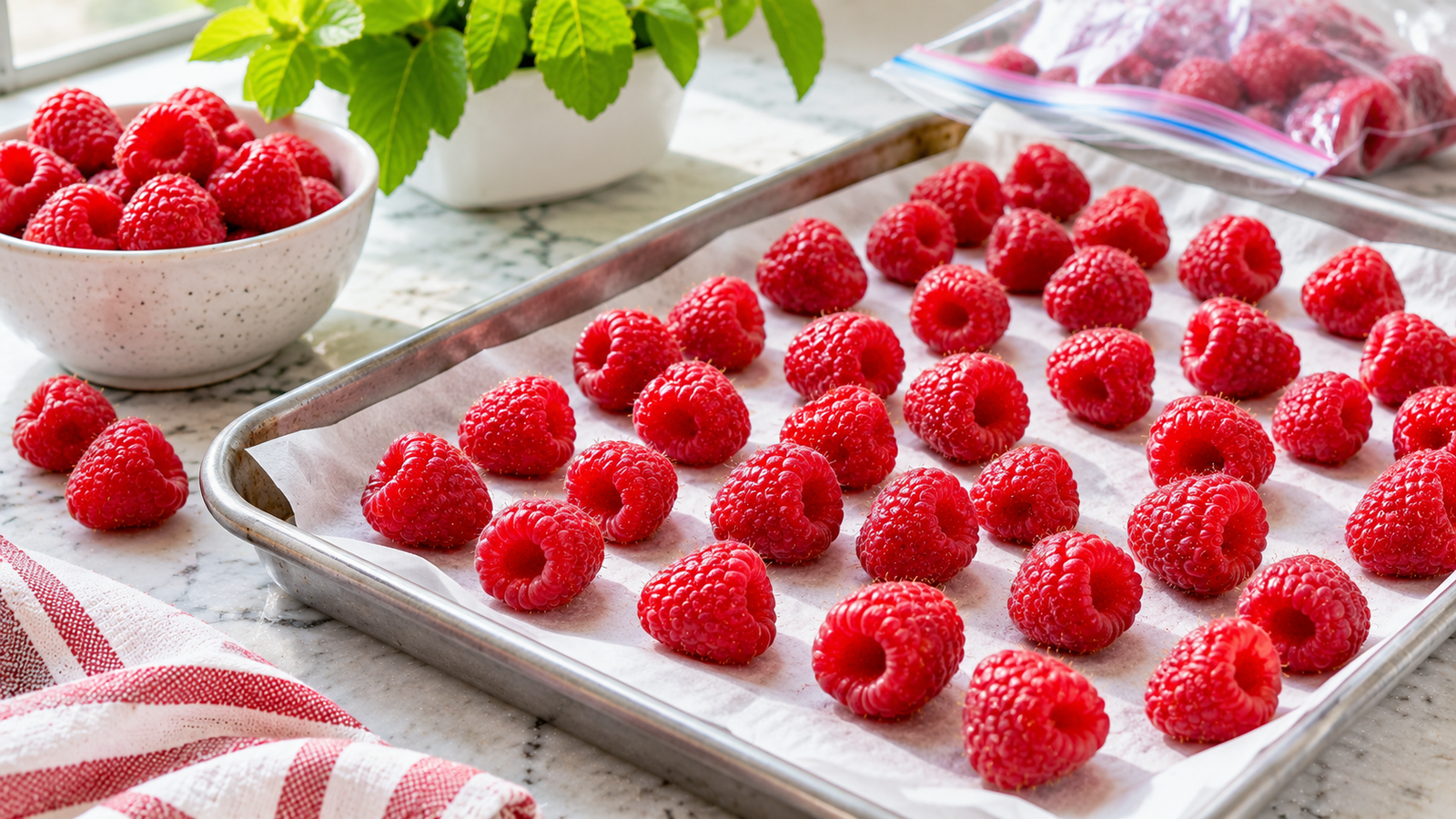
Freezing raspberries is an easy way to preserve a fresh harvest for smoothies, baking, sauces and desserts. Because raspberries are delicate and have a hollow center, the best approach is to handle them gently, freeze them in a single layer first, and then transfer the firm berries to freezer-safe packaging. This helps keep them separate so you can use a small portion at a time.
Quick Answer: The Best Way to Freeze Raspberries
Sort the raspberries, remove any damaged or moldy fruit, and rinse only if needed. If you wash them, use a gentle stream of cool running water and dry them thoroughly. Arrange the berries in one layer on a parchment-lined tray, freeze until firm, then pack them in an airtight freezer bag or container, label and return them to the freezer.
What You’ll Need
- Fresh, firm raspberries
- A colander, if washing is needed
- Clean paper towels or a lint-free kitchen towel
- A rimmed baking sheet or freezer-safe tray
- Parchment paper
- Freezer-safe bags or airtight containers
- A marker for labeling the package with the date
How to Freeze Raspberries Step by Step
1. Choose and sort the berries
Start with ripe raspberries that are dry, plump and in good condition. Remove leaves, stems, crushed berries and any fruit showing mold or leaking juice. Freezing does not improve the quality of berries that are already spoiled or overripe.
2. Decide whether to wash them
If the raspberries are visibly dirty, rinse them gently under cool running water. Avoid soaking or stirring them in a bowl because the fruit can break apart. If they are clean and you prefer to preserve their delicate texture, you can sort them carefully and wash them after thawing if appropriate for your intended use.
3. Dry them carefully
After rinsing, spread the berries on a clean towel in a single layer. Let excess water drain and gently blot around the fruit without pressing it. Surface moisture can create extra ice crystals and make the berries stick together, so allow them to dry thoroughly before freezing.
4. Arrange berries on a tray
Line a baking sheet with parchment paper. Place raspberries on the tray in a single layer, leaving a little space between them. Keep the hollow side facing down where practical, and avoid stacking or crowding the berries.
5. Freeze until firm
Place the tray flat in the freezer until the raspberries are firm. The time varies with berry size and freezer temperature, so check them rather than relying on an exact timer. Once solid, they should lift from the parchment without collapsing easily.
6. Pack and label
Transfer the frozen raspberries promptly into freezer-safe bags or airtight containers. Remove as much air as practical from bags, seal tightly, and label with the contents and freezing date. Return the package to the freezer promptly.
Can You Freeze Raspberries Without Washing Them?
Yes, you can sort and freeze clean raspberries without washing them first. Raspberries are fragile and hold water easily, so unnecessary rinsing can make them harder to dry and more likely to clump. If you do rinse them, handle them gently and dry them well. Follow safe produce-handling practices and wash fruit when it is dirty or before eating it.
Can You Freeze Raspberries in Their Original Container?
The original ventilated produce container is useful for short-term refrigeration, but it is not usually the best choice for longer freezer storage. A freezer-safe bag or rigid container helps protect the fruit from air exposure, odors and freezer burn. Tray-freezing first also makes it easier to remove only the amount you need.
How Long Do Frozen Raspberries Last?
Keep raspberries continuously frozen at 0°F (-18°C) or below. For best flavor and texture, aim to use them within about 8 to 12 months. They may remain safe longer when kept frozen continuously, but quality can decline over time. Good packaging and a steady freezer temperature help reduce freezer burn and flavor loss.
How to Thaw Frozen Raspberries
- For smoothies: Add raspberries straight from the freezer; thawing is usually unnecessary.
- For sauces and compotes: Cook them from frozen over gentle heat, allowing time for the fruit to release its juice.
- For baking: Many recipes allow frozen raspberries to be added directly. Follow the recipe and fold them in gently to avoid streaking the batter.
- For toppings: Thaw the amount you need in a covered container in the refrigerator. Expect some juice to collect as the berries soften.
Frozen raspberries soften after thawing because ice crystals affect the fruit’s structure. They are therefore best for recipes where a softer texture is acceptable rather than for garnishes that need perfectly firm fresh berries.
Best Ways to Use Frozen Raspberries
- Blend them into smoothies or smoothie bowls.
- Cook them into a quick raspberry sauce or compote.
- Add them to muffins, pancakes, oatmeal and quick breads.
- Stir thawed berries and their juice into yogurt or chia pudding.
- Use them in fruit fillings, desserts and homemade popsicles.
For more berry preparation ideas, read our guides on how to freeze strawberries and how to wash fresh berries. If you are storing a fresh raspberry harvest before freezing, see our raspberry guide for more ways to enjoy the fruit.
Common Mistakes to Avoid
- Freezing wet berries: Dry them carefully after rinsing to limit excess ice and clumping.
- Skipping the tray-freezing step: Packing fresh berries together can make a solid frozen mass.
- Pressing or stirring the fruit: Raspberries crush easily, so use a light touch.
- Overfilling bags: Pack without compressing the berries and seal out excess air.
- Leaving packages unlabelled: Add the date so you can rotate older fruit first.
- Refreezing repeatedly: Portion the fruit before freezing and thaw only what you plan to use.
Frequently Asked Questions
Do raspberries need to be blanched before freezing?
No. Raspberries are generally frozen without blanching. Sort them, rinse only if needed, dry thoroughly and freeze in a single layer before packing.
Why do my frozen raspberries stick together?
They may have been packed before they were individually frozen, or they may have had excess surface moisture. Tray-freezing dry berries first helps keep them separate.
Can I freeze raspberries with sugar?
Yes. You can gently mix raspberries with sugar if you want a sweetened fruit pack for desserts or sauces. The berries will release juice and become softer, so this method is less suitable when you want individually frozen berries for portioning.
Can I use frozen raspberries instead of fresh in recipes?
Often, yes. Frozen raspberries work well in smoothies, sauces and many baked recipes. They release more liquid and are softer after thawing, so follow the recipe’s guidance and adjust for extra moisture if needed.
Can I refreeze thawed raspberries?
For best quality, thaw only the portion you need. If raspberries have thawed in the refrigerator and remained safely cold, they can generally be refrozen, although their texture and quality may decline. Do not refreeze fruit that has been left at room temperature for an extended period.
Keep Raspberries Ready for Recipes All Year
Tray-freezing is a simple way to preserve raspberries while making them easy to portion later. Choose sound fruit, handle it gently, remove excess moisture and pack the berries securely once firm. Frozen raspberries may be softer after thawing, but they remain useful for smoothies, baking, sauces and many everyday recipes.
Food-preservation note: These instructions are for freezer storage, not shelf-stable preservation. Keep raspberries continuously frozen and discard fruit that shows signs of spoilage before freezing.
1 thought on “How to Freeze Raspberries Without Crushing Them”