
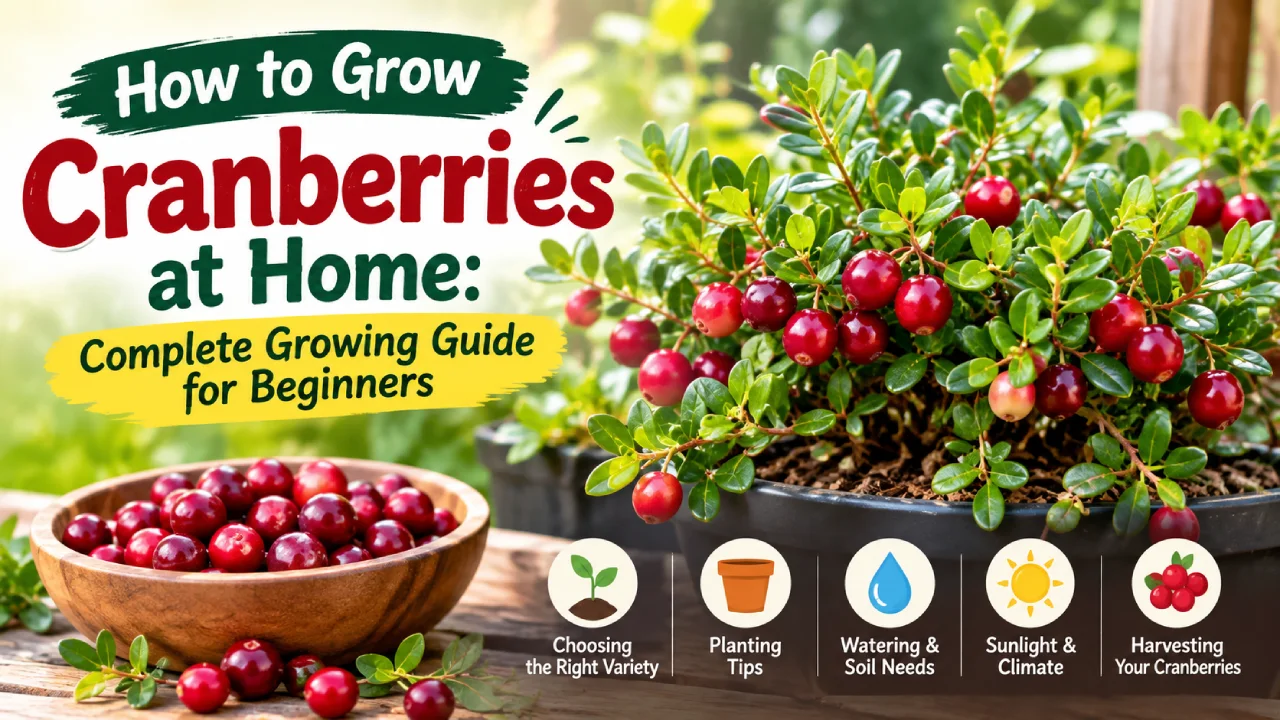
Growing cranberries might sound intimidating, but with the right conditions and knowledge, you can successfully cultivate these tart, delicious berries in your own backyard. Whether you’re a seasoned gardener or just starting out, this guide will walk you through everything you need to know about growing cranberries from planting to harvest.
What Are Cranberries? Quick Facts
Before we dive into the growing process, let’s understand what makes cranberries special:
- Scientific Name: Vaccinium macrocarpon (American cranberry)
- Growing Season: Perennial plants that produce berries in fall
- Harvest Time: September through November
- Growing Zones: Hardiest in USDA zones 3-7
- Yield: Mature plants produce 4-8 pounds per plant annually
- Lifespan: Properly maintained plants can produce for 100+ years
Cranberries are native to North America and thrive in acidic, boggy environments. The good news? You don’t need a traditional bog to grow them successfully at home.
Requirements for Growing Cranberries Successfully
1. Soil pH and Composition
This is the most critical factor for cranberry success. Cranberries are extremely acid-loving plants and require:
- Soil pH: 4.0-5.5 (very acidic)
- Soil Type: Sandy, peaty, or loamy soil with excellent drainage
- Organic Matter: High in peat moss or decomposed plant material
Test your soil pH before planting. If your soil is too alkaline (above 6.0), you’ll need to amend it significantly with peat moss or sulfur. Many home gardeners successfully grow cranberries by creating a dedicated bed with imported acidic soil.
2. Water Management
Cranberries evolved in wetland environments, so they need consistent moisture—but not standing water:
- Moisture Level: Consistently moist but well-draining
- Best Setup: Sandy soil that retains moisture without becoming waterlogged
- Watering: Deep, regular watering during growing season (spring-summer)
- Ideal: Raised beds or slight depressions that collect water naturally
If you live in a dry climate, consider installing drip irrigation to maintain consistent moisture. Conversely, if you’re in a wet area, ensure excellent drainage to prevent root rot.
3. Sunlight
- Required: Full sun (6-8 hours minimum daily)
- Ideal: 8+ hours of direct sunlight
- Shade: Too much shade reduces berry production
Choose a location in your garden that gets consistent afternoon sun for best results.
4. Temperature and Hardiness
Cranberries are incredibly cold-hardy and actually thrive in cool climates:
- Winter: Can tolerate temperatures down to -20°F (-29°C)
- Chill Hours: Require 100-200 chill hours below 45°F for proper fruiting
- Growing Zones: Best in zones 3-7; possible in zone 8 with afternoon shade
If you live in zone 8-9, focus on late-afternoon shade and consistent moisture to keep plants cooler.
How to Plant Cranberries: Step-by-Step
Step 1: Prepare Your Bed (2-4 Weeks Before Planting)
- Choose the location: Full sun area with good drainage
- Test soil pH: Aim for 4.0-5.5
- Amend soil if needed: Mix in peat moss to lower pH and improve water retention
- Add sand layer: Create a 4-6 inch base of coarse sand for drainage
- Mix growing medium: Combine peat moss, sand, and small amount of topsoil (60% peat, 30% sand, 10% topsoil)
Step 2: Plant Your Cranberry Plants
- Timing: Plant in early spring (April-May) or early fall (August-September)
- Spacing: 12-24 inches apart in rows
- Depth: Plant at same depth as pot; don’t bury deeper
- Initial watering: Water thoroughly after planting
Step 3: Add Mulch
- Material: Use sand or fine gravel as mulch (not bark)
- Amount: 1-2 inches
- Why: Keeps soil consistently moist and helps maintain acidic conditions
Step 4: Install Support Structure (Optional)
Many growers install:
- Border edging to contain the planting area
- Irrigation system for consistent watering
- Shade cloth (if in warmer zones)
Caring for Your Cranberry Plants
Spring Care (April-May)
- Watering: Begin regular deep watering as growth starts
- Fertilizing: Apply balanced, acid-loving fertilizer (like blueberry fertilizer)
- Mulch: Refresh sand mulch if needed
- Pruning: Remove any dead branches
Summer Care (June-August)
- Watering: Most critical period; maintain consistent moisture
- Weeding: Remove weeds carefully (cranberry roots are shallow)
- Monitoring: Watch for pests and diseases
- Pruning: Can lightly trim runners to control spread
Fall Care (September-October)
- Harvesting: Pick berries as they ripen (see harvesting section)
- Reduce watering: Gradually decrease as temperatures cool
- Clean up: Remove fallen leaves and debris
Winter Care (November-March)
- Dormancy: Plants go dormant; minimal care needed
- Winter flooding: Traditional bog growers flood beds for winter protection (optional for home gardeners)
- Mulch: Sand mulch protects shallow roots from frost heave
- No fertilizing: Wait until spring
Harvesting Cranberries
When to Harvest
Cranberries are ready to pick when they develop a deep red or dark burgundy color. This typically happens:
- Timing: Late September through November
- Peak harvest: October for most varieties
- Readiness: Berries should feel firm, not soft
How to Harvest
Method 1: Hand Picking (Best for Home Gardeners)
- Pick berries individually when fully ripe
- Gently pull from vine; berries should come free easily
- Harvest into baskets to avoid bruising
Method 2: Scoop Method
- Use a berry scoop or rake to collect multiple berries at once
- Gather from edges and roll toward center
- More efficient for larger beds
Storage
- Fresh: Refrigerate in containers; keep for 2-3 weeks
- Frozen: Freeze on trays, then store in freezer bags for up to a year
- Dried: Dry in oven at low temperature for preserved berries
- Sauce/Juice: Process immediately for best flavor
Common Cranberry Growing Problems & Solutions
Problem: Poor Fruit Production
Causes: Insufficient sunlight, improper pH, young plants (takes 2-3 years for production)
Solution: Ensure 8+ hours sun, test soil pH, be patient with new plantings
Problem: Yellowing Leaves
Causes: Alkaline soil, nutrient deficiency, poor drainage
Solution: Amend soil with sulfur or peat moss; apply acid-loving fertilizer; improve drainage
Problem: Fungal Diseases
Common types: Fruit rot, leaf blotch, root rot
Prevention: Ensure good air circulation, avoid overhead watering, remove infected plant material
Solution: Apply fungicide if needed; improve drainage and reduce moisture on foliage
Problem: Pest Infestation
Common pests: Cranberry girdler, shoot moths, leafhoppers
Organic control: Encourage beneficial insects, remove affected branches, use neem oil if severe
Best Cranberry Varieties for Home Growers
| Variety | Characteristics | Best Zones |
|---|---|---|
| Ben Lear | Large berries, excellent flavor, very hardy | 3-6 |
| Bergman | Early ripening, good disease resistance | 3-7 |
| Howes | Classic variety, reliable producer | 3-7 |
| Stevens | Large berries, late harvest, excellent storage | 3-7 |
| Pilgrim | Medium berries, very productive | 3-7 |
Frequently Asked Questions
How long does it take to get a cranberry harvest?
Most plants begin producing berries in their second to third year. Full production (4-8 pounds per plant) is reached by year 4-5.
Can I grow cranberries in containers?
Yes! Use a large container (12+ gallons) with acidic potting mix. This works well in warmer zones where in-ground growing is challenging.
Do I need more than one plant for pollination?
Cranberries are self-fertile, but cross-pollination increases yield. Plant at least 2 varieties for best production.
What’s the difference between fresh and frozen cranberries?
Frozen cranberries are harvested and frozen at peak freshness. Fresh store-bought cranberries are sometimes treated with fungicide. Home-grown, fresh cranberries are superior for eating fresh.
Can I use regular blueberry fertilizer on cranberries?
Yes! Cranberries and blueberries prefer similar growing conditions. Acid-loving fertilizers work well for both.
How often should I replace cranberry plants?
With proper care, cranberry plants are extremely long-lived. Plants in traditional bogs have been productive for over 100 years. Home plants can easily produce for 30-50+ years.
Tips for Success
- Start with soil preparation: This is 80% of the battle. Get your pH and drainage right before planting.
- Be patient: Don’t expect a full harvest the first year. Let plants establish strong root systems.
- Keep consistent moisture: Cranberries don’t like dry spells. Drip irrigation is worthwhile.
- Mulch matters: Sand or fine gravel mulch is superior to bark for cranberries.
- Join a local gardening group: Gardeners in your area understand your climate and can offer specific advice.
- Start small: Begin with 3-5 plants to learn the process before expanding.
Final Thoughts
Growing cranberries at home is entirely achievable with the right soil conditions, consistent care, and patience. While they require specific growing conditions—particularly acidic soil and consistent moisture—thousands of home gardeners successfully cultivate these delicious berries every year.
The reward? Fresh, tart cranberries straight from your garden, perfect for sauces, baking, juices, or eating fresh. Plus, once established, cranberry plants produce for decades with minimal intervention.
Ready to start? Begin with soil testing, gather your materials, and plant in early spring or fall. By next October, you’ll be harvesting your first berries.
Have you grown cranberries before? Share your experience in the comments below!
1 thought on “How to Grow Cranberries at Home: Complete Growing Guide for Beginners”