
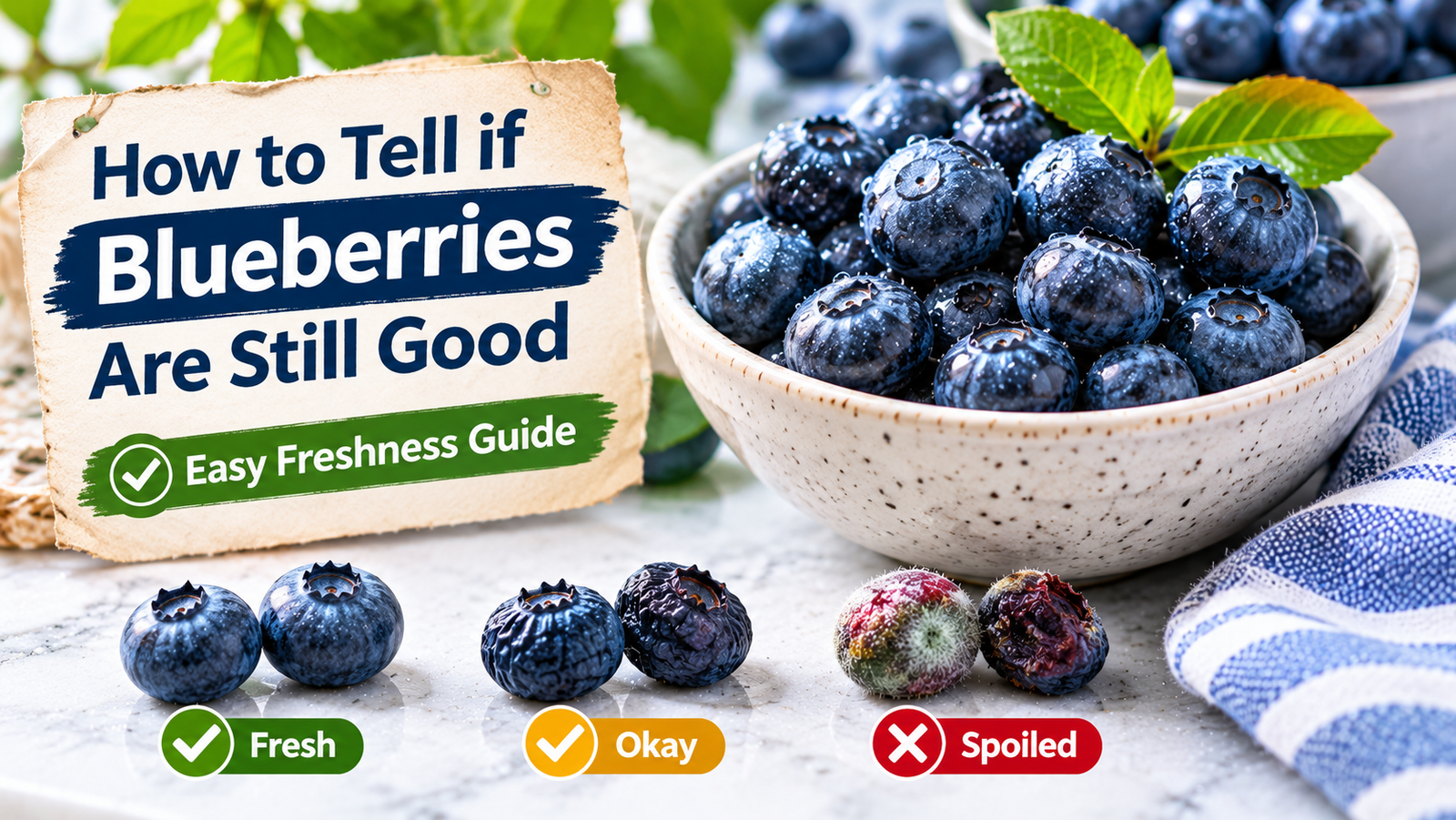
Blueberries can change quickly after you bring them home, especially if moisture gets trapped in the container. The good news is that you can often judge their condition by checking their appearance, texture and smell. This guide explains how to tell whether blueberries are fresh, simply past their best, or spoiled—and what to do when you find a questionable berry.
Quick Signs: Are Your Blueberries Still Good?
- Fresh: Firm, plump berries with smooth, unbroken skin and a natural dusty-white coating called bloom.
- Past their prime: Some berries may be slightly soft, wrinkled or less juicy, but show no mold, leaking or off smell. Use these promptly if they are otherwise sound.
- Spoiled: Visible fuzzy mold, leaking juice, mushy or collapsed berries, or a sour, fermented or otherwise unpleasant smell.
One soft berry does not automatically mean every berry in the pack is spoiled. Inspect the whole container, remove damaged fruit, and be especially cautious if you see mold or widespread moisture.
7 Signs Blueberries Have Gone Bad
1. Fuzzy mold
Look for fuzzy white, gray, blue-green or green patches on the skin or between berries. Mold is a clear reason to discard affected fruit. Because blueberries are soft and moist, do not simply cut mold off and eat the rest of that berry. Check nearby berries carefully; if mold has spread through the container or berries are touching moldy fruit, the safer choice is to discard the affected contents.
2. Leaking juice or wet patches
Fresh blueberries should not sit in a pool of juice. Leaking often means berries have been crushed or their skins have broken down. Excess moisture also encourages mold growth, so check the bottom and corners of the package.
3. Very soft or mushy texture
Gently handle a few berries. Fresh blueberries are generally firm and plump. Berries that collapse easily, feel slimy or turn to mush are deteriorating and should be discarded.
4. Wrinkled or shriveled skin
A little wrinkling can mean a berry has lost moisture and is no longer at peak quality. Wrinkling alone is not the same as mold, but combine it with other signs—such as leaking, softness or an unusual smell—before deciding whether to keep it. Use sound but slightly shriveled berries promptly.
5. Sour, fermented or unpleasant smell
Fresh blueberries have a mild, fruity smell. A strong sour, alcoholic, fermented or musty odor suggests spoilage. Do not taste berries to test whether they are safe.
6. Discolored or broken berries
Some natural variation in color is normal, but badly bruised, split or collapsed berries deteriorate faster. Remove damaged fruit and inspect the berries around it for moisture or mold.
7. Mold or moisture hidden underneath
Do not inspect only the top layer. Tip the berries gently onto a clean plate if needed and check the bottom of the container. Mold and leaking juice can hide beneath berries that look fine from above.
Is the White Powder on Blueberries Mold?
Usually, no. A light, dusty-white coating on fresh blueberries is called bloom. It is a naturally occurring waxy layer on the skin and is a normal sign of an intact berry. It may rub off when berries are handled.
Bloom looks like an even, pale film. Mold is more likely to appear as fuzzy, raised or patchy growth and may be accompanied by soft spots or an off smell. If you are unsure whether a patch is bloom or mold, do not eat that berry.
What to Do If You Find One Moldy Blueberry
- Do not taste the moldy berry.
- Discard the moldy berry rather than trying to wash or cut the mold away.
- Inspect berries that were touching it, as well as the bottom of the container.
- Discard any berries that are moldy, leaking, slimy or unusually soft.
- If mold is widespread or the container is wet and deteriorating, discard the whole pack.
- Wash your hands and clean any surface or container that came into contact with spoiled fruit.
Soft fruits have high moisture content, so mold can extend beyond what is visible. When in doubt, throw it out.
How to Keep Blueberries Fresh Longer
- Refrigerate promptly: Store blueberries in the refrigerator rather than leaving them on the counter for extended periods.
- Keep them dry: Moisture encourages spoilage. Avoid washing berries until you are ready to eat or use them.
- Sort before storing: Remove crushed, leaking or moldy berries as soon as you notice them.
- Use a breathable container: Keep berries in their ventilated package or a clean container that allows moisture to escape.
- Avoid overcrowding: Do not press berries tightly into a container where they can be crushed.
- Check regularly: Look through the container every day or two and remove berries that are deteriorating.
For more detail, read our guide on how long blueberries keep in the fridge. When you are ready to eat them, follow our instructions for washing fresh berries without crushing them.
Can You Freeze Blueberries Before They Spoil?
Yes—freeze blueberries while they are still sound, firm and free from mold. Sort them, remove stems and damaged fruit, and gently rinse only if you can dry them thoroughly. Spread the berries in a single layer on a tray and freeze until firm, then transfer them to a labeled freezer-safe bag or container. Do not freeze berries that are moldy or spoiled to try to make them safe.
Frequently Asked Questions
Are wrinkled blueberries safe to eat?
Wrinkling can simply indicate moisture loss. If the berries are otherwise clean, not moldy, not slimy and have no unpleasant smell, they may be past peak quality but still usable. Discard any berry with additional signs of spoilage.
Can I wash mold off blueberries?
No. Washing does not reliably make moldy soft fruit safe to eat. Discard moldy berries and inspect the rest of the container carefully.
Why do blueberries get mushy in the fridge?
Bruising, excess moisture, damaged skins and time in storage can all contribute to softening. Keep berries dry, avoid crushing them and remove damaged fruit promptly.
Should I wash blueberries before putting them in the fridge?
It is generally better to keep them unwashed until just before eating. Extra surface moisture can speed deterioration. If you do wash them earlier, dry them thoroughly before refrigerating.
Is a white coating on blueberries safe?
The even, dusty-white coating is usually natural bloom, not mold. Fuzzy or irregular patches, especially with soft or leaking berries, may indicate spoilage.
Can I eat blueberries that are soft but not moldy?
Softness can be a quality issue rather than proof of spoilage. Do not eat berries that are slimy, leaking, fermented-smelling or otherwise deteriorated. When uncertain, discard them.
Final Takeaway
Fresh blueberries are usually firm, dry and lightly coated with natural bloom. Mold, leaking juice, sliminess and a sour or fermented smell are warning signs to take seriously. Check the entire container, store sound berries dry in the refrigerator, and freeze good-quality berries before they deteriorate.