
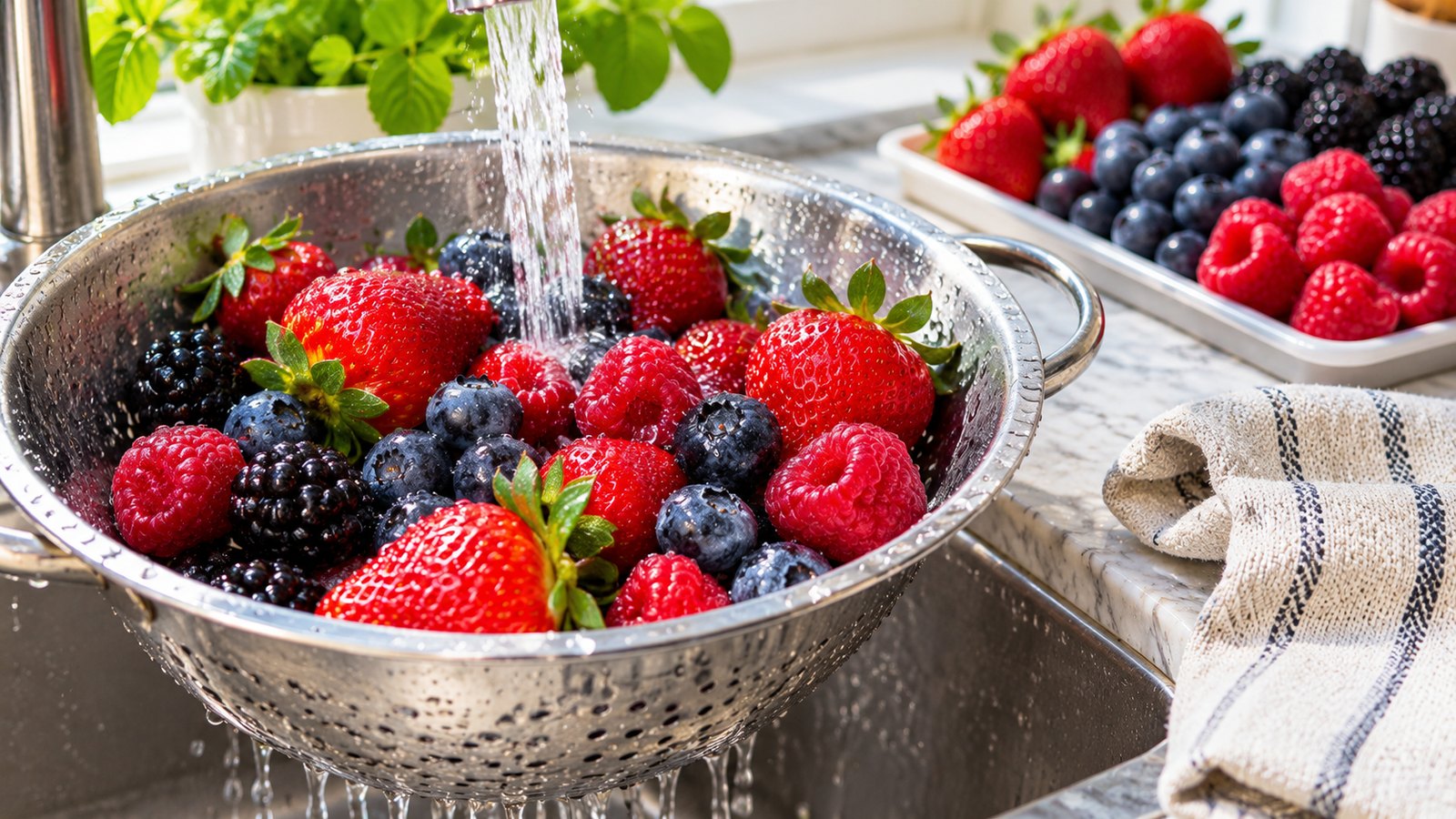
Fresh berries are delicate, so washing them the right way matters. A gentle rinse under cool, clean running water helps remove dirt and surface debris without crushing the fruit. The best method depends on the berry: firm blueberries can handle a little more movement, while raspberries and blackberries need a lighter touch.
Quick Answer: The Best Way to Wash Fresh Berries
Wash berries just before you plan to eat or use them. Place them in a clean colander, rinse gently under cool running water, let excess water drain, and pat dry carefully with a clean paper towel or kitchen towel. Do not use soap, detergent, bleach, or household cleaning products on fruit.
What You’ll Need
- A clean colander or strainer
- Cool, potable running water
- A clean paper towel or soft kitchen towel
- A shallow container for serving or preparing the berries
How to Wash Different Types of Berries
Strawberries
- Keep the green leafy tops attached while rinsing. Removing the tops first can let water enter the fruit.
- Place strawberries in a colander in a single loose layer if possible.
- Rinse under a gentle stream of cool water, turning the berries carefully so all sides are rinsed.
- Drain and pat dry. Remove the stems and hull only when you are ready to prepare or eat them.
Blueberries
- Put blueberries in a colander and remove any leaves, stems or damaged fruit.
- Rinse with cool running water, gently moving the berries with your hand.
- Allow them to drain well and spread them on a clean towel to dry.
Raspberries
- Check raspberries and remove any crushed or moldy fruit.
- Place them in a fine-mesh strainer or colander so they are supported.
- Use a light stream of cool water. Avoid stirring or rubbing them because raspberries crush easily.
- Drain thoroughly and let them air-dry briefly on a clean towel.
Blackberries
- Sort through the blackberries and discard fruit that is moldy or leaking.
- Rinse in a colander under cool running water, gently turning the fruit if needed.
- Drain without shaking hard, then pat dry carefully.
Should You Wash Berries Before Storing Them?
Usually, no. For the best quality, store berries unwashed and rinse only the amount you plan to eat. Extra moisture can encourage spoilage, especially for soft berries such as raspberries and blackberries. Keep them refrigerated in a clean container that allows some airflow, and remove damaged fruit before storing.
If berries are already wet, spread them in a single layer on a clean towel and let the surface dry before refrigerating. Avoid sealing damp berries in an airtight container.
Should You Use Vinegar to Wash Berries?
A vinegar soak is not necessary for routine berry washing. The simplest recommended approach is to rinse produce under clean running water. Vinegar does not make berries sterile, and soaking delicate fruit can affect its texture and shorten its quality if it is not dried thoroughly. Do not treat vinegar as a substitute for safe handling and refrigeration.
Can You Wash Berries with Soap or Produce Wash?
No. Do not wash berries with dish soap, detergent, bleach, or household disinfectants. These products are not intended to be eaten and can leave residues. The U.S. Food and Drug Administration advises consumers to wash produce under running water and not use soap, detergent or commercial produce washes.
Read the FDA’s guidance: 7 Tips for Cleaning Fruits, Vegetables.
How to Dry Berries Without Crushing Them
- Let berries drain in the colander for a minute or two.
- Spread them in a single layer on a clean, lint-free towel.
- For firm berries, gently roll or turn them on the towel.
- For raspberries and blackberries, avoid pressing; allow more time for air-drying.
- Do not put wet berries straight into a sealed storage container.
Common Berry-Washing Mistakes to Avoid
- Washing the whole batch too early: Moisture can speed up spoilage during storage.
- Soaking soft berries: Raspberries and blackberries can absorb water and break apart.
- Using soap or bleach: These are not safe fruit-washing methods.
- Removing strawberry tops first: Keep the tops on while rinsing and hull afterward.
- Rubbing delicate fruit: Use a gentle stream rather than scrubbing.
- Ignoring mold: Sort berries before washing and discard moldy or badly spoiled fruit.
Frequently Asked Questions
Is it better to wash berries in cold or warm water?
Use cool, clean running water. Avoid hot water, which can soften delicate berries and affect their texture.
How long should I rinse berries?
There is no single required number of seconds for every berry. Rinse gently and thoroughly enough to remove visible dirt, without prolonged soaking or rough handling.
Can I wash frozen berries?
Follow the package directions. Frozen berries sold ready to eat may be intended for use directly from the package, while some products are intended for cooking. If you thaw berries, do so in the refrigerator and handle them with clean utensils.
Do organic berries need to be washed?
Yes. Rinse organic berries under running water just as you would conventional berries. Organic certification does not remove the need to wash fresh produce.
What should I do if I find one moldy berry?
Remove and discard moldy fruit and inspect the berries around it. If several berries are moldy, leaking or smell off, discard the affected portion rather than trying to wash it clean.
Keep Berries Clean, Dry and Ready to Enjoy
A gentle rinse just before serving is usually all fresh berries need. Keep them unwashed while storing, handle soft varieties carefully, and dry them well after rinsing. These simple steps help preserve their flavor and texture for snacks, baking, smoothies and recipes such as our easy mixed berry compote.
Food-safety note: Washing can reduce surface dirt and some bacteria, but it does not eliminate all germs. Keep berries refrigerated and discard fruit that is moldy or spoiled.
3 thoughts on “How to Wash Fresh Berries: Strawberries, Blueberries, Raspberries and Blackberries”