
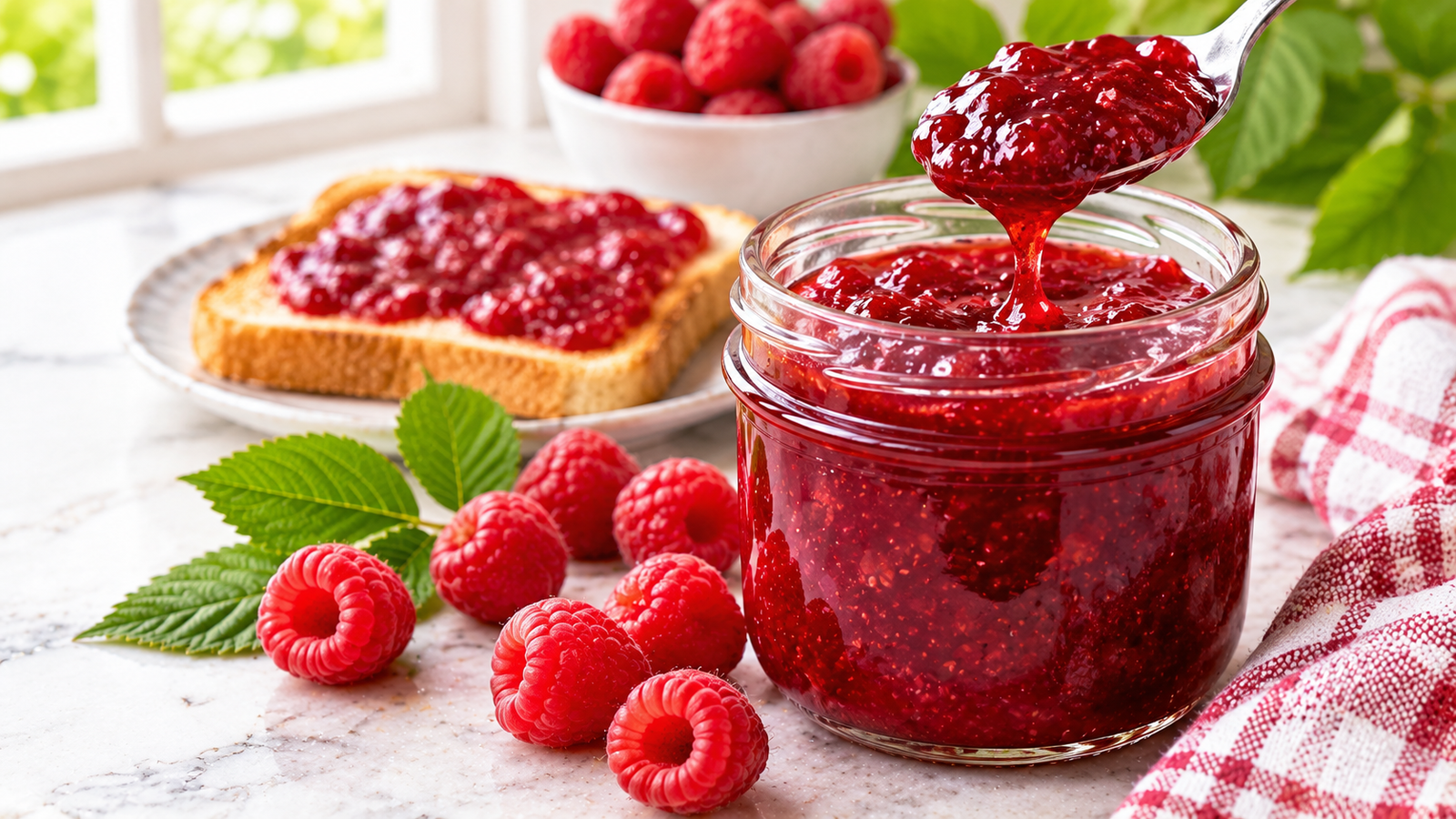
Homemade raspberry jam is a simple way to turn fresh or frozen raspberries into a bright, fruit-forward spread. This small-batch recipe uses raspberries, sugar and lemon juice—no commercial pectin required. The berries naturally break down as they cook, while their own pectin and the sugar help the mixture thicken. Make it for toast, yogurt, pancakes or a quick dessert topping.
Why Make Raspberry Jam Without Pectin?
Raspberries soften quickly when heated, making them well suited to a small-batch jam. This recipe keeps the ingredient list short and lets the fruit provide most of the flavor and texture. Because it is a refrigerator/freezer recipe rather than a tested canning formula, store it chilled or frozen; do not keep it at room temperature as a shelf-stable preserve.
Ingredients
Makes approximately 1 1/2 to 2 cups, depending on cooking time and the juiciness of the fruit.
- 4 cups (about 500–550 g) fresh or frozen raspberries
- 1 1/2 cups granulated sugar
- 2 tablespoons freshly squeezed lemon juice
- 1 teaspoon finely grated lemon zest, optional
Choose ripe raspberries without mold or leaking fruit. If using frozen berries, add them straight to the saucepan. For tips on selecting and handling the fruit, see our guide to why raspberries can taste sour.
How to Make Raspberry Jam Without Pectin
- Prepare the fruit. If using fresh raspberries, gently sort them and remove any damaged fruit. Rinse only if needed, then drain and dry carefully. Frozen raspberries can be used without thawing.
- Combine the ingredients. Place the raspberries, sugar and lemon juice in a wide, heavy-bottomed saucepan. Stir gently so the sugar begins to draw juice from the berries.
- Heat until the fruit breaks down. Set the pan over medium heat and stir as the mixture warms. The berries will release liquid and soften. Use a spoon or potato masher if you prefer a smoother texture.
- Simmer and stir. Bring the mixture to a steady simmer, then adjust the heat to prevent scorching. Cook for about 15–25 minutes, stirring frequently, especially as the mixture thickens. Cooking time varies with pan size, fruit moisture and heat.
- Check the consistency. Put a small plate in the freezer before you start cooking. To test the jam, place a little hot mixture on the cold plate, wait briefly, then push it with your fingertip. If the surface wrinkles and the jam moves slowly, it may be ready. If it remains runny, simmer a little longer and test again.
- Remove from the heat. When the jam reaches the consistency you like, take the pan off the heat. Skim excess foam if desired and let it stand briefly.
- Transfer and cool. Spoon the jam into clean, heat-safe jars or containers, leaving room at the top if you plan to freeze it. Cool, cover and refrigerate promptly.
How to Get the Right Jam Thickness
Raspberry jam thickens further as it cools, so avoid cooking it until it looks extremely stiff in the saucepan. The cold-plate test is more useful than judging the hot mixture alone. If the chilled jam is still thinner than you want, return it to the pan and simmer for a few more minutes. If it becomes too thick, stir in a teaspoon of hot water or lemon juice at a time.
A wide saucepan helps moisture evaporate more efficiently. Keep the heat controlled and stir regularly so the fruit and sugar do not stick to the bottom.
Fresh vs. Frozen Raspberries
Both fresh and frozen raspberries work in this recipe. Fresh berries may cook a little faster if they are very ripe and juicy. Frozen berries release liquid as they thaw in the pan, so the simmer may take a little longer. There is no need to thaw them separately.
If you have extra fruit, learn how to freeze raspberries without crushing them so you can keep berries ready for another batch.
Should You Strain Out the Raspberry Seeds?
That depends on the texture you prefer. For a traditional seed-filled raspberry jam, leave the seeds in. For a smoother spread, press the cooked fruit through a fine-mesh sieve before returning the puree to the pan to finish thickening. Straining removes some pulp as well as seeds, so the final yield will be smaller.
Easy Raspberry Jam Variations
- Vanilla raspberry jam: Stir in 1/2 teaspoon vanilla extract after removing the pan from the heat.
- Lemon-forward jam: Add a little extra lemon zest for a brighter citrus note.
- Mixed berry jam: Replace up to 1 cup of raspberries with blackberries or blueberries. The texture and cooking time may change.
- Less-sweet version: You can reduce the sugar, but the jam may be softer and more tart. Do not assume a reduced-sugar batch has the same keeping quality as this recipe; keep it refrigerated and use it promptly.
- Chunky raspberry spread: Mash only some of the berries during cooking and leave the rest whole.
How to Use Homemade Raspberry Jam
Spread it on toast, English muffins, biscuits or scones. Swirl a spoonful into oatmeal or plain yogurt, spoon it over pancakes and waffles, or use it between cake layers. It also makes a quick topping for cheesecake, vanilla ice cream and simple desserts. For another easy berry topping, try our mixed berry compote recipe.
How to Store Raspberry Jam Safely
This recipe is intended for refrigerator or freezer storage only. It has not been developed or tested as a shelf-stable canning recipe. Do not store the jars in a pantry or assume that a sealed lid makes the jam safe at room temperature.
- Refrigerator: Transfer the cooled jam to clean, covered containers and refrigerate promptly at 40°F (4°C) or below. For best quality, use within about 2 weeks.
- Freezer: Freeze in freezer-safe containers, leaving headspace for expansion. Use within about 3 months for best quality. Thaw in the refrigerator.
- Serving: Use a clean spoon each time and return the jar to the refrigerator promptly. Discard jam if you notice mold, fermentation, an unusual odor or other signs of spoilage.
For longer room-temperature storage, use a tested raspberry jam canning recipe from a reliable food-preservation authority and follow its exact ingredient ratios, jar preparation and processing instructions. Do not adapt this refrigerator recipe for pantry storage.
Common Raspberry Jam Problems
Why is my raspberry jam runny?
It may need more cooking time, or the fruit may have released more liquid than expected. Simmer it a little longer and repeat the cold-plate test. Remember that it will thicken as it cools.
Why did my jam become too thick?
It may have cooked for too long or lost too much moisture. Gently rewarm it and stir in a small amount of hot water until the texture loosens.
Why is the jam sticking to the pan?
The heat may be too high, or the mixture may not be stirred often enough. Use a heavy-bottomed pan, lower the heat as it thickens and scrape the base while stirring.
Can I double the recipe?
You can, but a larger batch takes longer to evaporate moisture and may cook less evenly. For more predictable results, make separate small batches or use a wide pan and monitor the consistency carefully.
Frequently Asked Questions
Can I make raspberry jam with frozen raspberries?
Yes. Add frozen raspberries directly to the saucepan with the sugar and lemon juice. They will release liquid as they heat, so the cooking time may be a little longer.
Do raspberries contain natural pectin?
Raspberries contain some naturally occurring pectin, but the amount varies with fruit variety and ripeness. That is why cooking time and the final set can vary from batch to batch.
Can I use honey instead of sugar?
Honey changes the flavor and texture, and it does not behave exactly like granulated sugar in jam. This recipe is written for granulated sugar, so substitutions may produce a softer result.
How do I make seedless raspberry jam?
Cook the berries until soft, press them through a fine-mesh sieve to remove the seeds, then return the puree to the pan and continue simmering until it reaches the desired consistency.
Can I can this raspberry jam for pantry storage?
No. This small-batch recipe is for refrigerator or freezer storage only. Use a separately tested canning recipe and follow its instructions exactly if you want a shelf-stable product.
Final Thoughts
Making raspberry jam without commercial pectin is straightforward: simmer raspberries with sugar and lemon juice, check the set on a cold plate and allow the jam to cool. The result is a flavorful small-batch spread for breakfast and desserts. Keep this version refrigerated or frozen, and use a tested preservation recipe if you need shelf-stable jars.