
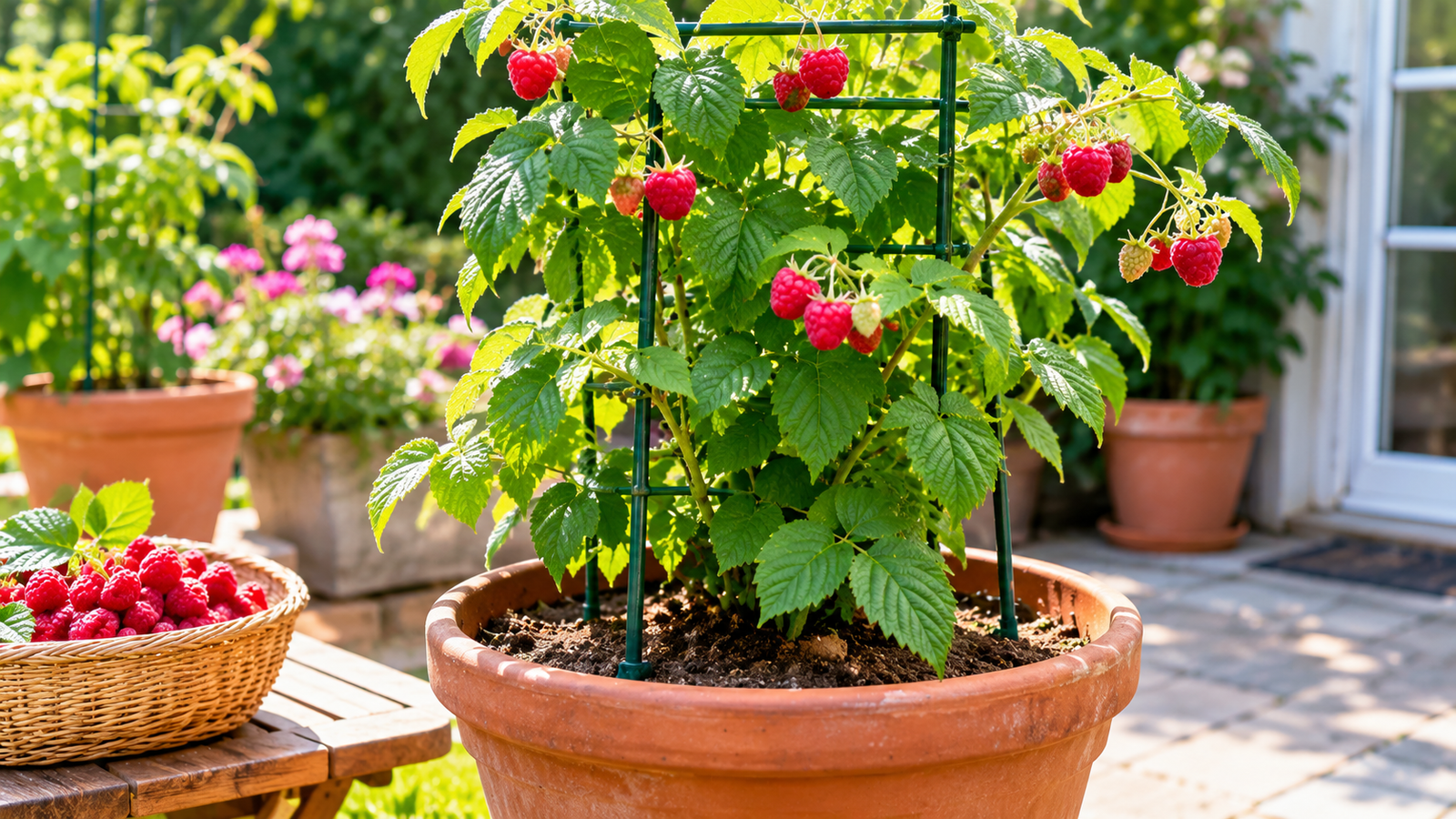
You do not need a large garden to grow raspberries. With a roomy container, a suitable variety, plenty of sunlight and regular watering, you can raise raspberry plants on a patio, balcony or sunny deck. Container growing also makes it easier to manage spreading canes and move pots when conditions change. The most important choices are selecting a variety suited to your climate and giving its roots enough space and drainage.
Can Raspberries Grow in Pots?
Yes. Raspberries can grow in large pots or planters, although they need more attention to watering and winter protection than plants growing in the ground. Choose a compact or container-suitable variety where possible. Some raspberry plants produce fruit on first-year canes (primocanes), while others fruit mainly on canes that grew the previous year (floricanes). Check the variety label so you know when to expect fruit and how to prune it.
Choose the Right Raspberry Variety
Look for a compact, productive variety recommended for your region. Primocane-fruiting types can be convenient because they may produce a late-summer or fall crop on the current season’s canes. Floricane-fruiting types generally produce on overwintered canes. The best choice depends on your local winter temperatures, summer heat, available space and the harvest season you prefer.
Buy healthy, disease-free plants from a reputable nursery. If you are comparing raspberry flavor and ripeness, our guide explains why raspberries sometimes taste sour.
What Size Pot Do Raspberries Need?
Use a sturdy container with several drainage holes. A pot around 18–24 inches wide and at least 18 inches deep is a practical starting point for one raspberry plant; larger containers provide more room for roots and help the growing medium dry out less quickly. Avoid putting several vigorous plants into one small pot.
- Choose a stable container that will not tip over as canes grow.
- Make sure excess water can drain freely from the base.
- Use a container made for outdoor growing and suitable for your climate.
- Do not let the pot sit permanently in a saucer full of water.
Best Soil for Container Raspberries
Fill the pot with a high-quality, well-draining potting mix intended for containers. Garden soil is usually too dense for pots and can compact, restrict drainage and introduce weeds or soil-borne problems. A mix that retains some moisture while allowing excess water to escape is ideal.
Raspberries generally prefer slightly acidic soil. If you are unsure about the pH of your growing medium, use a soil test rather than adding amendments by guesswork. Follow the potting mix and fertilizer labels, and avoid over-fertilizing.
How to Plant Raspberries in a Container
- Prepare the pot. Check that the drainage holes are open. Add a layer of potting mix so the plant will sit at the correct depth.
- Position the plant. Remove the raspberry plant carefully from its nursery pot. Gently loosen tightly circling roots without tearing them unnecessarily.
- Set the planting depth. Place the plant in the container at approximately the same depth it was growing in its nursery pot. Keep the crown at the appropriate level and do not bury the canes deeply.
- Backfill. Add potting mix around the roots and firm it gently to remove large air pockets. Leave a little space at the top for watering.
- Water thoroughly. Water until excess drains from the bottom. This settles the mix around the roots.
- Add support. Install a small trellis, stakes or a suitable cane support before the plant becomes crowded. Tie canes loosely with soft garden ties.
- Place in a suitable spot. Set the container where the plant receives strong sunlight and good air circulation.
How Much Sunlight Do Raspberries Need?
Most raspberry plants produce best with around 6–8 hours of direct sunlight a day. In regions with very hot summers, some afternoon shade can help reduce heat stress, particularly for plants in dark containers. Good airflow around the leaves also helps the plant dry after rain or watering.
Watering Raspberries in Pots
Container raspberries need consistent moisture, but their roots should not remain waterlogged. Check the potting mix regularly by feeling the top inch or two. Water deeply when the surface begins to dry, allowing excess water to drain away. During hot, windy weather or fruit development, containers may need watering more frequently.
- Check moisture more often during heat waves.
- Water the growing medium rather than repeatedly wetting the foliage.
- Use mulch on the surface to slow moisture loss, keeping it away from direct contact with the canes.
- Reduce watering during cool or dormant periods, but do not let the root ball dry out completely.
Feeding Container Raspberry Plants
Potting mix nutrients are gradually used or washed out through drainage. Feed according to the directions on a balanced fertilizer suitable for edible fruit plants and container use. Apply it during active growth at the recommended rate. Too much fertilizer can encourage leafy growth at the expense of fruit and may damage roots, so do not apply extra feed to compensate for poor growth without checking the plant’s needs.
Pruning and Supporting Raspberry Canes
Pruning depends on whether your variety is primocane-fruiting or floricane-fruiting. Identify the type before cutting canes:
- Primocane-fruiting varieties: Some gardeners cut all canes down to the soil during dormancy to produce one main crop on new canes the following season. If you want two crops, the pruning method is different; follow the variety’s specific instructions.
- Floricane-fruiting varieties: After these canes have fruited, remove the spent canes at ground level while preserving healthy new canes for the next crop.
- Both types: Remove dead, damaged or diseased canes and keep the plant open enough for light and airflow.
Use clean, sharp pruning tools and secure tall canes loosely to their support. For variety-specific pruning advice, consult a local university extension or gardening authority.
Winter Care for Raspberries in Containers
Roots in containers are more exposed to cold than roots in the ground. In cold-winter areas, move the pot to a sheltered, unheated location such as a protected garage after the plant enters dormancy, if practical. Another option may be to insulate the container or group it with other pots in a sheltered spot. Keep the growing medium slightly moist during dormancy, not saturated.
In mild climates, the plant may remain outdoors with protection from drying winds and extreme temperature swings. Follow local advice for your raspberry variety because winter hardiness differs.
When Will Container Raspberries Produce Fruit?
Timing depends on the variety, the age and health of the plant, and your growing climate. A healthy nursery plant may establish and fruit sooner than a small young plant, but some plants need a full growing season to build strong roots and canes. Primocane-fruiting varieties may produce fruit in late summer or fall on new growth, while floricane-fruiting varieties typically crop on canes that overwintered. Check the plant label for its expected harvest window.
Common Problems When Growing Raspberries in Pots
Leaves turning yellow
Yellowing can result from overwatering, poor drainage, nutrient issues or other plant stress. Check the moisture level and drainage first. Avoid adding fertilizer until you have considered the growing conditions.
Leaves wilting in hot weather
Containers can dry quickly in heat and wind. Check the potting mix, water thoroughly if it is dry, and consider temporary afternoon shade during extreme heat.
Few or no berries
Possible causes include an unsuitable variety, insufficient sunlight, incorrect pruning, plant immaturity or weather damage during flowering. Confirm the cane type and its pruning requirements.
Canes becoming crowded
Remove spent or weak canes according to the variety’s pruning method and keep healthy canes supported. Good spacing improves access for picking and airflow.
Fruit becoming soft or moldy
Pick ripe berries regularly and avoid leaving damaged fruit on the plant. Improve airflow and water at the soil level where possible. For post-harvest handling, read our guide to freezing raspberries without crushing them.
Frequently Asked Questions
Can I grow one raspberry plant in a pot?
Yes. One plant can grow in a suitably large container. Some varieties are self-fertile, but check the plant label for pollination requirements and expected yield.
Can raspberries grow on a balcony?
Yes, if the balcony receives enough sunlight, can support the weight of a large pot and has room for canes and a support. Protect the container from strong winds and check moisture frequently.
Should I repot raspberries?
Repot when the plant becomes crowded, roots fill the container or the potting mix no longer drains well. Refreshing the growing medium and moving to a larger pot may help, depending on the plant’s condition.
Can I grow raspberries in a grow bag?
Yes, a durable grow bag with adequate volume and drainage can work. It may dry out faster than a rigid pot, so monitor moisture carefully and provide support for the canes.
Do raspberries need a trellis in a pot?
Many varieties benefit from support, especially when canes become tall or carry fruit. Use a stable stake or compact trellis suited to the container and tie canes loosely.
Final Tips for a Healthy Container Raspberry Plant
Choose a variety suited to your region, give it a roomy pot with good drainage, provide plenty of sunlight and keep the root zone consistently moist without waterlogging it. Learn whether your plant fruits on primocanes or floricanes before pruning, and protect the container during severe winter weather. With the right setup and regular care, a patio or balcony can become a productive little raspberry-growing space.
Further Reading
For additional regional growing guidance, see the University of Minnesota Extension guide to growing raspberries in the home garden.