
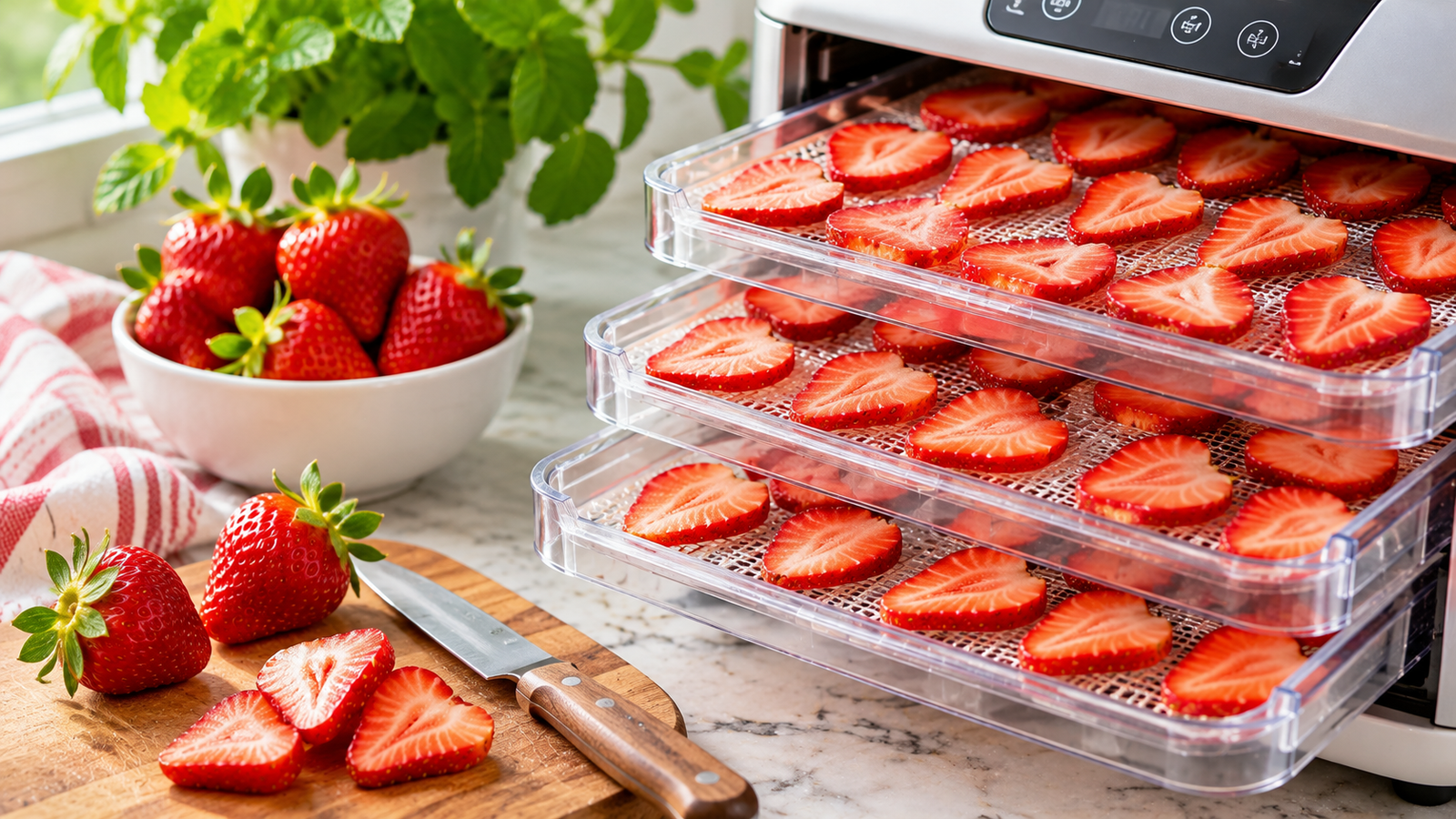
Dehydrated strawberries are sweet, chewy fruit snacks that are easy to add to cereal, yogurt, trail mix and baked goods. You can make them at home with a food dehydrator, and a low-temperature oven may work if it can maintain a suitable drying temperature. The keys are choosing ripe fruit, slicing it evenly, allowing good airflow and checking that the berries are dry all the way through before storage.
Quick Guide: How to Dehydrate Strawberries
Wash and dry firm, ripe strawberries, remove the green caps, and slice them about ¼ inch thick. Arrange the slices in a single layer on dehydrator trays without overlapping. Dry at 130°F to 140°F (54°C to 60°C), following your appliance instructions, until the pieces are pliable and leathery with no visible moisture when pressed. Drying time varies widely with slice thickness, airflow, humidity and the machine; small slices may take around 9 hours, while whole berries can take much longer.
What You Need
- Fresh, ripe strawberries without mold or damaged areas
- Colander and clean towel
- Paring knife or strawberry huller
- Food dehydrator with trays, or an oven that can hold a low temperature
- Airtight glass or food-safe plastic containers for conditioning and storage
How to Prepare Strawberries for Dehydrating
1. Choose good-quality fruit
Select strawberries that are fully ripe, firm and evenly colored. Drying concentrates flavor but does not improve poor-quality fruit, so discard moldy, leaking or badly bruised berries.
2. Wash and dry them
Rinse the berries under cool running water and drain well. Pat them dry with a clean towel. Remove the green caps after washing and trim away any damaged areas. For more produce-handling advice, see our guide on how to wash fresh berries.
3. Slice evenly
Cut medium and large strawberries into slices about ¼ inch (6 mm) thick. Similar thickness helps the pieces dry at a more even rate. Small berries can be halved or left whole, but whole fruit takes longer because less surface area is exposed to moving air.
How to Dehydrate Strawberries in a Food Dehydrator
- Arrange the slices: Place strawberry slices in a single layer on the dehydrator trays. Leave space around each piece so air can circulate; do not overlap them.
- Set the temperature: Use approximately 130°F to 140°F (54°C to 60°C), following the manufacturer’s instructions for fruit.
- Dry patiently: Check the berries as they dry. Small, thin slices may take around 9 hours, while thicker pieces and whole berries can take substantially longer, sometimes up to 24–36 hours.
- Rotate if needed: If your dehydrator dries unevenly, rotate trays according to the appliance manual. Some slices may finish before others, so remove dry pieces and continue drying the rest.
- Check doneness: Properly dried strawberry slices should feel pliable and leathery, not wet or sticky. Press a cooled piece between your fingers; there should be no beads of moisture.
These temperature and doneness guidelines are consistent with Penn State Extension’s instructions for drying strawberries. Actual time depends on the fruit and equipment, so use texture rather than the clock alone.
Can You Dehydrate Strawberries in the Oven?
Possibly, if your oven can maintain a low, steady temperature suitable for drying—around 140°F (60°C)—and you can provide adequate airflow. Arrange slices in a single layer on racks or trays and monitor them closely. A conventional oven may take considerably longer than a dehydrator because airflow is usually less effective. If your oven cannot hold a low temperature reliably, it is not a good tool for this job. Do not use a microwave to dehydrate strawberries.
For general food-drying guidance, consult University of Minnesota Extension’s home-drying guidance.
How to Tell When Dried Strawberries Are Ready
Cool a few pieces before testing, since warm fruit can feel softer than it will after cooling. Strawberry slices should be leathery and pliable, with no visible moisture when pressed. If you find wet spots, beads of moisture or pieces that feel damp inside, return them to the dehydrator and continue drying. Do not package fruit while it is still warm.
Conditioning Dried Strawberries Before Storage
Conditioning helps equalize any remaining moisture between pieces. Let the dried strawberries cool completely, then place them loosely in a clean, airtight glass or food-safe plastic container for several days. Check the container daily for condensation and shake it gently to separate the pieces. If moisture appears, put the strawberries back in the dehydrator and dry them further before repeating the conditioning process.
How to Store Dehydrated Strawberries
- Once conditioned, store the fruit in airtight containers or vacuum-sealed bags.
- Keep containers in a cool, dark, dry place away from heat and sunlight.
- For longer quality retention, refrigeration or freezer storage can help protect dried berries from humidity and quality loss.
- Check stored fruit occasionally. Discard it if you notice mold, off odors or signs of spoilage.
Storage life depends on how thoroughly the fruit was dried, packaging, humidity and temperature. Avoid promising a fixed shelf life for home-dried berries; check them regularly and use them while their flavor and texture remain good.
Ways to Use Dehydrated Strawberries
- Eat the slices as a chewy snack.
- Break them into pieces and add to granola or trail mix.
- Sprinkle over oatmeal, cereal, yogurt or chia pudding.
- Fold small pieces into muffin, pancake or quick-bread batter.
- Blend fully dried pieces into a powder to flavor frostings, smoothies or homemade snack mixes.
- Add them to dessert toppings, milkshakes or homemade chocolate bark.
If you have extra fresh fruit, you can also freeze strawberries for smoothies and baking or cook them into an easy mixed berry compote.
Common Mistakes to Avoid
- Uneven slices: Thick and thin pieces finish at different times. Aim for consistent thickness.
- Overcrowded trays: Overlapping slices block airflow and slow drying.
- Using fruit that is already spoiled: Drying is not a way to rescue moldy or decaying strawberries.
- Relying only on a timer: Drying time changes with berry size, humidity and equipment. Check the texture and moisture.
- Packaging warm fruit: Let the slices cool before conditioning and storage to avoid trapped condensation.
- Skipping conditioning: Moisture can be unevenly distributed. Check for condensation during the conditioning period.
Frequently Asked Questions
How long does it take to dehydrate strawberries?
It depends on slice thickness, berry size, temperature, humidity and airflow. Thin slices may take around 9 hours, while whole berries can take up to 24–36 hours. Start checking early and continue until the fruit is properly dry.
What temperature is best for dehydrating strawberries?
A commonly recommended range is 130°F to 140°F (54°C to 60°C). Follow the directions for your dehydrator and verify that the appliance maintains its set temperature.
Do strawberries need pretreatment before drying?
For the simple sliced-strawberry method, Penn State Extension’s guidance does not require an additional pretreatment. Wash the fruit, remove the caps and slice it evenly before drying.
Should dried strawberries be crispy?
Not necessarily. Strawberry slices are often pliable and leathery when adequately dried. They can be dried further if you prefer a crisper snack, but check carefully so they do not scorch.
Can I dry whole strawberries?
Small strawberries can be dried whole, but they take much longer than sliced berries because their skins limit moisture loss. Halving or slicing produces a more predictable result.
Can I store dried strawberries in a jar?
Yes, once they are completely cool and have been conditioned. Use a clean, airtight jar and store it in a cool, dark, dry place. Check for condensation or spoilage during storage.
Make the Most of Strawberry Season
Dehydrating is a useful way to turn ripe strawberries into a portable snack and a versatile pantry ingredient. Start with firm fruit, slice it evenly, dry it with controlled heat and airflow, and condition it before packing. With careful moisture checks and airtight storage, homemade dried strawberries can add concentrated berry flavor to snacks and recipes.
Food-preservation note: Home drying results vary with equipment and conditions. Follow current tested extension guidance and your appliance instructions. Do not store fruit that shows signs of moisture buildup or spoilage.