
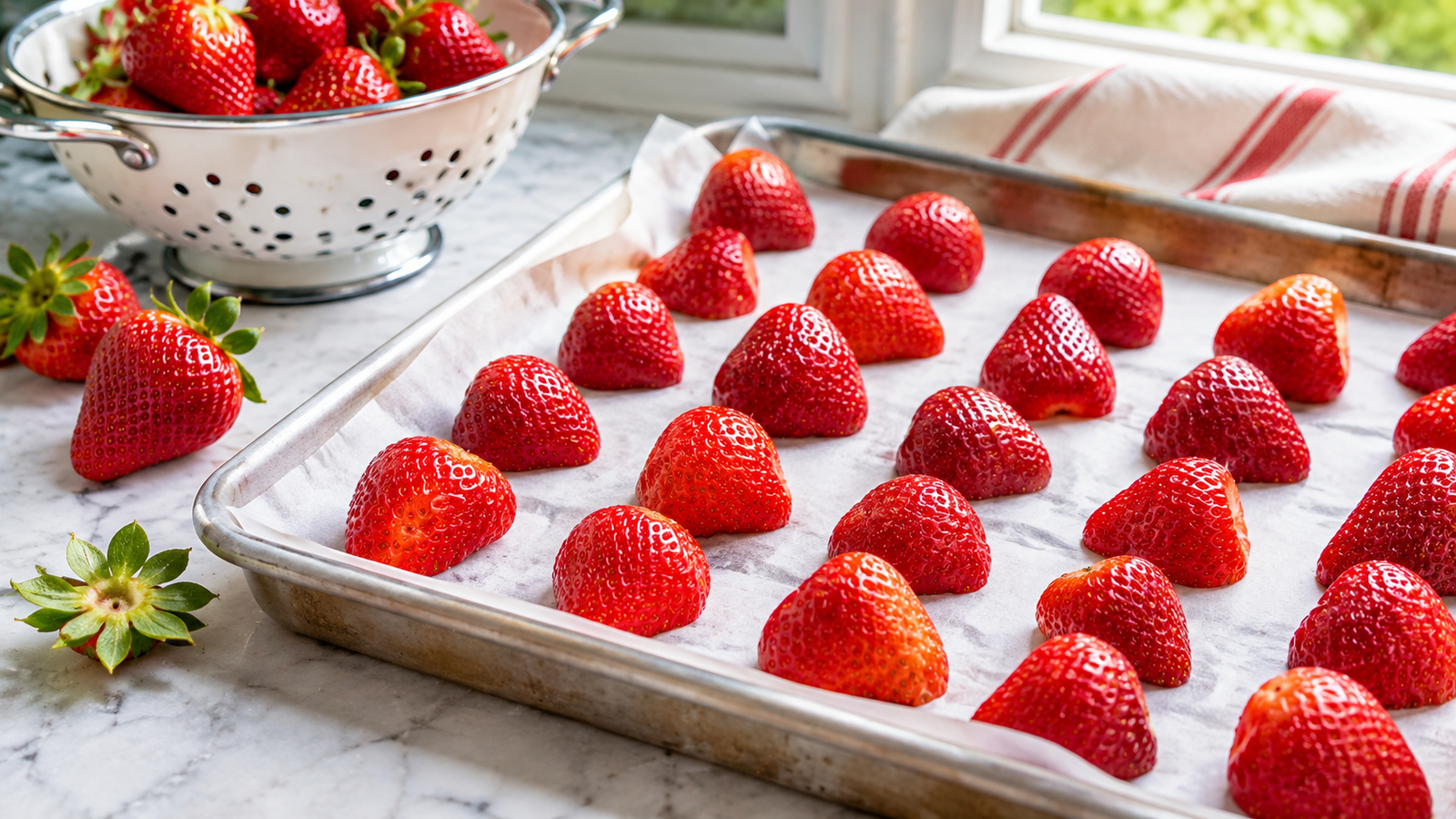
Freezing strawberries is one of the easiest ways to preserve ripe berries for smoothies, baking, sauces and desserts. The best everyday method is to wash and dry the fruit, remove the green tops, freeze the berries in a single layer until firm, and then pack them into airtight freezer bags or containers. This tray-freezing step keeps individual berries from becoming one solid block.
Can You Freeze Fresh Strawberries?
Yes. Strawberries can be frozen whole, sliced, crushed or puréed. You can freeze them with no added sugar, pack them with sugar, or use a syrup pack. Unsweetened tray-frozen berries are especially handy when you plan to use the fruit in smoothies, baking or cooked recipes. Sugar or syrup packs are options when you want a sweeter product for desserts. Penn State Extension’s strawberry freezing guide explains these methods in detail.
What You Need
- Fresh, ripe, firm strawberries
- A colander and clean kitchen towel or paper towels
- A paring knife or strawberry huller
- A rimmed baking sheet or freezer-safe tray
- Parchment paper (optional)
- Freezer-safe bags or airtight containers
- A permanent marker for labeling and dating
How to Freeze Strawberries Step by Step
1. Choose ripe, firm berries
Pick strawberries that are fully ripe, fragrant and firm, with a deep red color. Remove fruit that is moldy, badly bruised, leaking or underripe. Freezing preserves the quality of the fruit you start with, so sort carefully before preparing the batch.
2. Rinse and drain
Rinse the berries under cool running water in a colander. Do not leave them soaking in a bowl of water. Drain well and gently pat dry with a clean towel. Removing excess surface moisture helps prevent ice from building up around the fruit.
3. Remove the green tops
After washing, remove the leafy caps and any tough white core. Leave small strawberries whole. Halve or quarter very large berries so pieces are more similar in size and easier to portion later.
4. Arrange in a single layer
Line a rimmed baking sheet with parchment if desired. Spread the strawberries across the tray with a little space between pieces. Avoid piling them up; separated pieces freeze individually and are easier to use in small amounts.
5. Freeze until solid
Place the tray flat in the freezer. Freeze until the berries are firm all the way through, often around one to two hours depending on their size and your freezer. If they are still soft or sticking to the tray, give them more time.
6. Pack, label and return to the freezer
Transfer the frozen berries promptly to freezer-safe bags or rigid containers. Press excess air from bags before sealing. Label each package with the contents and date, then return it to the freezer. Keep the freezer at 0°F (-18°C) or below for frozen food storage.
Three Ways to Pack Strawberries for Freezing
Unsweetened dry pack
Use the tray-freezing method above, then transfer the solid berries to bags or containers. This is a practical option for smoothies, muffins, sauces and cooking because you can take out only what you need. No sugar is required.
Sugar pack
For a sweeter pack, mix prepared whole, sliced or crushed strawberries with sugar. A traditional guideline from the National Center for Home Food Preservation is ¾ cup sugar for 1 quart (about 1⅓ pounds) of strawberries. Stir until the sugar begins to dissolve, or let the mixture stand for about 15 minutes, then pack into freezer containers. Leave room for expansion and follow tested guidance for the container you use. See the National Center for Home Food Preservation instructions.
Syrup pack
Strawberries can also be covered with a chilled sugar syrup before freezing. This method is generally suited to fruit intended for desserts where a sweeter, softer result is welcome. Use a tested syrup proportion and leave adequate headspace in the container because liquid expands as it freezes. For most everyday cooking uses, the unsweetened dry pack is simpler.
Should You Freeze Strawberries Whole or Sliced?
Both work. Whole small berries are convenient for smoothies and sauces. Halved or sliced berries are easier to measure for baking, oatmeal and toppings, and they may thaw more quickly. If your strawberries are unusually large, cutting them into pieces helps them freeze and portion more evenly.
How Long Do Frozen Strawberries Last?
Keep strawberries continuously frozen at 0°F (-18°C) or below. For the best flavor and texture, use them within about 8 to 12 months. They may remain safe longer if kept frozen continuously, but quality can decline over time. Protect the fruit from air exposure and temperature changes to reduce freezer burn and loss of flavor.
How to Thaw Frozen Strawberries
- For smoothies: Add berries directly from the freezer; thawing is usually unnecessary.
- For sauces and compotes: Cook from frozen over gentle heat, allowing extra time for the fruit to release its juices.
- For baking: Many recipes allow frozen berries to be folded directly into the batter. Follow the recipe and avoid overmixing.
- For chilled toppings: Thaw in a covered container in the refrigerator and use the fruit with its released juices.
Frozen strawberries become softer after thawing because ice crystals affect the fruit’s cell structure. They are usually not as firm as fresh berries, so they are better for blended, cooked or baked uses than for recipes that depend on a crisp fresh texture.
Best Ways to Use Frozen Strawberries
- Blend them into smoothies or smoothie bowls.
- Cook them into strawberry sauce, compote or jam.
- Add them to muffins, quick breads and pancakes.
- Use them in oatmeal, yogurt or chia pudding.
- Make fruit pops, sorbet or a simple dessert topping.
For a quick breakfast, pair frozen strawberries with our easy blueberry pancakes. You can also make a quick mixed berry compote with a combination of frozen berries.
Common Mistakes to Avoid
- Freezing wet berries: Drain and dry them well before tray freezing.
- Skipping the tray step: Packing fresh berries directly together can make a hard clump that is difficult to portion.
- Overfilling containers: Leave headspace where needed, especially for sugar or syrup packs.
- Leaving bags loosely sealed: Excess air encourages freezer burn and quality loss.
- Freezing spoiled fruit: Remove moldy, damaged or leaking berries before packing.
- Expecting fresh texture after thawing: Frozen strawberries soften; plan to use them in smoothies, baking or cooked dishes.
Frequently Asked Questions
Do strawberries need to be blanched before freezing?
No. Strawberries are generally frozen without blanching. Wash, drain, remove the caps and pack them using a suitable method.
Can I freeze strawberries without sugar?
Yes. Whole or sliced strawberries can be frozen without added sugar. Tray freezing first helps keep the pieces separate.
Can I freeze strawberries in their original store container?
It is better to prepare and pack them in freezer-safe bags or containers designed to protect food from air and moisture loss. The original produce carton is not usually suitable for long-term freezer storage.
Why are my strawberries mushy after thawing?
Freezing forms ice crystals that damage some of the fruit’s cell structure. As the berries thaw, they release juice and soften. This is normal and makes them especially useful for sauces, smoothies and baking.
Can I refreeze thawed strawberries?
For best quality, portion berries before freezing so you only thaw what you need. If fruit has thawed in the refrigerator and remained safely cold, it can generally be refrozen, although texture and quality may decline. Do not refreeze fruit that has been left at room temperature for an extended period.
Make Strawberry Season Last Longer
With ripe fruit, a little preparation and a flat tray, you can freeze strawberries in portions that are easy to use throughout the year. Choose the unsweetened tray-pack method for everyday flexibility, label each package, and remember that thawed berries are best in recipes where a softer texture is expected.
Food preservation note: These steps are for freezing quality fruit, not for canning or shelf-stable storage. Keep frozen strawberries continuously frozen and follow current food-preservation guidance for your freezer and containers.