
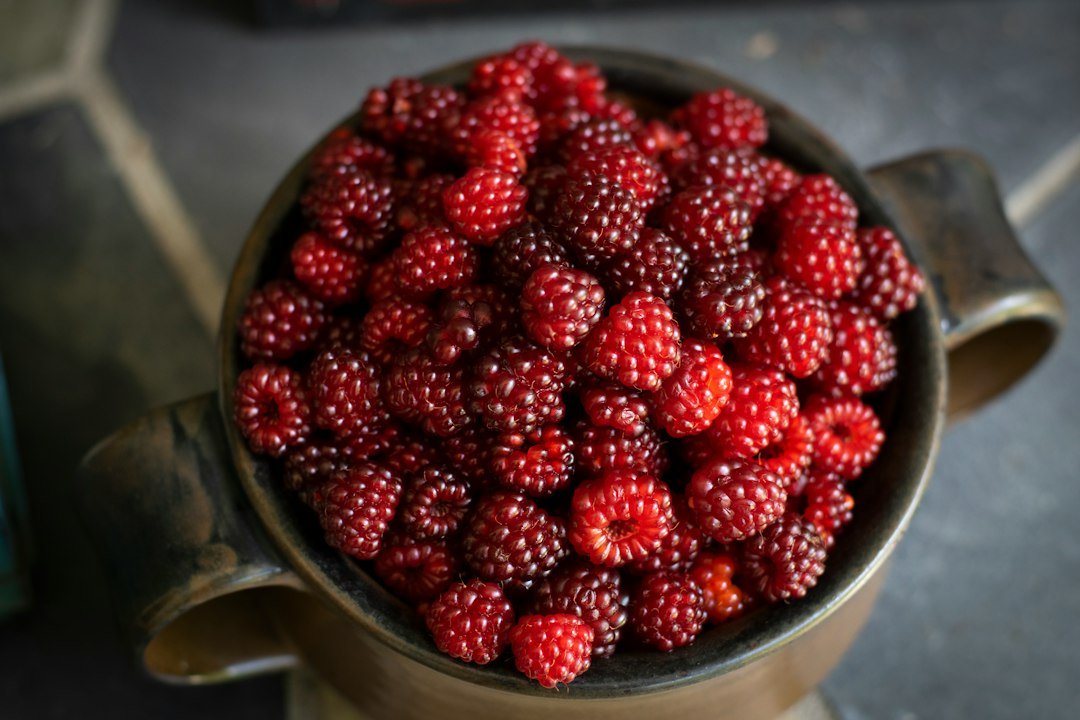
Blackberries and black raspberries can look similar at first glance, but they are different fruits. Both belong to the Rubus genus and have clustered drupelets, yet their color, shape, flavor and growing habits offer useful clues. If you are comparing berries at a farm stand or identifying a plant, this guide explains the main differences.
Blackberry vs. Black Raspberry: Quick Differences
| Feature | Blackberry | Black raspberry |
|---|---|---|
| Color | Usually glossy black or deep purple when ripe | Deep purple-black when ripe, often with a pale bloom |
| Shape | Often larger and elongated or rounded | Usually smaller and more rounded |
| When picked | The core usually comes away with the fruit | The hollow center usually remains after picking |
| Flavor | Sweet-tart, juicy and variable by cultivar | Often rich, tangy and distinctly aromatic |
1. Look at the Inside of the Berry
One of the easiest clues is the center. When a ripe blackberry is picked, the receptacle generally stays attached, so the fruit has a solid center. A black raspberry typically separates from its receptacle, leaving a hollow center. Handle wild berries gently because this feature can be difficult to see if the fruit is crushed.
2. Compare Their Shape and Size
Blackberries are commonly larger and may be elongated, although varieties differ. Black raspberries are often smaller, rounder and made up of tightly packed drupelets. Size alone is not a reliable identification method because cultivated varieties can vary considerably.
3. Notice the Flavor
Both fruits can be sweet and tart. Blackberries often have a juicy, refreshing flavor that ranges from mildly sweet to sharp. Black raspberries are frequently described as more concentrated and aromatic. Ripeness, growing conditions and cultivar all affect taste, so flavor should support—not replace—other identification clues.
4. Understand How the Plants Grow
Blackberries and black raspberries grow on brambles, but their canes and growth habits vary by species and cultivar. Some blackberry plants have trailing canes, while others grow upright. Black raspberry canes often arch and may develop a bluish-white coating. Do not handle unknown brambles carelessly: stems may have thorns, and plant identification should use several characteristics rather than one.
Nutrition and Ways to Eat Them
Both berries provide dietary fiber and naturally occurring plant compounds, including anthocyanin pigments that contribute to their dark color. Enjoy them fresh, frozen, stirred into yogurt, blended into smoothies or cooked into sauces and preserves. Wash berries under cool running water just before eating and discard fruit that is moldy or spoiled.
For more berry comparisons and ideas, read our guides to salmonberry vs. cloudberry, what salmonberries taste like and what a mayhaw berry is.
Can You Identify Wild Black Berries by Color Alone?
No. Several wild plants produce dark berries, and not all are edible. Never eat a wild berry based only on its color, a photo match or an online description. Confirm the plant using a reliable regional field guide or local expert, and avoid berries from roadsides or areas that may have been treated with chemicals.
Frequently Asked Questions
Are black raspberries the same as blackberries?
No. They are related members of the Rubus genus, but they are different fruits. The hollow center of a picked black raspberry is a helpful distinguishing feature.
Which berry is sweeter?
Neither is always sweeter. Taste depends on the variety and ripeness. Sample fully ripe, safely sourced fruit if you want to compare flavor.
Can I substitute black raspberries for blackberries in recipes?
Usually, yes. They can be used in smoothies, sauces, jams and baked goods. Their flavor and moisture may differ, so adjust sweetener and cooking time to taste.
Final Takeaway
To tell a blackberry from a black raspberry, check the center after picking, then consider shape, flavor and plant growth. A blackberry usually has a solid center, while a black raspberry is typically hollow. Use several clues together, and never eat an unidentified wild berry.
1 thought on “Blackberry vs Black Raspberry: Key Differences to Know”