
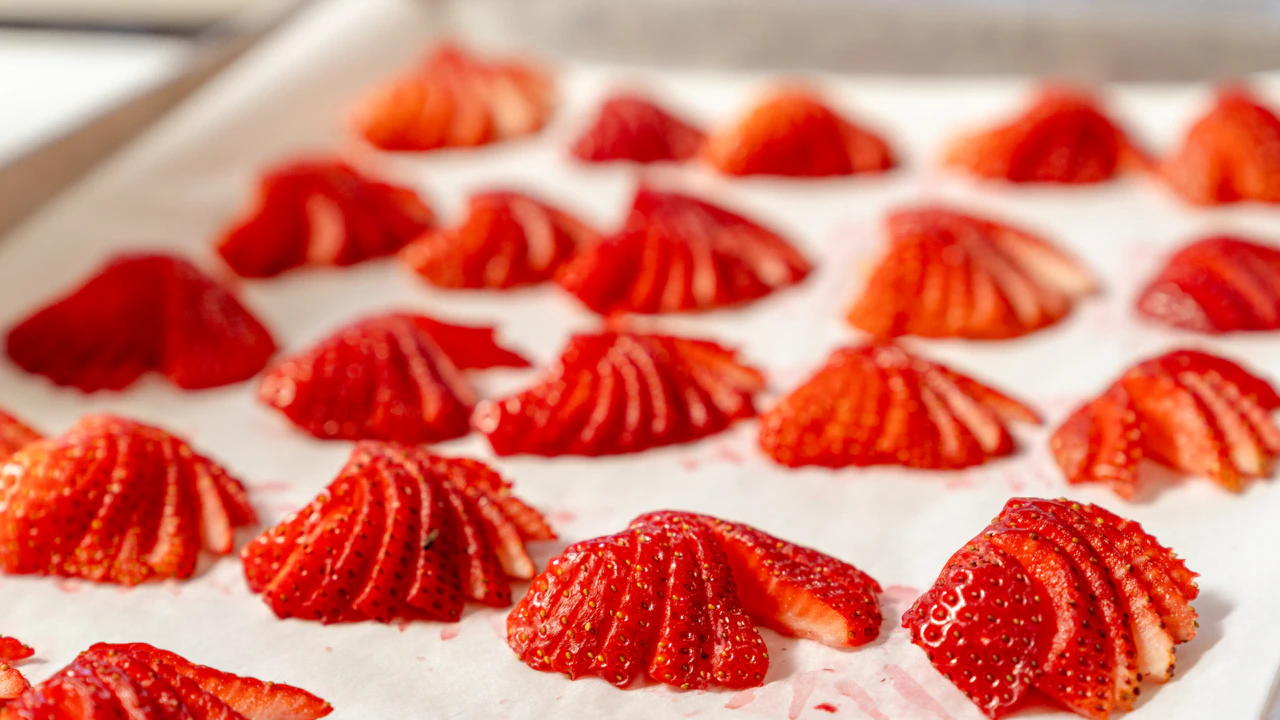
Fresh berries are easy to enjoy when they are in season, but a bag of frozen berries can be just as convenient for smoothies, oatmeal, baking, sauces, and quick desserts. The trick is to freeze them so they stay separate instead of turning into one icy block.
This practical guide explains how to freeze fresh berries without clumping, how to prepare different berry types, how to package them for the freezer, and how to use them later.
Why berries clump in the freezer
Berries stick together when moisture on their surfaces freezes and forms ice between the fruit. Packing damp berries straight into a bag makes this more likely. A large, tightly packed batch can also freeze slowly, which can soften the fruit’s texture.
The simple solution is to dry the berries well, freeze them in a single layer first, and transfer them to airtight freezer packaging only after they are solid.
What you need
- Fresh, ripe berries without mold or badly bruised spots
- A colander and clean paper towels or a clean kitchen towel
- A rimmed baking sheet or shallow tray
- Parchment paper, if your tray tends to stick
- Freezer-safe bags or airtight containers
- A marker or labels for the berry type and date
How to freeze fresh berries without clumping
1. Sort and prepare the berries
Remove leaves, stems, underripe fruit, and any berries that are moldy or badly damaged. Hull strawberries and cut very large ones into halves or slices if that suits how you plan to use them. Blueberries, raspberries, and blackberries can usually be frozen whole.
2. Rinse gently and dry completely
Rinse berries gently under cool, running water and avoid soaking delicate fruit. Spread them on a clean towel and pat carefully. Let them air-dry until no visible moisture remains. Do not freeze wet berries: surface water is one of the main reasons berries freeze together.
For food safety, do not use soap, detergent, or commercial produce wash on fruit. The FDA recommends rinsing produce under running water and removing damaged areas.
3. Arrange them in one layer
Line a rimmed baking sheet with parchment if needed. Spread the berries out so they are not touching or piled on top of one another. If you have a large amount, use two trays or work in batches.
4. Freeze until firm
Place the tray flat in the freezer and freeze the berries until solid. Small berries may firm up in a few hours; larger strawberry pieces can take longer. The exact time depends on berry size, tray material, and how cold your freezer is. Keep the freezer at 0°F (-18°C) or below for frozen-food storage.
5. Transfer quickly to freezer bags or containers
Once the berries are hard, move them into freezer-safe bags or airtight containers. Remove as much air as practical from bags without crushing the fruit. Divide them into recipe-sized portions so you can take out only what you need.
6. Label and return them to the freezer
Write the berry type and freezing date on each package. Return the packages promptly to a freezer at 0°F (-18°C) or below. For best quality, the University of Minnesota Extension advises using frozen fruit within about 8–12 months; quality can decline over time even when food remains frozen.
Tips for different types of berries
- Blueberries: Remove stems and leaves, and freeze the berries whole. They are handy for pancakes, muffins, oatmeal, and smoothies.
- Strawberries: Remove the green tops. Freeze whole small strawberries or slice larger ones first. Expect thawed strawberries to be softer than fresh ones.
- Raspberries and blackberries: Handle gently because they crush easily. Give them plenty of space on the tray and avoid stacking them while they freeze.
- Cranberries: Sort out soft or damaged fruit, rinse and drain, then tray-freeze before packing. Frozen cranberries work well in sauces, baking, and cooked dishes.
- Mixed berries: You can freeze a blend together, but make sure the pieces are similarly dry and spread in a single layer. Alternatively, freeze each type separately and mix them after they are solid.
Should you add sugar before freezing berries?
No. For smoothies, oatmeal, sauces, and most everyday cooking, berries can be frozen without added sugar. Unsweetened freezing makes it easier to control sweetness when you use them later. Sugar or syrup packs are optional methods for people who prefer them for particular desserts or textures.
If you are freezing berries for a recipe, consider portioning them by the amount the recipe needs. That is often more useful than adding sugar to the entire batch.
How to use frozen berries
- Smoothies: Add berries straight from the freezer; they help make the drink thick and cold.
- Muffins and pancakes: Use frozen berries directly in many batters. Fold them in gently to reduce streaking, and follow the recipe’s baking directions.
- Oatmeal and yogurt: Stir in a small portion and let it thaw, or warm it briefly first.
- Sauces and toppings: Heat berries in a saucepan with a little water and optional sweetener until they soften and release their juices.
- Berry desserts: Thawed berries are usually softer because freezing changes their cell structure. They are often better in cooked dishes than as a firm, fresh-looking garnish.
Common mistakes to avoid
- Freezing berries while wet: Dry them thoroughly before tray-freezing.
- Skipping the tray-freezing step: Packing fresh berries directly into a bag often creates a clump.
- Overfilling the tray: A single layer lets cold air circulate around the fruit.
- Using thin storage bags: Choose freezer-grade packaging and remove excess air to reduce freezer burn.
- Refreezing berries repeatedly: Take out a measured portion and keep the rest frozen to protect quality.
- Assuming freezing sterilizes fruit: Freezing slows microbial growth but does not reliably kill all germs. Handle and wash produce safely before preparation.
Frequently asked questions
Can I freeze berries without washing them?
Guidance can vary by berry and intended use. Some extension resources recommend freezing certain blueberries dry and washing them before use to preserve texture. For a straightforward all-purpose method, rinse berries gently before preparation and dry them completely; follow specific guidance for the fruit you have and keep it separate from unclean surfaces.
Do frozen berries need to thaw before a smoothie?
No. Add them frozen. If you need berries for a cold topping or a recipe that calls for thawed fruit, thaw only the amount needed in the refrigerator.
How long do frozen berries last?
Keep them continuously frozen at 0°F (-18°C) or below. For best flavor and texture, aim to use them within about 8–12 months and label each package with the date.
Make your berry supply last longer
Tray-freezing is a small extra step that makes a big difference: dry the berries, spread them out, freeze until solid, and then package them in portions. It works for many common berries and gives you fruit ready for smoothies, baking, breakfast, and sauces throughout the year.
If you grow your own fruit, you may also like our guides to growing cranberries at home and choosing how many blueberry bushes to plant. For more context on fitting berries into your routine, see our guide to eating two cups of berries a day.
Sources and further reading
- Illinois Extension: Freezing Fruits
- University of Minnesota Extension: How to Freeze Fruit Safely
- U.S. Food and Drug Administration: 7 Tips for Cleaning Fruits and Vegetables
Featured image photo credit: Peter Muniz via Unsplash.
4 thoughts on “How to Freeze Fresh Berries Without Clumping: Step-by-Step Guide”