
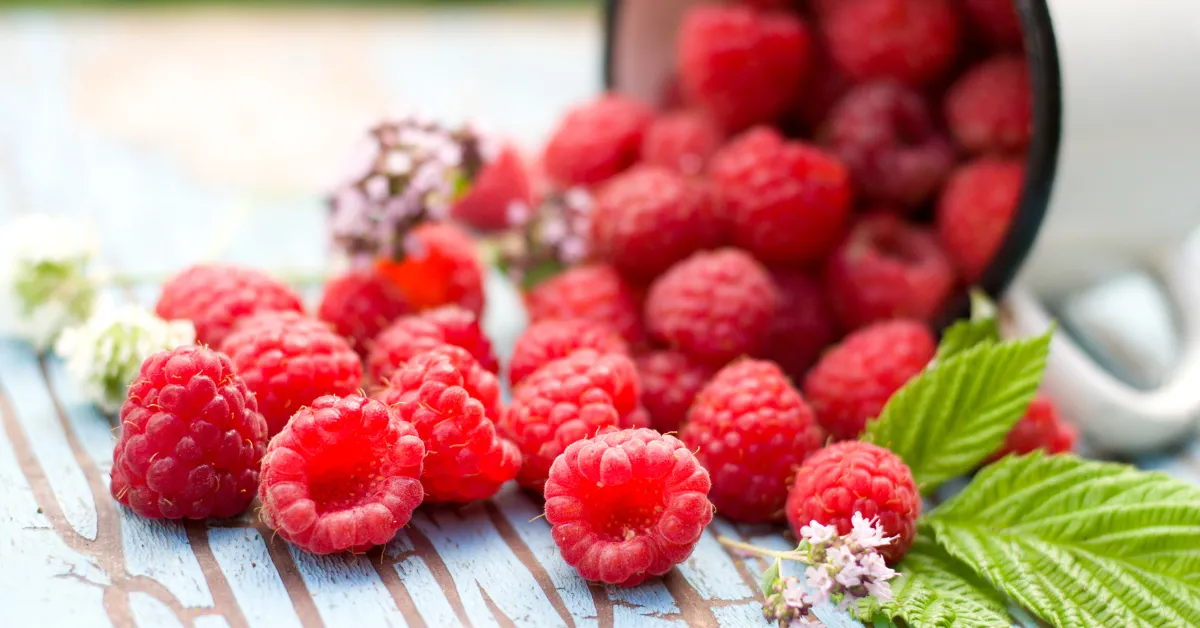
The raspberry is one of America’s most beloved fruits — and one of its most ancient. Long before cultivated varieties appeared in grocery stores, wild raspberries grew across the continent from Alaska to the Appalachians, feeding Indigenous peoples, wildlife, and eventually European settlers who recognized in them a fruit worth cultivating. This is the complete guide to one of North America’s greatest berries.
This guide covers everything about raspberries: the native American species and how they differ from European cultivated varieties, full nutritional breakdown, six science-backed health benefits, red versus black raspberry comparison, how to grow them at home, storing and freezing, five recipes, and a detailed FAQ. Whether you are a gardener, a health enthusiast, a forager, or simply someone who loves raspberries in their morning yogurt — this is your definitive resource.
What Is a Raspberry? Botanical Profile
Raspberries belong to the genus Rubus in the rose family (Rosaceae) — the same genus that includes blackberries, salmonberries, and boysenberries. They are aggregate fruits, meaning each berry is composed of many small individual drupelets clustered together around a central core. The defining characteristic that separates raspberries from blackberries is what happens when you pick them: a ripe raspberry separates cleanly from its receptacle (core), leaving a hollow center. A blackberry comes off with the core attached.
The most important species for American growers and foragers are the native red raspberry (Rubus idaeus strigosus), the native black raspberry (Rubus occidentalis), and the European red raspberry (Rubus idaeus idaeus) from which most cultivated varieties descend.
Genus: Rubus | Family: Rosaceae | Native American species: R. idaeus strigosus (red), R. occidentalis (black)
Types: Red, black, golden/yellow | Season: June–October depending on region | USDA Zones: 3–9
Native American Raspberry vs European Raspberry
Most people do not realize there is a meaningful distinction between the raspberries native to North America and the European varieties that dominate commercial cultivation. Here is a clear breakdown:
| Feature | Native American red raspberry | European red raspberry |
|---|---|---|
| Scientific name | Rubus idaeus strigosus | Rubus idaeus idaeus |
| Origin | Native to North America | Native to Europe and Asia |
| Berry size | Smaller, more delicate | Larger, firmer |
| Flavor | More intense, tarter | Sweeter, milder |
| Prickles | Dense, bristly prickles | Fewer, stouter thorns |
| Where found | Wild across North America | Cultivated farms, gardens |
| Antioxidants | Generally higher (wild) | Lower (cultivated) |
The native American raspberry tends to have a more intense, complex flavor than cultivated European-derived varieties — the same pattern seen when comparing wild blueberries to cultivated ones. If you encounter wild raspberries while foraging, they are worth picking even if the berries are small, because the flavor is often significantly better than anything from the grocery store.
Red Raspberry vs Black Raspberry: Full Comparison
Black raspberries (Rubus occidentalis) are a distinct native North American species — not a color variant of the red raspberry, and not a blackberry. They are one of the most nutritionally impressive berries on the planet, containing anthocyanin levels that rival or exceed blueberries, yet they remain largely unknown outside of parts of the Pacific Northwest and Appalachia where they grow wild.
| Feature | Red raspberry | Black raspberry |
|---|---|---|
| Species | Rubus idaeus | Rubus occidentalis |
| Color | Bright red | Deep purple-black |
| Taste | Sweet-tart, bright | Richer, deeper, more complex |
| Anthocyanins | Moderate | Among the highest of any berry |
| Hollow when picked? | Yes | Yes (key difference from blackberry) |
| Native range | North America and Europe | Eastern North America |
| Availability | Widely available fresh and frozen | Limited — mostly frozen or from Oregon farms |
| Cancer research | Some studies | Significant research — especially esophageal cancer |
| Best for | Fresh eating, jams, baking | Smoothies, supplements, baking |
Black raspberries are the subject of significant cancer prevention research. Studies at Ohio State University’s Comprehensive Cancer Center have investigated black raspberry extracts for their potential to inhibit the progression of esophageal, colon, and oral cancers. While this research is ongoing and black raspberries are not a cancer treatment, the concentration of ellagitannins and anthocyanins makes them among the most studied berries in oncology research.
Where Do Raspberries Grow in the USA?
Raspberries are commercially grown and found growing wild across a wide range of the United States. Oregon is the largest commercial producer of red raspberries in the country, accounting for the majority of the fresh and processed market. Washington follows as the second largest producer. According to the USDA NASS, U.S. raspberry production totals over 100 million pounds annually.
- Pacific Northwest (Oregon, Washington): The commercial heart of American raspberry production. The Willamette Valley in Oregon is particularly well-suited to raspberries, producing fruit with exceptional flavor.
- Northeast (New York, Michigan, Pennsylvania): Significant commercial and home garden production. Wild raspberries are abundant throughout the Appalachians and Great Lakes region.
- Midwest: Wild native raspberries grow abundantly along forest edges, roadsides, and disturbed areas throughout Minnesota, Wisconsin, Michigan, and Ohio.
- Southeast: Raspberries can be grown in the highlands of the Appalachians but struggle with heat and humidity in the Deep South lowlands.
- Alaska and Canada: Wild red and black raspberries are abundant throughout forested regions, ripening in late July and August.
Raspberry Nutrition Facts
Raspberries are one of the most nutritionally impressive fruits on a calorie-for-calorie basis. One cup (123g) of raw red raspberries provides the following, sourced from the USDA FoodData Central database:
| Nutrient | Per 1 cup (123g) | % Daily Value |
|---|---|---|
| Calories | 64 kcal | — |
| Carbohydrates | 14.7g | 5% |
| Dietary fiber | 8.0g | 29% |
| Sugars | 5.4g | — |
| Protein | 1.5g | 3% |
| Vitamin C | 32.2mg | 36% |
| Manganese | 0.82mg | 36% |
| Vitamin K | 9.6mcg | 8% |
| Folate | 25.8mcg | 6% |
| Potassium | 186mg | 4% |
| Magnesium | 27.1mg | 6% |
| Vitamin E | 1.07mg | 7% |
Three numbers stand out: 8g of fiber per cup (29% of daily value — exceptional for a fruit), 36% of daily vitamin C, and 36% of daily manganese. Raspberries also have one of the lowest sugar contents of any berry — only 5.4g per cup — making them one of the best berry choices for people managing blood sugar or following a low-carbohydrate diet.
6 Health Benefits of Raspberries
1. Exceptional fiber content for gut health
At 8g of dietary fiber per cup, raspberries are one of the highest-fiber fruits you can eat — higher per cup than blueberries (3.6g), strawberries (3g), or even apples (4.4g). This fiber content supports a healthy gut microbiome by feeding beneficial bacteria; promotes regular bowel movements; slows glucose absorption to prevent blood sugar spikes; and contributes to sustained satiety that can support healthy weight management. The fiber in raspberries is a mix of soluble and insoluble types, delivering benefits across the full spectrum of gut health.
2. Outstanding antioxidant profile
Raspberries contain a diverse array of antioxidant compounds including anthocyanins, ellagitannins (particularly ellagic acid), quercetin, kaempferol, and vitamin C. This combination gives raspberries strong antioxidant activity across multiple mechanisms. Research published in the Journal of Nutritional Biochemistry found that raspberry polyphenols have anti-inflammatory and antioxidant effects that may protect against oxidative-stress related diseases.
3. Blood sugar regulation and diabetes prevention
Raspberries have a low glycemic index of approximately 25 — one of the lowest of any fruit. Their exceptional fiber content slows glucose absorption, and their polyphenols may inhibit certain digestive enzymes involved in carbohydrate breakdown. Research published in Obesity found that raspberry consumption reduced insulin demand in overweight adults, suggesting meaningful benefits for people managing or at risk for type 2 diabetes. For anyone watching blood sugar, raspberries are one of the safest and most beneficial fruits available.
4. Heart health support
The anthocyanins in raspberries have been shown to reduce blood pressure, improve arterial flexibility, and lower LDL cholesterol oxidation — three of the most important risk factors for cardiovascular disease. The potassium in raspberries (186mg per cup) supports healthy blood pressure by helping the body excrete excess sodium. Quercetin, also present in significant amounts, has anti-inflammatory effects on arterial walls. Regular consumption of berry anthocyanins is associated with a 32% reduced risk of heart attack in women, according to research from the Harvard School of Public Health.
5. Weight management
Raspberries are one of the most weight-management-friendly fruits available — 64 calories per cup, 8g of fiber for satiety, and very low sugar. Research has also suggested that raspberry ketones (aromatic compounds responsible for part of the berry’s fragrance) may influence adiponectin, a hormone involved in fat metabolism. While the supplement industry has overhyped raspberry ketones dramatically, eating whole raspberries delivers these compounds alongside fiber and a complete antioxidant matrix that supplements cannot replicate.
6. Anti-cancer potential (especially black raspberries)
Raspberries — particularly black raspberries — are the subject of active cancer prevention research. Ellagic acid and ellagitannins in raspberries have demonstrated the ability to slow cancer cell growth and promote apoptosis (programmed cancer cell death) in laboratory studies. Clinical trials at Ohio State University have investigated black raspberry preparations for their effects on esophageal and colon cancer progression. While this research is preliminary and raspberries are not a cancer treatment, the scientific interest in raspberry polyphenols for cancer prevention is genuine and substantive. See the NIH’s review of berry bioactives and cancer for a comprehensive overview of the current research.
Identifying and Foraging Wild Raspberries
Wild raspberries are one of the most rewarding and safest berries to forage in North America. They grow abundantly along trails, roadsides, forest edges, and disturbed areas throughout most of the country. Here is how to identify them with confidence:
Key identification features
- Hollow center when picked: This is the single most reliable identification feature. Pick a berry and check — if it comes off hollow (the receptacle stays on the plant), it is a raspberry or a close relative. Blackberries are solid.
- Compound leaves: Leaves are pinnate with 3–7 leaflets, each with serrated edges and a paler underside.
- Stems: Armed with prickles (not true thorns — they break off more easily). Canes are biennial: first-year canes (primocanes) are green; second-year canes (floricanes) turn brown and produce fruit, then die.
- Color: Ripe wild red raspberries are a bright, even red. Any green or pale coloring indicates underripe fruit.
- Habitat: Disturbed areas, logging roads, forest edges, roadsides, abandoned fields — anywhere where sunlight reaches the forest floor.
Foraging season by region
- Pacific Northwest: June through October (commercial fields are harvested mechanically July–August)
- Northeast and Appalachians: July and August peak, with fall crop September
- Midwest: July peak for red raspberries; black raspberries ripen slightly earlier in June–July
- Alaska and northern Canada: August, ripening later with latitude
How to Grow Raspberries at Home
Raspberries are one of the most productive and rewarding fruits for the home garden. A well-established raspberry patch can yield 1–2 quarts of berries per plant per season, and a good plant lives and produces for 10–15 years with proper management.
Summer-bearing vs everbearing varieties
Summer-bearing varieties (e.g., Meeker, Willamette, Latham) produce one large crop in summer on second-year canes. Everbearing varieties (e.g., Heritage, Caroline, Fall Gold) produce a summer crop on cane tips and a fall crop the same year. For beginners, everbearing varieties are more forgiving and give two chances at harvest per season.
Soil and planting
Raspberries prefer slightly acidic soil (pH 5.6–6.2), excellent drainage, and full sun (6+ hours daily). Do not plant in areas where tomatoes, peppers, or eggplants have grown recently — shared soilborne diseases can be a problem. Plant bare-root canes in early spring, 2–3 feet apart, in rows 6–8 feet wide.
Trellis and pruning
Raspberries need support. Install a simple two-wire trellis (wires at 3 and 5 feet) along the row. Pruning is the most important ongoing task: after summer-bearing canes fruit, cut them to the ground in fall. For everbearing varieties, you can cut all canes to the ground in late winter for a simplified single fall crop, sacrificing the summer crop for easier management. According to the University of Minnesota Extension, proper annual pruning is the single most important factor in maintaining a productive raspberry planting.
Watering and mulching
Raspberries need 1–1.5 inches of water per week, particularly during fruit development. Drip irrigation is ideal. Mulch 3–4 inches deep with straw, wood chips, or shredded leaves to retain moisture, suppress weeds, and protect shallow roots from temperature extremes.
Storing and Freezing Raspberries
Fresh storage
- Do not wash raspberries until immediately before eating — moisture causes rapid mold growth
- Store in a single layer on a paper-towel-lined plate or shallow container in the refrigerator
- Fresh raspberries last only 2–3 days in the refrigerator — they are more perishable than most berries
- Remove any moldy berries immediately to prevent spread
Freezing raspberries
- Sort and discard any soft or damaged berries — do not wash before freezing
- Spread in a single layer on a parchment-lined baking sheet
- Freeze for 2–4 hours until solid
- Transfer to airtight freezer bags or containers, removing as much air as possible
- Label with the date. Frozen raspberries keep well for 10–12 months
Frozen raspberries retain their anthocyanins and vitamin C well. They are ideal for smoothies, baking, jam-making, and sauces — and because they are individually frozen, you can measure out exactly what you need without thawing the whole bag.
5 Raspberry Recipes
1. Classic raspberry jam (no commercial pectin needed)
Raspberries are naturally high in pectin and set beautifully without additives. Combine 4 cups of crushed raspberries with 3 cups of sugar and the juice of one lemon in a heavy saucepan. Bring to a boil, stirring constantly, and cook until the mixture reaches 220°F or passes the wrinkle test (drop a spoonful on a cold plate; if it wrinkles when pushed, it is set). Pour into sterilized jars. The result is a pure, intensely flavored jam with no artificial thickeners.
2. Raspberry vinaigrette
Blend ½ cup of fresh or thawed raspberries with 3 tablespoons of red wine vinegar, 2 tablespoons of olive oil, 1 teaspoon of honey, and a pinch of salt. Strain through a fine sieve for a smooth dressing. This vibrant pink vinaigrette elevates any summer salad and keeps refrigerated for up to two weeks.
3. Raspberry lemonade (fresh-pressed)
Muddle ¾ cup of raspberries with 2 tablespoons of sugar. Strain through a sieve and mix with the juice of 4 lemons and 3 cups of cold water. Adjust sweetness to taste. The raspberry deepens the color to a gorgeous pink and adds berry complexity to the citrus base. Serve over ice with fresh mint.
4. Baked raspberry oatmeal
Combine 2 cups of rolled oats, 1.5 cups of milk, 1 egg, 2 tablespoons of maple syrup, 1 teaspoon of vanilla, and 1 cup of frozen raspberries. Pour into a greased 8×8 baking dish. Bake at 375°F for 35–40 minutes until golden and set. Slice into squares and refrigerate for up to 5 days — a make-ahead breakfast that gets better as the raspberry flavor infuses the oats.
5. Raspberry coulis (the chef’s sauce)
Blend 2 cups of raspberries with 3 tablespoons of powdered sugar and a teaspoon of lemon juice. Strain through a fine sieve. This professional-quality sauce requires no cooking and takes 5 minutes to make. Use over cheesecake, panna cotta, ice cream, crepes, or chocolate cake. It freezes perfectly for up to 6 months.
Frequently Asked Questions About Raspberries
Are raspberries native to North America?
Yes. The American red raspberry (Rubus idaeus strigosus) is native to North America and grows wild across the continent from Alaska to the Appalachians. Black raspberries (Rubus occidentalis) are also native to eastern North America. The larger cultivated raspberries in grocery stores descend mainly from European varieties (Rubus idaeus idaeus), but wild native raspberries are abundant across the country.
What is the difference between a raspberry and a blackberry?
The easiest test: when you pick a ripe raspberry, it comes off the bush with a hollow center — the core stays on the plant. A blackberry comes off with the core attached and is solid. Raspberries are also generally smaller, brighter in color, and have a more tart, brighter flavor. Blackberries are typically larger, darker, and sweeter.
What is the difference between red and black raspberries?
Red raspberries (Rubus idaeus) and black raspberries (Rubus occidentalis) are different species. Black raspberries are native to eastern North America, have a deeper and richer flavor, and contain significantly more anthocyanins — potentially making them the most antioxidant-dense commonly eaten berry. Both are hollow when picked, distinguishing them from blackberries.
When is raspberry season in the USA?
Raspberry season runs from June through October depending on region and variety. The Pacific Northwest commercial season peaks July–August. Wild and garden raspberries in the Northeast and Midwest peak in July and August, with a fall crop in September from everbearing varieties. Oregon and Washington produce the largest commercial crops in the country.
Are frozen raspberries as healthy as fresh?
Yes. Freezing preserves vitamin C, anthocyanins, and other antioxidants very effectively. Frozen raspberries are often more nutritious than fresh raspberries that have spent several days in transit and on store shelves. For smoothies, baking, and sauces, frozen raspberries are an excellent and economical choice year-round.
How many raspberries should I eat per day?
Half a cup to one cup (60–120g) per day is the amount used in most berry health research and delivers meaningful fiber, vitamin C, and antioxidant benefits. See our post on how many berries you should eat per day for a full breakdown.
Can you eat raspberry leaves?
Yes. Raspberry leaf tea has a long history of traditional use, particularly in herbal medicine for women’s health — most commonly to support uterine tone during late pregnancy. The dried leaves are used to make an astringent, mildly flavored herbal tea. Consult a healthcare professional before using raspberry leaf tea medicinally, especially during pregnancy.
Conclusion: A Berry That Earns Its Popularity
The raspberry has earned its place as one of America’s most beloved fruits. With 8 grams of fiber per cup, 36% of daily vitamin C, low sugar, outstanding antioxidant diversity, and a flavor profile that works equally well fresh, frozen, baked, or preserved — it is hard to find a more nutritionally complete and versatile berry.
Whether you are picking them wild along a forest trail in the Cascades, growing a productive patch in your backyard, or pulling a bag from the freezer for a winter smoothie, raspberries reward the investment every time.
More from Berry Nation USA
Written by Kirna — Berry Nation USA
Berry Nation USA is America’s home for wild, native, and cultivated berry guides. Learn more about us.