
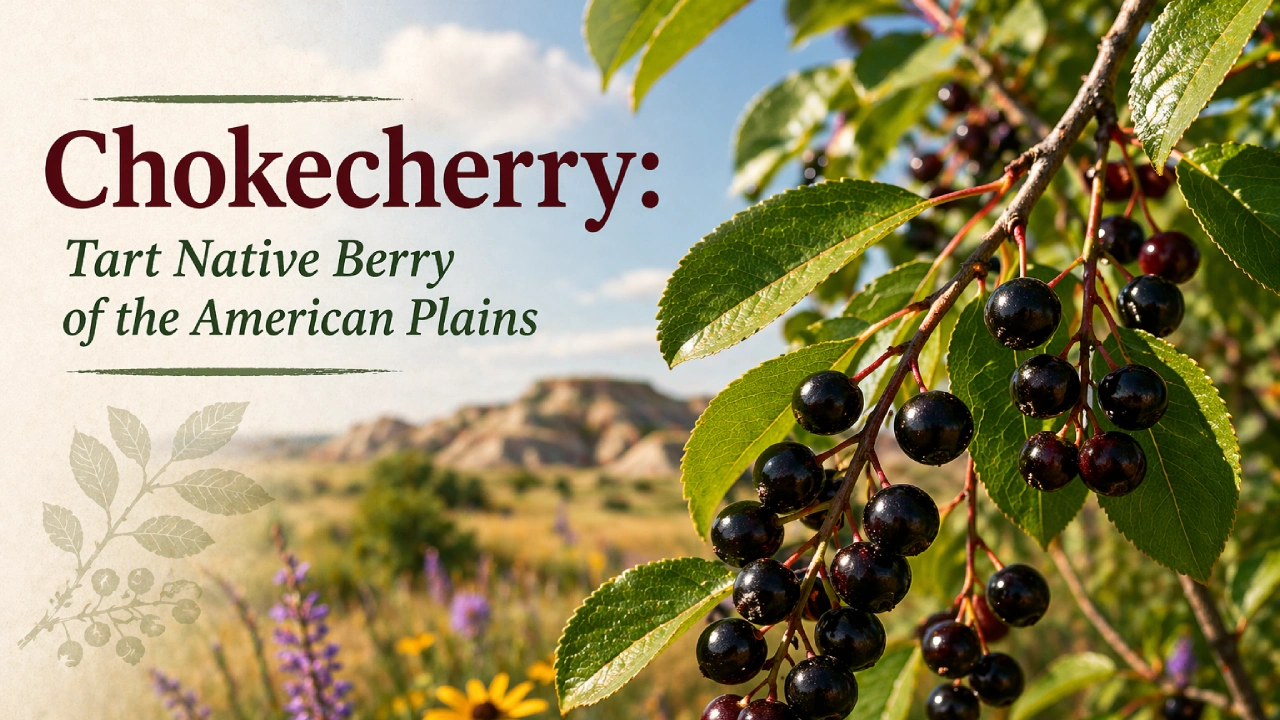
Across the American plains, no wild fruit has fed more people, nourished more wildlife, or produced more jelly jars in farmhouse kitchens than the chokecherry. It grows from Alaska to Georgia, from the Atlantic coast to the Cascades, in hedgerows and creek banks and abandoned pastures across almost every state in the country. It is abundant, nutritious, and makes what many call the finest wild fruit jelly in North America — yet most Americans walk past it without recognizing it. This guide changes that.
This complete guide covers everything you need to know about chokecherries: which parts are edible and which contain toxins (and why the distinction is critical), how to identify Prunus virginiana with confidence, full nutritional breakdown, six health benefits, the history of chokecherry as a foundational food for Indigenous peoples of the plains, a regional foraging guide, and detailed recipes including the classic chokecherry jelly that has made this berry a homesteading staple for generations.
Critical safety note — read before foraging or preparing chokecherries
The flesh of ripe chokecherries is safe to eat. The seeds (pits), leaves, bark, and stems contain amygdalin — a compound that releases hydrogen cyanide when crushed or chewed. Never crush or chew the seeds. When making juice, syrup, or jelly, strain carefully through a jelly bag and never force liquid through in a way that could crush seed material. The seeds can be swallowed whole (as with any stone fruit) with minimal risk, but crushing them creates genuine toxicity. Properly prepared chokecherry products with seeds removed are completely safe.
Botanical Profile: What Is a Chokecherry?
The chokecherry (Prunus virginiana) is a deciduous shrub or small tree in the rose family (Rosaceae), belonging to the genus Prunus — the same genus as cherries, plums, peaches, apricots, and almonds. It is native to North America and has one of the widest natural distributions of any native woody plant on the continent, growing from Newfoundland to British Columbia and south to California, Kansas, and the Carolinas.
The “choke” in chokecherry refers to the fruit’s intensely astringent quality when eaten raw — the tannins and other compounds in uncooked chokecherries cause a powerful puckering sensation in the mouth, a drying of the saliva, and a closing sensation in the throat that gives the berry its evocative name. This astringency disappears almost entirely when the berries are cooked and sweetened, revealing a rich, complex cherry flavor beneath.
Scientific name: Prunus virginiana | Family: Rosaceae | Common names: Chokecherry, common chokecherry, bitter-berry
Height: 6–30 feet | Fruit color: Dark red to purple-black when ripe | Season: July–September
USDA Zones: 2–7 | Fruit type: Drupe (stone fruit, like a cherry) | Seed: Toxic when crushed — do not eat
Unlike the aggregate fruits of the Rubus family (raspberries, blackberries), chokecherries are true stone fruits — each small berry contains a single hard pit surrounded by fleshy pulp, just like a cherry or plum. This drupe structure means that chokecherries have far less juice per berry than a raspberry, but their concentrated flavor more than compensates.
How to Identify Chokecherries
Chokecherry identification is straightforward for anyone who spends a few minutes learning the key features. The plant is distinctive across all seasons, with identification markers that remain reliable from spring through fall.
The fruit clusters — most distinctive feature
- Arrangement: Chokecherries grow in elongated, cylindrical, drooping clusters called racemes — typically 3–6 inches long, containing 20–40 individual cherries in a dense grape-like arrangement. This raceme structure is one of the most reliable identification features: cherries hanging in long, dense, drooping clusters rather than short bunches
- Color progression: Green → bright red → dark red → purple-black as the season progresses. All colors may be present on the same cluster at once. Ripe berries are uniformly dark — either deep red or purple-black depending on the individual plant
- Size: 4–10mm in diameter — about the size of a large pea, significantly smaller than a commercial sweet cherry
- Surface: Smooth, shiny skin with a small round scar at the tip where the flower was attached
- Pit: A single hard, oval seed inside each berry. The pit is immediately obvious when you bite into the flesh — do not bite through it
The leaves
- Simple, alternate, oval to elliptical with finely toothed edges
- Dark green and smooth above, paler below
- 3–4 inches long with a pointed tip
- Two distinctive small glands (nectaries) visible on the leaf stem near the base of the leaf blade — a diagnostic feature of the Prunus genus
- Scratch the underside of a leaf and smell it — a faint bitter almond or maraschino cherry scent confirms Prunus identification. This smell comes from benzaldehyde in the leaf tissue, the same compound that gives almonds and amaretto their characteristic scent
The bark and stems
- Young stems are smooth and gray-brown with prominent orange-brown lenticels (horizontal breathing pores)
- Older bark becomes gray and slightly rough
- Scratch the bark and smell — the same bitter almond scent is present, more concentrated in bark than in leaves
- No thorns on any part of the plant
The flowers
Clusters of small, white, five-petaled flowers appearing in May–June on the same elongated raceme structure that will later hold fruit. Flowers have a sweet, slightly bitter fragrance. The raceme arrangement of both flowers and fruit is consistent and distinctive — no other common wild plant in chokecherry’s range produces both flowers and fruit in this elongated drooping cluster form.
Key distinguishing features at a glance
| Feature | What to look for | Why it matters |
|---|---|---|
| Fruit cluster | Long, dense, drooping raceme 3–6 inches | Most distinctive feature; distinguishes from elderberry |
| Individual fruit | Round drupe with single hard pit | Stone fruit — not aggregate like raspberry |
| Leaf shape | Simple oval with fine teeth | Not compound like elderberry or Rubus |
| Leaf glands | Two small bumps on leaf stem near blade | Diagnostic Prunus genus feature |
| Almond scent | Scratch leaf/bark — smell benzaldehyde | Confirms Prunus genus — very reliable |
| Thorns | None | Distinguishes from hawthorn |
Distinguishing chokecherry from elderberry — important safety distinction
The most important look-alike confusion for foragers to understand is between chokecherry and elderberry (Sambucus canadensis). Both produce dark-colored berry clusters on native shrubs in overlapping habitats. The differences are clear once you know them:
- Cluster shape: Chokecherry clusters are elongated and cylindrical (racemes). Elderberry clusters are flat-topped or umbrella-shaped (corymbs)
- Berry size: Chokecherry berries are larger (4–10mm) with a single hard pit. Elderberry berries are tiny (3–5mm) with multiple small soft seeds
- Leaf type: Chokecherry has simple oval leaves. Elderberry has pinnate compound leaves with 5–9 separate leaflets
- Smell: Crushed chokecherry leaf smells of bitter almond. Crushed elderberry leaf has an unpleasant musky smell
Never confuse these two — elderberries are toxic when raw (though safe when cooked), while chokecherry flesh is edible raw, but chokecherry seeds contain different toxic compounds. Both require knowledge before use.
Safety in Full: Edible Flesh vs Toxic Seeds
The safety situation with chokecherries is nuanced but manageable once understood. Here is a complete, accurate breakdown:
What is safe to eat
- The flesh (pulp) of ripe, dark-colored chokecherries — completely safe when properly prepared. The flesh contains beneficial anthocyanins, vitamins, and other nutrients with no toxic compounds
- Chokecherry juice, jelly, jam, syrup, and wine — safe when prepared by straining out all seed material
- Whole berries swallowed without chewing the pit — the hard seed coat prevents amygdalin release if swallowed intact, similar to swallowing a cherry pit
What must be avoided
- Crushed or chewed seeds: The pits contain amygdalin — a cyanogenic glycoside that releases hydrogen cyanide when the seed is damaged. Chewing through the pit creates genuine toxicity risk
- Leaves: Chokecherry leaves contain prunasin, another cyanogenic glycoside, in concentrations high enough to cause serious harm to livestock. Wilted or frost-damaged leaves are more dangerous than fresh ones. Do not use leaves for tea or any food preparation
- Bark and stems: Also contain cyanogenic compounds — not for consumption
- Unripe berries: Higher concentration of astringent tannins and potentially higher amygdalin in flesh — wait for full dark red or purple-black ripeness
- Red elderberry (Sambucus racemosa): Not a chokecherry but sometimes confused with it — avoid entirely
How to safely prepare chokecherries
Safe preparation follows one non-negotiable rule: remove all seed material before consuming the liquid or pulp. The standard method:
- Simmer whole cherries (including pits) in water until flesh is soft — about 15 minutes
- Mash the cooked berries to release juice
- Strain through a jelly bag, cheesecloth, or fine mesh strainer, allowing juice to drip through naturally
- Do not press, squeeze, or force liquid through the strainer — this can rupture seeds and introduce amygdalin into the juice
- The resulting clear juice contains only flesh compounds — no seed toxins
This process has been used by Indigenous peoples and settlers across North America for centuries. It is reliable and safe when the “no pressing” rule is observed. The National Center for Home Food Preservation provides official guidance on safe chokecherry processing and canning.
What Do Chokecherries Taste Like?
The honest answer to “what does a chokecherry taste like raw” is: not very good, and quite possibly unpleasant. Chokecherries are among the most astringent fruits in North America when eaten fresh and unprocessed. The tannins in the flesh cause an immediate, powerful puckering — your mouth dries out, your cheeks draw in, and your throat tightens. This is the “choke” the name promises, and it delivers.
Beneath the astringency, there is a genuine flavor: a rich, slightly bitter, deeply cherry-like taste with a pleasant fruity quality that hints at what cooking will reveal. Some people enjoy eating a few fresh chokecherries for the experience, but bulk fresh consumption is rarely appealing.
Cooked chokecherries — and particularly chokecherry jelly — are a revelation. The cooking process breaks down the tannins that cause astringency, and the sugar balances the natural tartness, leaving behind a complex, intensely flavored cherry essence that is genuinely extraordinary. The flavor of chokecherry jelly is difficult to compare to anything in the commercial food world because nothing commercial is made from it. It is: deeply cherry, slightly earthy, with a brightness and complexity that makes commercial cherry jam taste flat by comparison.
Chokecherry syrup applied to pancakes, chokecherry wine, chokecherry sauce alongside venison or roast pork — in all these cooked applications, the chokecherry reveals itself as one of the finest flavoring fruits in the North American wild larder. The secret is heat and sugar. Raw, it challenges you. Cooked, it rewards you.
Chokecherry vs Wild Black Cherry
Chokecherry (Prunus virginiana) and wild black cherry (Prunus serotina) are the two most common wild cherry species in North America and are frequently confused. Both have toxic seeds and edible flesh, both produce drooping racemes of small dark cherries, and both have the characteristic almond scent of the Prunus genus. Here is how to tell them apart:
| Feature | Chokecherry (P. virginiana) | Wild black cherry (P. serotina) |
|---|---|---|
| Ripe berry color | Dark red to purple-black | True black |
| Berry size | 4–10mm (smaller) | 6–12mm (larger) |
| Mature tree bark | Gray-brown, relatively smooth | Dark, scaly, peels in irregular plates (very distinctive) |
| Tree size | Shrub to small tree (6–30 ft) | Large tree (up to 80 ft) |
| Leaf width | Wider relative to length | Narrower, longer |
| Flavor when cooked | Tart, complex, deeply cherry | Sweeter, less astringent |
| Range | All of North America — very widespread | Eastern North America primarily |
| Seeds | Toxic if crushed — same rule applies | Toxic if crushed — same rule applies |
For practical foraging purposes, both species are usable interchangeably for jelly, syrup, and wine — both require the same seed-removal precautions, and both produce excellent results when properly processed. The chokecherry is more widespread and more commonly encountered by foragers across the Great Plains and mountain West.
Where Chokecherries Grow in the USA
Chokecherry has one of the broadest natural distributions of any native shrub in North America. The USDA PLANTS Database documents Prunus virginiana presence in 49 US states — essentially everywhere except Hawaii and a handful of southern states in the Deep South where it is absent or rare. This remarkable range makes chokecherry one of the most accessible native wild fruits in the country.
| Region | Abundance | Peak ripening | Best habitat |
|---|---|---|---|
| Great Plains (ND, SD, NE, KS, MT) | Very abundant | Late July–August | Creek banks, coulees, draws, shelterbelts |
| Rocky Mountains (CO, WY, ID, MT) | Very abundant | August–September | Mountain shrublands, canyon walls, aspen edges |
| Northeast (NY, PA, NE, MA) | Common | July–August | Forest edges, old pastures, roadsides |
| Pacific Northwest (WA, OR) | Common | July–August | Dry east slopes, forest edges, canyon shrubland |
| Midwest (MN, WI, MI, OH) | Common | July–early August | Forest edges, fence lines, disturbed areas |
| Appalachians (VA, WV, NC) | Present | July | Mountain slopes, ridgelines, forest gaps |
The chokecherry is particularly associated with the Great Plains and Rocky Mountains, where it is ecologically dominant in creek bottoms, coulee edges, and any moist depression in an otherwise dry landscape. In these regions, chokecherry thickets can be extensive — covering acres of creek bank with productive shrubs that yield hundreds of pounds of fruit in a good year. The plant spreads aggressively by suckers, forming dense colonies that are visible from a distance when in fruit due to the weight of dark berry clusters bending the branches.
In terms of habitat, look for chokecherry wherever there is:
- Slightly more moisture than the surrounding terrain — creek banks, ravines, and north-facing slopes
- Some disturbance — forest edges, roadsides, old fence lines, abandoned pastures
- Full to partial sun — chokecherry tolerates shade but fruits most heavily in open conditions
Chokecherry Nutrition Facts
Chokecherries are nutritionally significant, particularly for their antioxidant content. Nutritional data comes from analyses published by the USDA FoodData Central database and from Canadian research on Prunus virginiana conducted in connection with its importance as a traditional food of plains Indigenous nations:
| Nutrient | Per 100g chokecherries (flesh only) | Significance |
|---|---|---|
| Calories | ~58 kcal | Low calorie |
| Anthocyanins | Very high — among highest of any native berry | Primary antioxidant; responsible for dark color |
| Vitamin C | ~10mg | Moderate — meaningful dietary contribution |
| Dietary fiber | ~3.5–5g | Good gut health support |
| Potassium | ~220mg | Blood pressure support |
| Iron | Present (~0.5mg) | Modest contribution |
| Proanthocyanidins | Very high | Same compounds as cranberry; possible UTI benefits |
| Quercetin | Present | Anti-inflammatory flavonoid |
| Malic acid and citric acid | High — responsible for tartness | Natural preservative quality |
The most nutritionally remarkable aspect of chokecherries is their extremely high anthocyanin concentration. Research published in the Journal of Agricultural and Food Chemistry comparing antioxidant levels of native North American berries found that chokecherries ranked among the highest in total phenolic content and anthocyanin concentration — comparable to wild blueberries and significantly higher than most commercially grown berries. The deep red-to-black color of ripe chokecherries is a direct indicator of this anthocyanin density.
6 Health Benefits of Chokecherries
1. Exceptionally high antioxidant levels
Chokecherries contain some of the highest concentrations of anthocyanins and total polyphenols of any commonly foraged native berry in North America. These antioxidants neutralize free radicals, reduce oxidative stress, and protect cells from the cumulative damage that accumulates into chronic disease over decades. The ORAC (Oxygen Radical Absorbance Capacity) value of chokecherry extract has been measured at levels comparable to chokeberry (aronia) — a berry specifically marketed for its antioxidant content. For a berry available for free along creek banks across 49 states, this antioxidant profile is remarkable.
2. Cardiovascular protection through multiple pathways
The anthocyanins and proanthocyanidins in chokecherries work through several distinct cardiovascular protection mechanisms. Anthocyanins reduce LDL oxidation — the process that converts LDL cholesterol into the form that deposits in arterial walls. Proanthocyanidins improve endothelial function and reduce arterial inflammation. The berry’s potassium content (approximately 220mg per 100g) supports healthy blood pressure. Research published in Food Chemistry found that phenolic compounds extracted from Prunus species demonstrate significant protective effects against LDL oxidation.
3. Anti-inflammatory effects comparable to commercial berries
The polyphenol profile of chokecherries — anthocyanins, quercetin, chlorogenic acid, and proanthocyanidins — creates a broad-spectrum anti-inflammatory effect that reduces markers of systemic inflammation. Chronic inflammation is increasingly recognized as a central driver of nearly all major chronic diseases. The berry’s high tannin content, while responsible for the unpleasant raw-eating experience, actually contributes meaningfully to anti-inflammatory activity when consumed in properly prepared forms.
4. Potential UTI prevention — proanthocyanidin connection
Chokecherries contain proanthocyanidins — the same class of compounds responsible for cranberry’s documented ability to prevent urinary tract infections by inhibiting bacterial adhesion to bladder walls. Research has not yet established the same clinical evidence base for chokecherry as exists for cranberry, but the structural similarity of the proanthocyanidins and the much higher overall polyphenol content of chokecherries suggests potential comparable or greater efficacy. This is a research area worth watching.
5. Digestive health support
Chokecherries provide dietary fiber supporting gut health, and their polyphenol content has prebiotic properties — selectively promoting the growth of beneficial gut bacteria including Lactobacillus species. The tannins in chokecherries also have historically been used as a traditional remedy for digestive complaints — particularly diarrhea — due to their astringent effects on intestinal mucous membranes. This traditional use is documented across multiple Indigenous traditions and aligns with the known biological activity of tannins on gut tissue.
6. Immune support and vitamin C
While chokecherries are not the highest-vitamin-C berry (that distinction belongs to strawberries), they provide meaningful vitamin C alongside a comprehensive polyphenol matrix that enhances immune function through multiple pathways beyond vitamin C alone. Indigenous peoples of the northern plains consumed chokecherries as a critical late-summer food source before winter — their vitamin C and antioxidant content may have contributed to resilience against winter illness, though this is a historical inference rather than a clinical claim.
Indigenous Significance: Pemmican and Beyond
No other wild fruit played a more central role in the food culture of the Great Plains Indigenous nations than the chokecherry. Its abundance, the reliability of its annual fruiting, and its remarkable concentration of flavor when dried made it an irreplaceable ingredient in the food systems that sustained plains communities for thousands of years.
Pemmican — the original energy food
Pemmican was the foundational preserved food of the plains — a concentrated mixture of dried buffalo meat, rendered fat, and dried berries that could sustain a person through winter and during long journeys. Chokecherries were the berry of choice for pemmican across most of the plains, valued for their intense flavor, high tannin content (which contributed preservative properties), and the way their tartness balanced the richness of the fat and meat.
The preparation was simple but labor-intensive: chokecherries were harvested in bulk, then pounded — pits and all — using a stone pestle. The crushed whole cherries (pits included) were then mixed with dried meat and fat. Crucially, the pits were crushed in this process, which in theory would release amygdalin. Research suggests that the very small quantities consumed per serving in pemmican, combined with the dilution by fat and meat protein, may have made this safe in practice — or that the specific populations had developed some tolerance over generations. Modern food safety guidance advises against consuming crushed chokecherry pits and recommends the straining method described above.
Nation-specific uses
The Lakota called chokecherries čhaŋpȟá and considered them sacred — the cherry was the subject of songs, stories, and ceremonial use. Lakota women gathered chokecherries in late summer as a community event, and the berry’s harvest marked an important point in the seasonal calendar. The Blackfoot, Crow, Cheyenne, Assiniboine, Cree, and Ojibwe all incorporated chokecherries into their food and medicinal traditions, with uses ranging from food preservation to treatment of coughs and cold symptoms to ceremonial use in sun dance preparations.
Medicinal uses
Across multiple Indigenous nations, chokecherry bark tea was used as a cough suppressant and treatment for respiratory complaints — a use that aligns with the known pharmacological activity of prunasin (the cyanogenic glycoside in the bark) in small quantities, which can suppress cough reflexes. This is a traditional use that should not be replicated without professional guidance, as the therapeutic window between helpful and harmful is narrow. The berry flesh itself was used for digestive complaints and as a general tonic in multiple traditions.
Foraging Guide: When and How to Harvest
Chokecherries are among the most rewarding berries to forage in North America — they grow in large, accessible clusters, fruit abundantly, and a single productive thicket can yield enough fruit for a year’s worth of jelly in an afternoon. Here is everything you need for a successful harvest.
Timing by region
- Mid-Atlantic and Midwest: July through early August — often one of the first dark wild berries to ripen after serviceberries
- Great Plains (ND, SD, NE, KS): Late July through August — peak harvest typically coincides with the hottest weeks of summer
- Rocky Mountains and Pacific Northwest: August through September, with higher elevations ripening last
- Northern states and Canada: August through September
How to tell when chokecherries are ripe
- Color: Wait for uniform deep red to purple-black throughout the entire cluster. Bright red berries are unripe and extremely astringent — not worth picking
- Softness: Ripe chokecherries yield slightly to gentle pressure. Hard berries are unripe
- Release: Ripe berries come off the cluster stem with a light pull. Unripe ones hold firmly
- Taste test: Pop one berry, spit out the pit, and taste the flesh. Ripe flesh is tart but has a rich, recognizable flavor under the astringency. Very unripe flesh is primarily astringent with no pleasant flavor undertone
- After first frost: Like buffaloberry and some other native fruits, chokecherries picked after the first light frost are often noticeably sweeter and less astringent — if you can time a harvest for just after the first fall frost, the berries will be at their absolute best
Harvesting technique
Harvest entire clusters by snipping or breaking the cluster stem — this is far more efficient than picking individual berries. Chokecherry clusters are dense and hang at accessible heights, making bulk harvesting straightforward. A productive bush can be stripped of its accessible clusters in minutes. Use a bucket or wide container — the berries are firm enough to handle brief stacking without damage. Rinse in cold water and proceed to processing the same day for best results, though refrigerated chokecherries keep 5–7 days before processing.
Processing for jelly: the juice extraction method
For jelly and syrup, follow the juice extraction method described in the safety section: simmer whole berries in water, mash, and allow juice to drip through a jelly bag without pressing. This method is both the safest approach (no seed crushing) and the method that produces the clearest, best-flavored juice.
5 Chokecherry Recipes
1. Classic chokecherry jelly
This is the recipe that has made chokecherry jelly a homesteading and farmhouse tradition from the plains to the mountains for over a century. Follow the extraction method carefully — the patience of allowing juice to drip naturally rather than pressing produces both a clearer jelly and a safer one.
For the juice: Wash 3–4 pounds of ripe chokecherries and place in a large saucepan with 1 cup of water. Bring to a boil, reduce heat, and simmer 15 minutes until all berries have burst and are completely soft. Mash with a potato masher to release maximum juice. Pour into a jelly bag or double layer of dampened cheesecloth set over a deep bowl. Allow to drip freely for at least 2 hours — ideally overnight in the refrigerator. Do not squeeze or press. You should yield approximately 3–4 cups of deep red juice.
For the jelly: Measure exactly 3.5 cups of chokecherry juice into a large, wide saucepan. Add 2 tablespoons of lemon juice and one 1.75oz package of powdered fruit pectin. Stir to dissolve. Bring to a full rolling boil over high heat, stirring constantly. Add 4.5 cups of granulated sugar all at once. Return to a full rolling boil that cannot be stirred down and boil hard for exactly 1 minute, stirring continuously. Remove from heat, skim any foam, and pour immediately into hot sterilized half-pint jars leaving ¼ inch headspace. Wipe rims, apply lids, and process in a boiling water bath for 10 minutes. Yields approximately 5–6 half-pint jars.
The resulting jelly is a jewel-bright deep red with an intensely fruity, complex flavor that rewards the effort. Served on fresh bread, used as a glaze for roast pork or venison, or stirred into plain yogurt, chokecherry jelly is among the finest wild fruit preserves available in North America.
2. Chokecherry syrup
Follow the juice extraction method above to yield 3 cups of strained juice. Combine juice with 2 cups of granulated sugar in a saucepan. Bring to a boil, stirring until sugar dissolves, then simmer 5 minutes until slightly thickened. Cool and pour into glass bottles. Refrigerate for up to 3 months or freeze for up to a year. Use over pancakes, waffles, ice cream, or cheesecake, or dilute 1:4 with sparkling water for a traditional wild cherry soda that has no commercial equivalent.
3. Chokecherry sauce for venison and wild game
Chokecherries and wild game are one of the great natural flavor pairings of North American cuisine — the berry’s tartness and complexity cut through the richness of venison, elk, or bison exactly as cranberry sauce works with turkey, but with far more complexity. Sauté one shallot in 1 tablespoon of butter until soft. Add ½ cup of chokecherry juice (from the extraction method above), 2 tablespoons of red wine, 1 tablespoon of honey, and a sprig of thyme. Simmer until reduced by half and slightly syrupy. Season with salt and pepper. Spoon over grilled venison steaks, elk medallions, or roast duck. This sauce takes 10 minutes and elevates wild game to something genuinely extraordinary.
4. Chokecherry wine
Chokecherry wine is a traditional homestead product across the northern plains and is considered by many to rival commercially produced fruit wines in complexity. It requires basic home winemaking equipment but is straightforward for a beginner. Combine 3 pounds of crushed chokecherries (whole, pits included for this recipe — they add tannin structure) with 2 pounds of sugar, 1 teaspoon of wine yeast nutrient, ½ teaspoon of acid blend, and ¼ teaspoon of wine yeast in 1 gallon of warm water. Ferment in a covered vessel for 5–7 days, stirring daily. Strain thoroughly through multiple layers of cheesecloth to remove all solids including any pit fragments. Transfer to a sealed fermentation vessel with airlock. Allow to ferment for 4–6 weeks, rack to a clean vessel, and bottle. Age for at least 3 months before drinking. The wine develops a beautiful deep ruby color and a flavor profile unlike any commercial wine — tart, complex, and unmistakably of the plains.
5. Chokecherry bark tea — traditional preparation (for reference only)
Traditional Indigenous preparations of chokecherry bark tea were used for cough and respiratory complaints across multiple nations. Note: this is provided as cultural and historical information only. The inner bark of chokecherry contains prunasin in quantities that can be therapeutic in very small amounts but harmful in larger ones — the therapeutic window is narrow. Do not prepare chokecherry bark tea without professional guidance from an herbalist or healthcare provider familiar with its preparation. This recipe is included here to document the traditional practice, not as a recommendation for home use.
Frequently Asked Questions About Chokecherries
Are chokecherries edible?
Yes — the flesh of ripe chokecherries is edible and nutritious. The seeds (pits) must never be crushed or chewed as they contain amygdalin, which releases hydrogen cyanide when damaged. Properly prepared chokecherry jelly, syrup, juice, and wine — made by straining out all seed material without pressing — are completely safe and are a staple of traditional food culture across the northern plains and Rocky Mountain states.
Are chokecherry seeds poisonous?
Yes — the seeds contain amygdalin, which releases hydrogen cyanide when crushed or chewed. Swallowing a few whole intact seeds is generally not dangerous because the hard seed coat prevents release of the compound. But crushing or chewing seeds creates genuine toxicity. Always strain chokecherries through a jelly bag without pressing when making juice or jelly, and never bite through the pit.
What do chokecherries taste like?
Raw chokecherries are intensely astringent — they cause a powerful puckering sensation that tightens the throat (hence “choke”). Beneath the astringency is a rich, bitter-cherry flavor. When cooked with sugar as jelly or syrup, the astringency disappears and a complex, deep cherry flavor emerges that many consider the finest of any wild berry jelly. The cooking process transforms the berry completely.
When are chokecherries ripe?
Chokecherries ripen July through September depending on region. Great Plains and Midwest sites ripen late July through August. Rocky Mountain and Pacific Northwest sites ripen August through September. Ripe chokecherries are uniformly dark red to purple-black, slightly soft when pressed, and detach easily from the cluster. Bright red berries are unripe — wait for deep coloration.
Is chokecherry the same as wild cherry?
No — chokecherry (Prunus virginiana) and wild black cherry (Prunus serotina) are different species. Chokecherries are smaller, ripen dark red to purple-black, grow as a shrub or small tree, and have gray-brown bark. Wild black cherries are slightly larger, ripen true black, grow as a large tree, and have distinctive dark scaly peeling bark. Both have toxic seeds and edible flesh requiring the same preparation precautions.
How do you make chokecherry jelly?
Simmer whole chokecherries in water until soft, mash, and strain through a jelly bag allowing juice to drip freely without pressing (pressing can rupture seeds). Combine strained juice with pectin and sugar per standard jelly recipes, boil to gel point, and can in sterilized jars. The full detailed recipe with measurements and canning instructions is in the recipes section above.
Can you eat chokecherries raw?
You can eat a few ripe chokecherries raw (spitting out the pits) — the flesh is not toxic. But the intense astringency makes raw bulk consumption unpleasant for most people. A handful of fresh chokecherries eaten trail-side to experience their flavor is perfectly safe; trying to eat a cupful is inadvisable not for safety reasons but because the puckering sensation is intense enough to be genuinely unpleasant. Cooking is how this berry reaches its full potential.
Conclusion: America’s Most Underestimated Jelly Berry
The chokecherry sits at an interesting intersection: too astringent to eat raw in quantity, yet capable of producing what many experienced wild food practitioners consider the finest fruit jelly available from any native North American berry. That gap between raw unpleasantness and cooked excellence is exactly what has kept chokecherry knowledge alive in homesteading communities, Indigenous food traditions, and foraging circles even as it has faded from broader American awareness.
Learning to identify and use chokecherries connects you to one of the deepest threads of food culture on this continent — a berry that fed plains nations for millennia, that provided critical nutrition in pemmican through brutal winters, and that still lines creek banks and roadside hedgerows across 49 states waiting for anyone willing to look for it. The jelly is the reward for that attention. And the jelly is genuinely extraordinary.
More from Berry Nation USA
- Elderberry Complete Guide: Benefits, Syrup Recipe & Safety
- Buffaloberry: America’s Most Underrated Native Superfruit
- Cranberry: More Than a Holiday Staple
- Wild Blackberries of America: Complete ID & Foraging Guide
- Serviceberry (Juneberry): America’s Forgotten Native Berry
- Blueberry Complete Guide: America’s Native Superfruit
- How Many Berries Should I Eat a Day?
Written by Kirna — Berry Nation USA
Berry Nation USA is America’s dedicated resource for wild, native, and cultivated berries across all 50 states. Learn more about us.
1 thought on “Chokecherry: Tart Native Berry of the American Plains”