
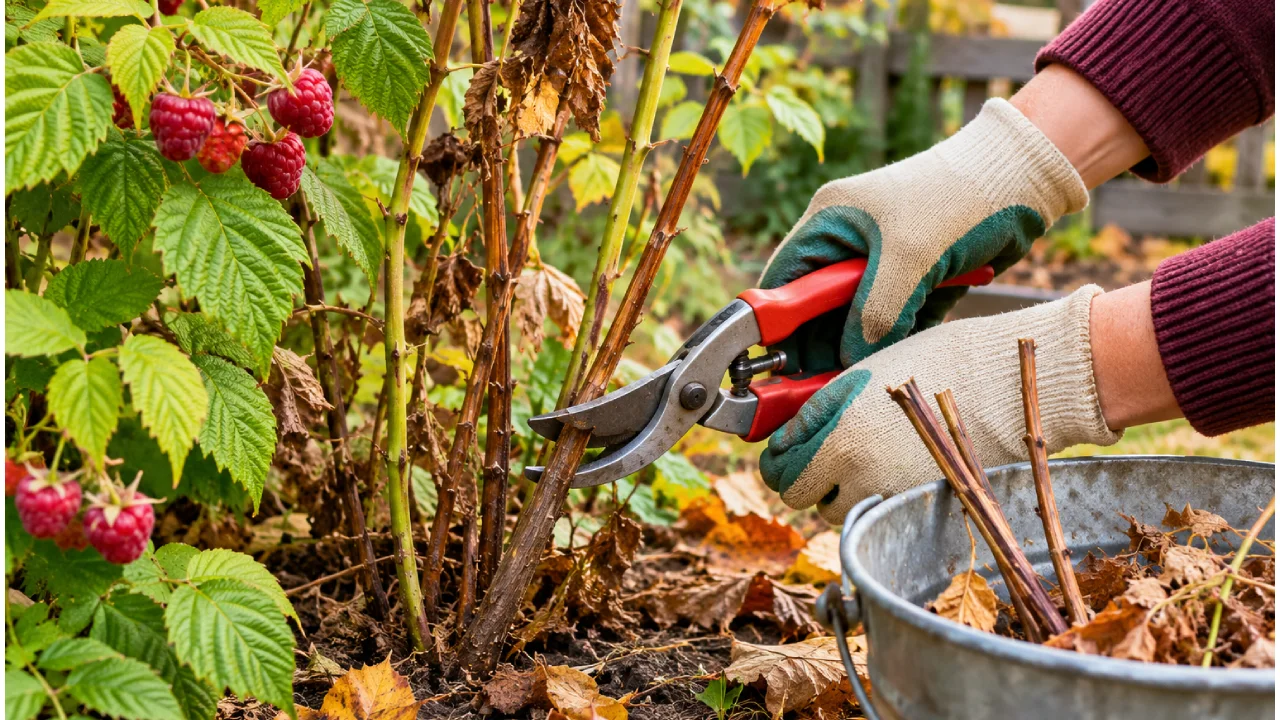
Fall is a useful time to assess a raspberry patch, but the right pruning method depends on when your variety produces fruit. Some raspberries crop on canes that grew the previous year; others produce a fall crop on canes that grew during the current season. Cutting every cane without identifying the type can remove next summer’s harvest.
This guide explains how to prune raspberry canes in fall, which stems to remove, and which ones to keep for the next crop. If you are unsure of the variety, check its plant label or ask your local Cooperative Extension office before making a major cut.
First, identify the two types of raspberry canes
Raspberry plants have two cane stages:
- Primocanes: First-year canes. They are usually green and flexible while actively growing. On fall-bearing varieties, their tips can flower and produce berries in the same season.
- Floricanes: Second-year canes. They are generally more woody and brown. Summer-bearing raspberries produce their main crop on these canes, after which the canes die.
The key question is whether your raspberry variety is summer-bearing (floricane-fruiting) or fall-bearing (primocane-fruiting). The University of Minnesota Extension explains these cane cycles in its guide to raspberry types and varieties.
How to prune summer-bearing raspberries in fall
Summer-bearing red raspberries usually produce their crop on canes that grew the previous year. After those canes finish fruiting, they will not produce another crop. Your goal is to remove the spent canes while protecting healthy first-year canes for next summer.
- Wait until the canes are dormant. Pruning can be done in late fall after dormancy or in early spring. In colder areas, some gardeners prefer to wait until late winter or early spring so winter damage is easier to see.
- Find the spent floricanes. Look for old, woody stems that carried fruit this year. They may have dry fruiting branches or old flower clusters.
- Cut spent canes at ground level. Use clean, sharp bypass pruners or loppers. Do not leave long stubs.
- Keep healthy primocanes. These are the canes that can carry next year’s summer crop. Remove only weak, damaged, diseased, or excess canes.
- Thin crowded rows. A common home-garden target is roughly 6 to 8 inches between retained canes, with the row kept narrow enough for good light and air movement. Adjust for your cultivar and local Extension advice.
Penn State Extension’s pruning guide for home bramble plantings describes removing spent floricanes and retaining suitable canes for the next crop.
How to prune fall-bearing raspberries
Fall-bearing raspberries, also called primocane-fruiting varieties, can produce fruit on canes in their first year. Many home gardeners grow them for one main fall crop because the pruning method is simple.
Option 1: One fall crop each year
If you want one fall crop, cut all canes down close to ground level after the plants become dormant in late fall, or before new growth starts in early spring. New canes will grow the following season and produce the next fall crop. This approach is straightforward and avoids having to distinguish old and new canes.
Option 2: A smaller summer crop plus a fall crop
Some primocane varieties can be managed for two crops. Instead of cutting every cane down, retain selected healthy canes over winter. Their lower portions may produce a summer crop the following year; new primocanes can then produce the fall crop. This system is more involved and the two-crop approach may change the size and timing of harvests. Confirm that your cultivar is suitable before choosing it.
The University of Minnesota Extension pruning and training guide explains the different approaches for primocane- and floricane-fruiting raspberries.
What to do with diseased or damaged canes
Remove canes that are broken, badly damaged, or showing suspicious lesions or dieback. Do not leave diseased material tangled in the row. Bag and discard clearly infected canes rather than putting them in a cool home compost pile. Clean soil and plant debris from your pruners, then disinfect the blades between plants when disease is suspected. Avoid pruning wet plants when possible, and make clean cuts.
Common raspberry pruning mistakes
- Cutting every cane on a summer-bearing variety: This can remove the canes needed for next summer’s fruit.
- Keeping spent floricanes: They will not produce another crop and can make the patch crowded.
- Pruning by color alone: Cane color is a clue, not a perfect test. Use the variety’s fruiting habit and the cane’s history.
- Leaving rows too dense: Crowded canes are harder to harvest and have poorer air circulation.
- Using dull or dirty tools: Sharp, clean tools make neater cuts and reduce avoidable plant injury.
After pruning: tidy and check the raspberry row
Remove loose cane pieces and weeds, check that the trellis wires and posts are secure, and make a note of any gaps where replacement plants may be needed. Avoid heavy fertilizing late in the season. For general raspberry care and harvest handling, see our guide on how to keep raspberries fresh longer. If you are planning additional fruit plants, our guide to berry bushes to plant in fall can help you compare options.
Frequently asked questions
Can I prune raspberries in November?
Often, yes, if the plants are dormant and the ground is workable. In very cold regions, waiting until late winter or early spring can make it easier to assess winter injury. Local climate and variety matter.
Should I cut raspberry bushes all the way to the ground?
Only when you are managing a fall-bearing variety for one fall crop, or when removing an individual spent or diseased cane. Do not cut all canes of a summer-bearing variety to the ground if you want next summer’s crop.
How can I tell if a raspberry cane is dead?
Dead canes are often brittle, dry, and brown throughout, while living canes may show healthy tissue when lightly scratched. When uncertain, wait until spring growth begins before removing borderline canes.
Do raspberries need pruning every year?
Yes. Annual pruning helps maintain a manageable row and removes canes that have already fruited. The exact method depends on whether the variety fruits on first-year or second-year canes.
Final takeaway
Successful fall raspberry pruning starts with identifying the variety. Remove spent second-year canes from summer-bearing plants and preserve healthy first-year canes. For a single fall crop from primocane varieties, cut the canes to the ground once dormant. When in doubt, confirm the cultivar and follow guidance for your region before pruning the entire patch.
Image credit: Margarita Shtyfura via Unsplash.