
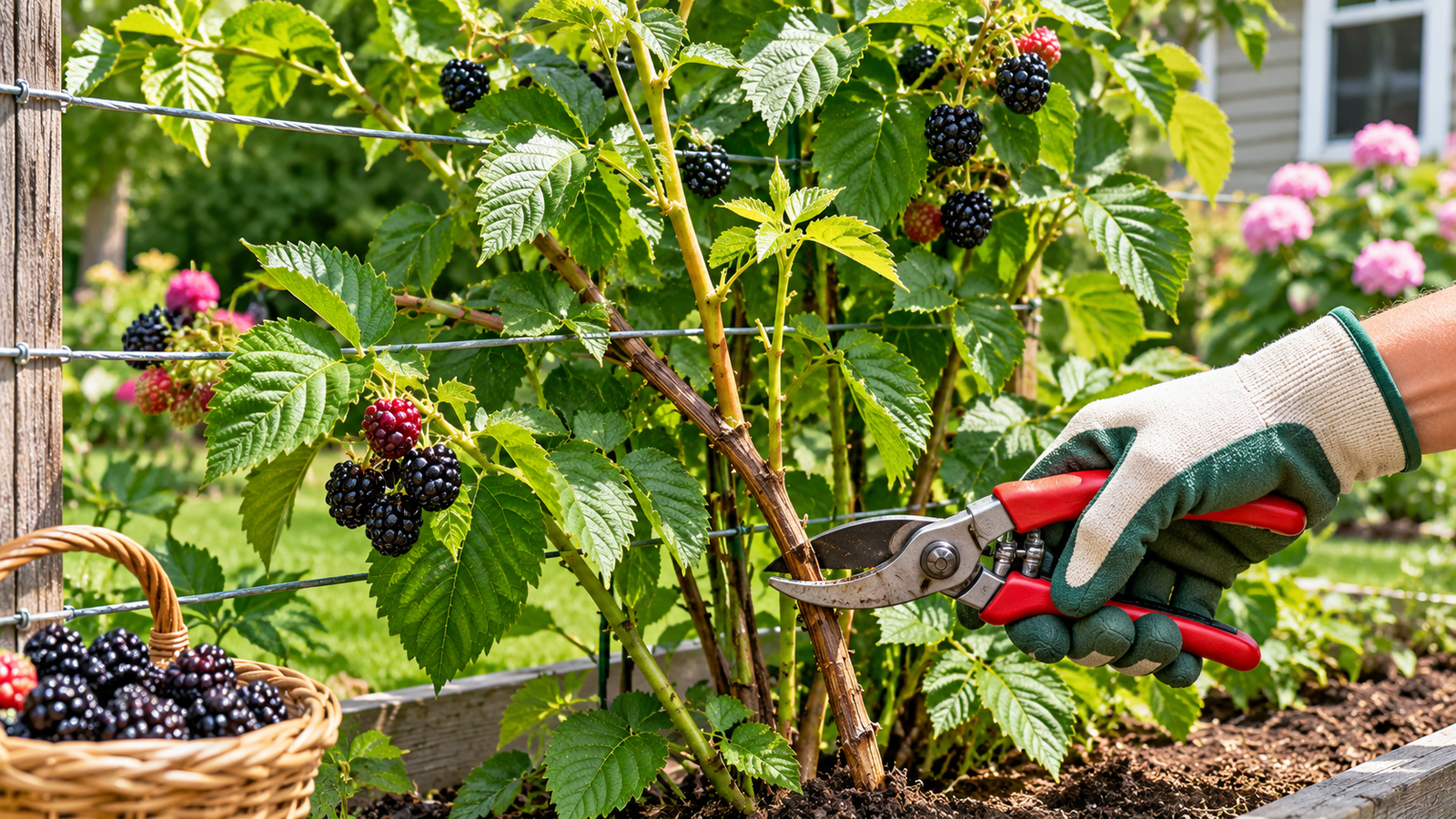
Blackberry bushes can produce generous harvests for years, but they need regular pruning to stay manageable and productive. The key is knowing which canes have already fruited, which ones will carry next season’s crop, and when to shorten new growth. Pruning at the wrong time can remove the very canes you are trying to grow for fruit.
This guide explains how to prune blackberry bushes in a home garden, including summer tipping, dormant-season thinning, post-harvest cleanup, and the differences between floricane- and primocane-fruiting varieties. Exact timing varies with cultivar and local climate, so use the plant’s growth stage as well as the calendar.
Why Pruning Blackberry Bushes Matters
Blackberries grow on canes that have a limited fruiting life. In many common summer-bearing varieties, a cane grows during its first year, produces fruit during its second year, and then dies. Removing spent canes and thinning crowded growth helps make room for new shoots.
- Better airflow: An open canopy dries more quickly after rain and is easier to inspect.
- More manageable growth: Tipping and training keep long canes within reach and on their support wires.
- Clearer harvest access: Removing tangled and low-growing canes makes ripe fruit easier to pick.
- Plant sanitation: Taking out dead, damaged, or diseased canes removes material that can harbor problems.
Understand Primocanes and Floricanes Before You Cut
Blackberry pruning makes more sense when you can identify the two cane stages:
- Primocanes are first-year shoots. On traditional floricane-fruiting varieties, they grow leaves and stems this season and usually carry next year’s crop.
- Floricanes are second-year canes on traditional summer-bearing varieties. They flower and produce berries, then die after fruiting.
Floricanes are often darker, woodier, and more brittle than young primocanes. Look for fruiting laterals or signs that a cane has already carried a crop. Do not remove healthy new primocanes simply because they are long: they may be next year’s fruiting wood.
Some newer primocane-fruiting cultivars can produce berries on first-year growth. Their pruning system is different, so check the cultivar label before using a full ground-level cutback.
When Is the Best Time to Prune Blackberry Bushes?
Most home gardeners use three pruning windows. The exact month depends on climate, cultivar, and harvest date.
1. Summer: tip new canes
When new primocanes reach the height recommended for their growth habit or trellis, pinch or cut off the tender tip. Tipping encourages side branches, which can become fruiting laterals the following year on floricane varieties. Erect and semi-erect cultivars are often tipped at different heights, so follow local extension or cultivar guidance rather than using one height for every blackberry.
2. After harvest: remove spent canes
Once a floricane has finished producing, cut it close to the soil line and remove it from the planting. Do not confuse it with the green, healthy primocanes growing beside it. In some regions this cleanup is done soon after harvest; in others it is delayed until dormancy.
3. Late winter or early spring: thin and shape
While plants are dormant, remove dead, weak, damaged, diseased, or crossing canes. Keep a manageable number of strong canes for your cultivar and training system, then shorten side branches as recommended for that type. Avoid pruning so heavily that you remove most of the healthy fruiting wood.
How to Prune Blackberry Bushes Step by Step
Step 1: Prepare clean, sharp tools
Use bypass pruners for small canes and loppers for thicker stems. Wear sturdy gloves, long sleeves, and eye protection, especially with thorny cultivars. Clean tools before starting and disinfect them between plants when disease is suspected or present.
Step 2: Identify the canes to remove
Find canes that have already fruited, along with dead, broken, diseased, very weak, or badly tangled growth. Remove these at or near ground level without leaving long stubs. Take diseased material out of the garden rather than leaving it under the plant.
Step 3: Keep the strongest new canes
Choose vigorous, well-positioned primocanes to replace the old fruiting canes. Thin out excess shoots so the remaining canes have room for light and airflow. The ideal number depends on whether the cultivar is erect, semi-erect, or trailing and on the spacing of the planting.
Step 4: Shorten lateral branches during dormancy
On many floricane-fruiting erect and semi-erect blackberries, side branches are shortened during dormant pruning to make the plant easier to manage and harvest. Recommended lateral length varies by cultivar and production system; extension guides commonly give ranges rather than one universal measurement.
Step 5: Tie canes to the trellis
Spread retained canes along the support wires and secure them loosely with soft plant ties or clips. Leave room for the stems to thicken. Keep new canes separated from spent canes so you can identify and remove them after harvest.
How to Prune Different Types of Blackberry Plants
Erect blackberries
Erect types have relatively stiff canes. Summer tipping encourages branching, while dormant pruning removes spent floricanes and thins the remaining growth. Some erect cultivars can stand without a trellis, but support may still make harvesting and maintenance easier.
Semi-erect blackberries
Semi-erect types benefit from a sturdy trellis. Train the canes along horizontal wires, tip new growth according to cultivar guidance, and remove spent floricanes after their crop. Keep the canopy open rather than allowing long canes to pile on top of one another.
Trailing blackberries
Trailing types have flexible canes that need support. Train and tie them carefully to prevent the stems from lying on the soil or becoming tangled. Their pruning and winter handling can differ from erect cultivars, so use recommendations for the specific variety.
Primocane-fruiting blackberries
These cultivars can fruit on first-year canes. For a single late-season crop, some gardeners cut all canes close to the ground during dormancy. For a two-crop system, retain the appropriate overwintered cane sections and remove only the portions that have already fruited. Confirm the recommended system for your cultivar before cutting every cane down.
Blackberry Trellis and Training Tips
A simple post-and-wire trellis helps keep canes upright and makes pruning easier. Set sturdy end posts and run horizontal support wires at heights suitable for the cultivar. Train fruiting canes and new primocanes in separate spaces or on different sides of the trellis where practical.
- Use soft ties or purpose-made clips; do not bind stems tightly.
- Check ties and wires during the growing season as canes lengthen.
- Remove canes that grow outside the intended row or become badly tangled.
- Keep the area around the base reasonably weed-free so new shoots are easy to see.
Seasonal Blackberry Care After Pruning
Water consistently
Water deeply during dry periods, especially while plants are flowering and developing fruit. Aim for evenly moist, well-drained soil rather than constantly saturated roots. A layer of organic mulch can help conserve moisture and suppress weeds; keep it from piling directly against the crown.
Feed according to soil needs
Use a soil test to guide fertilizer and pH decisions. Avoid applying excessive nitrogen, which can encourage soft, vigorous foliage at the expense of balanced growth. Follow local extension recommendations for your region and cultivar.
Monitor for pests and disease
Inspect leaves, canes, and fruit regularly for unusual spots, wilting, cane damage, insects, or mold. Remove affected material promptly and avoid working among wet plants when possible. Good spacing, clean tools, and removal of spent canes are useful parts of an integrated garden-care routine.
Protect plants in winter
Winter protection depends on cultivar hardiness and local conditions. In colder regions, trailing blackberry canes may need to be lowered and protected, while some erect cultivars are more cold-hardy. Check recommendations for your variety and growing zone before covering or moving canes.
Common Blackberry Pruning Mistakes to Avoid
- Cutting every cane to the ground: This removes next season’s crop on most traditional floricane varieties.
- Leaving spent floricanes in place: They will not fruit again and can crowd the new growth.
- Pruning without identifying the cultivar: Primocane-fruiting and floricane-fruiting plants need different approaches.
- Letting canes become tangled: Crowded growth reduces access and makes harvest and disease inspection harder.
- Using dull or dirty tools: Ragged cuts and contaminated tools can increase plant injury and disease spread.
- Ignoring the trellis: Loose wires, broken posts, and tight ties can damage canes as they grow.
Frequently Asked Questions
Should blackberry bushes be cut back every year?
Yes, most blackberry plants benefit from annual pruning. For traditional floricane varieties, remove canes that have finished fruiting, then thin and shape the replacement canes. Primocane-fruiting varieties may be managed differently depending on whether you want one crop or two.
What happens if I do not prune blackberries?
Plants can become crowded and tangled, with poorer airflow and more difficult harvesting. Spent canes also remain mixed with productive new growth, making routine care harder.
Can I prune blackberry bushes in the fall?
You can remove clearly spent or damaged canes after harvest where local guidance recommends it. Major dormant-season shaping is often done in late winter or early spring. In cold areas, avoid removing healthy canes that need to remain for next season’s crop.
Do thornless blackberries need pruning?
Yes. Thornless varieties still produce canes that need training, tipping, thinning, and removal after fruiting. Thornless does not mean maintenance-free.
How many canes should I leave on a blackberry bush?
There is no single number for every blackberry. Cane count depends on the cultivar’s growth habit, plant vigor, row spacing, and trellis system. Keep enough strong canes to fill the support without creating a dense, tangled canopy.
Final Thoughts
Successful blackberry pruning starts with one simple rule: identify the cane before you cut it. Remove canes that have finished fruiting, keep healthy replacement shoots, tip new growth when appropriate, and train the plant so light and air can reach the canopy. With a routine suited to your cultivar and climate, blackberry bushes can remain easier to manage and more productive over time.
For more berry-growing ideas, see our guides on growing raspberries in containers, blueberry bush spacing, and growing cranberries at home. When your harvest is ready, try our homemade blackberry syrup.
1 thought on “How to Prune Blackberry Bushes: Timing, Tips and Care”