
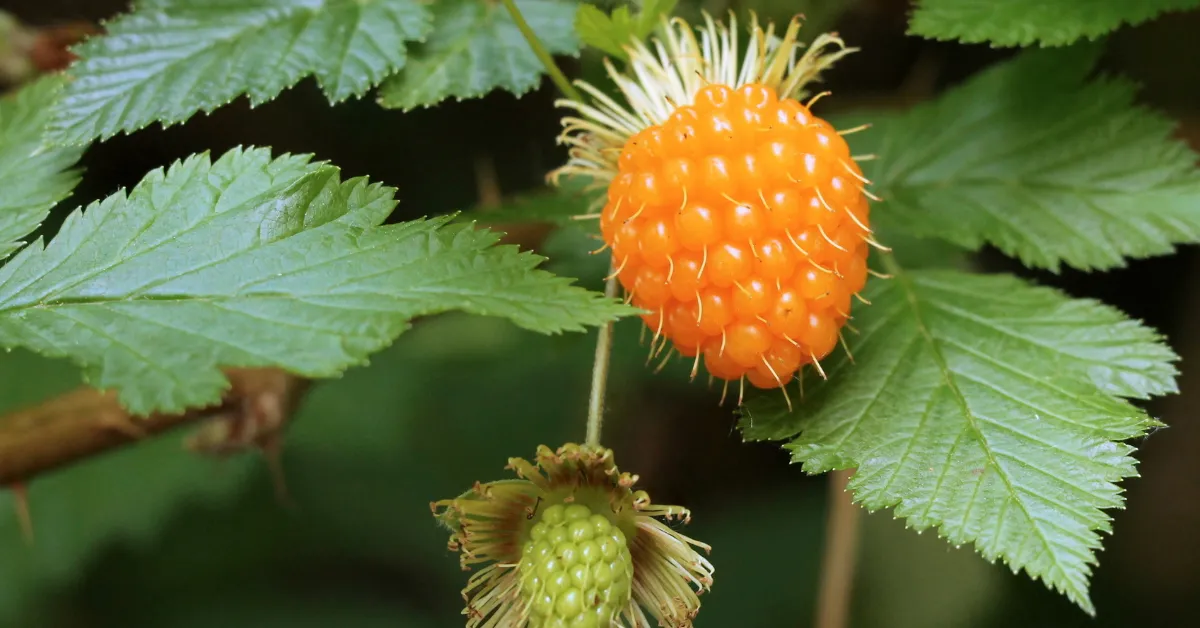
The salmonberry is one of the Pacific Northwest’s most distinctive wild fruits — beautiful, ecologically important, and deeply woven into the food traditions of Indigenous peoples who have harvested it for thousands of years. Yet outside of Oregon, Washington, and Alaska, most Americans have never seen one. This guide changes that.
This complete guide covers everything about Rubus spectabilis: how to identify salmonberries in the wild, what they taste like, their full nutritional profile, science-backed health benefits, foraging safely, recipes, how to grow them, and how they compare to raspberries and other Pacific Northwest berries. Whether you are a forager, a gardener, or simply curious about one of America’s most underappreciated native fruits — this is your definitive resource.
What Is a Salmonberry? Botanical Profile
The salmonberry (Rubus spectabilis) is a deciduous shrub in the rose family (Rosaceae) native to the Pacific coast of North America. It is a close relative of the raspberry and blackberry, sharing the same Rubus genus, but it is a distinct species with its own unique characteristics, habitat, and flavor profile.
The name “salmonberry” has two popular explanations. The most widely accepted is that Indigenous peoples traditionally ate the berries alongside salmon roe — the orange-pink color of the ripe fruit resembling salmon eggs. A second explanation points to the berry’s color, which mirrors the flesh of sockeye salmon.
Scientific name: Rubus spectabilis | Family: Rosaceae | Native range: Pacific Northwest USA and Canada
Height: 6–12 feet | Fruit color: yellow, orange, pink, red | Season: April–July | USDA Zones: 5–9
How to Identify Salmonberries
Salmonberries are relatively easy to identify once you know their key features. They are often confused with raspberries, but several characteristics distinguish them clearly. Here is a complete identification guide:
Fruit
- Shape: Rounded, aggregate fruit — identical in structure to a raspberry, with a hollow center when picked from the plant
- Size: Slightly larger than a wild raspberry — typically 1.5 to 2 cm in diameter
- Color: The most distinctive feature — salmonberries ripen through yellow, orange, salmon-pink, and deep red. All of these colors are ripe — color variation is genetic, not a ripeness indicator
- Surface: Glossy and juicy-looking, with distinct drupelets (the small segments that make up the berry)
Leaves
- Trifoliate (three leaflets per leaf), similar to raspberry
- Leaflets are oval with sharply serrated edges
- Dark green on top, paler underneath
- Leaflets range from 3 to 8 cm long
Stems and canes
- Reddish-brown bark that peels slightly on older canes
- Soft, slender prickles — significantly less sharp and dense than blackberry thorns
- Canes grow upright and can reach 12 feet in favorable conditions
Flowers (a key identifier)
Salmonberry flowers are one of the most beautiful and distinctive features of any Pacific Northwest plant. They bloom before the leaves fully emerge in early spring (February–April), producing large, five-petaled flowers in a vivid magenta-pink to rose-purple color. No other common Pacific Northwest shrub produces this combination of early bloom time and magenta flower color.
| Feature | Salmonberry | Raspberry | Thimbleberry |
|---|---|---|---|
| Fruit color | Yellow, orange, red | Red (or black) | Bright red only |
| Flower color | Magenta-purple | White | White |
| Stem prickles | Soft, sparse | Dense, sharp | None |
| Leaf shape | Trifoliate | Trifoliate or pinnate | Large, maple-like |
| Season | April–July | June–August | July–August |
| Habitat | Moist forests, streams | Open areas, trails | Forest edges |
| Taste | Mild, juicy, subtle | Sweet-tart, bold | Soft, velvety, mild |
Are there any dangerous look-alikes? No. Salmonberries have no toxic look-alikes in the Pacific Northwest. The magenta flowers, multi-colored fruit, and soft prickles are unique enough to identify safely. However, always cross-reference at least three identification features before eating any wild plant.
Where Do Salmonberries Grow in the USA?
Salmonberries are found along the Pacific coast from Alaska down to northern California. They are one of the most abundant wild shrubs in the Pacific Northwest, often forming dense thickets in moist, shaded areas.
| State / Region | Abundance | Best Areas |
|---|---|---|
| Alaska | Extremely common | Coastal forests, Kenai Peninsula, Southeast Alaska |
| Washington | Very common | Olympic Peninsula, Cascades west slope, San Juan Islands |
| Oregon | Common | Coast Range, Willamette Valley foothills, Columbia River Gorge |
| Northern California | Present | Redwood Coast, Humboldt County, Del Norte County |
Salmonberries grow best in moist, shaded environments — near streams and rivers, in coastal wetlands, along logging roads, and in the understory of old-growth forests dominated by cedar, spruce, and hemlock. They are rarely found more than 50 miles inland from the Pacific coast, and they do not grow in the dry climates of eastern Oregon, eastern Washington, or the Southwest.
What Do Salmonberries Taste Like?
Salmonberries are one of the mildest wild berries you will encounter. Foragers expecting the bold sweetness of a blackberry or the sharp tartness of a raspberry are often surprised by how delicate salmonberries are.
The flavor profile: lightly sweet, mildly tart, very juicy, and refreshing but subtle. Many describe the taste as somewhere between a raspberry and a mild apricot, with a watery quality that makes them incredibly thirst-quenching on a hot summer hike.
Color affects flavor: Yellow and orange salmonberries tend to be sweeter and are generally considered the best for fresh eating. Deep red salmonberries are slightly more tart. The difference is genetic — different plants produce different colors — rather than a matter of ripeness.
Ripeness matters: An unripe salmonberry is hard, sour, and unpleasant. A fully ripe one releases from the stem with a gentle touch and has a soft, yielding texture. Never force a berry off the stem — if it resists, it is not ready.
Salmonberry Nutrition Facts
While salmonberries have not been as extensively studied as blueberries or strawberries, nutritional analyses of Rubus spectabilis show they are a genuinely nutritious fruit. The data below is based on available ethnobotanical and nutritional research, sourced in part from the USDA FoodData Central database for related Rubus species.
| Nutrient | Per 100g (estimated) | Key benefit |
|---|---|---|
| Calories | ~47 kcal | Very low calorie snack |
| Water content | ~85% | Excellent hydration |
| Carbohydrates | ~11g | Natural energy |
| Dietary fiber | ~5–6g | Gut health, satiety |
| Vitamin C | High (similar to raspberry) | Immune support, skin health |
| Vitamin A | Moderate | Eye health, immunity |
| Antioxidants (anthocyanins) | Medium-high | Anti-inflammatory, cell protection |
| Manganese | Good source | Bone health, metabolism |
Salmonberries’ high fiber content (5–6g per 100g) is noteworthy — comparable to raspberries and higher than blueberries. Their high water content (around 85%) makes them outstanding for hydration, particularly during summer foraging hikes.
6 Health Benefits of Salmonberries
1. Rich in antioxidants
Like all Rubus berries, salmonberries contain anthocyanins — the plant pigments responsible for their orange-red color and a significant source of antioxidant activity. Antioxidants neutralize free radicals in the body, reducing oxidative stress linked to aging, inflammation, and chronic disease. Research on Rubus species published in the Journal of Agricultural and Food Chemistry consistently shows high antioxidant activity across the genus.
2. High vitamin C content
Salmonberries are an excellent natural source of vitamin C, with levels comparable to raspberries. Vitamin C is essential for immune function, collagen production, wound healing, and iron absorption. Indigenous communities of the Pacific Northwest relied on salmonberries as one of the first fresh fruits of spring — a crucial source of vitamin C after long winters with limited fresh produce.
3. Outstanding for digestive health
With 5–6g of dietary fiber per 100g, salmonberries are one of the higher-fiber wild berries available. Dietary fiber feeds beneficial gut bacteria, supports regular bowel movements, slows sugar absorption, and contributes to a feeling of fullness. For a fruit with only ~47 calories per 100g, this fiber content is exceptional.
4. Hydrating and electrolyte-supporting
With approximately 85% water content, salmonberries are among the most hydrating berries you can eat. They also contain potassium and other electrolytes, making them a natural recovery food for hikers and outdoor enthusiasts — perfectly suited to the Pacific Northwest lifestyle where they grow.
5. Anti-inflammatory properties
The flavonoids and anthocyanins in salmonberries have demonstrated anti-inflammatory properties in research on related Rubus species. Chronic inflammation is a driver of conditions including heart disease, type 2 diabetes, and arthritis. Regular consumption of anthocyanin-rich berries is associated with lower levels of inflammatory markers including C-reactive protein.
6. Traditional women’s health uses
Multiple Pacific Northwest Indigenous groups — including the Tlingit, Haida, and Chinook — used salmonberry shoots, leaves, and berries to support pregnancy and postpartum recovery. Salmonberry bark was used as a traditional remedy for pain relief during labor. While these are historical traditional uses that should not replace modern medical care, they reflect thousands of years of accumulated botanical knowledge about this plant. Always consult a healthcare professional for medical advice.
Salmonberry vs Raspberry: Full Comparison
Salmonberries and raspberries are the most commonly confused Pacific Northwest berries. Here is a definitive side-by-side comparison to help you tell them apart and understand which to use for different purposes:
| Feature | Salmonberry | Raspberry |
|---|---|---|
| Species | Rubus spectabilis | Rubus idaeus |
| Color | Yellow, orange, salmon, red | Red (or black/golden cultivars) |
| Taste | Mild, watery, subtle | Bold sweet-tart |
| Flower color | Vivid magenta-purple | White |
| Season | April–July (earlier) | June–August |
| Habitat | Moist Pacific forests | Open areas, gardens, trails |
| Thorns | Soft, sparse prickles | Sharper, denser prickles |
| Fiber (per 100g) | ~5–6g | ~6.5g |
| Best used for | Jam, syrup, fresh hiking snack | Fresh eating, baking, preserves |
| Native to | Pacific Northwest only | Across North America |
See our full guide to raspberries for a deeper look at their nutrition, growing requirements, and recipes.
Foraging Guide: When and How to Pick Salmonberries
Salmonberries are among the easiest and safest wild berries to forage. Here is everything you need to know to have a successful and safe harvest.
When to forage
Salmonberries are one of the first wild berries to ripen in the Pacific Northwest — often the earliest of any wild fruit in the region. General timing:
- Coastal lowlands (sea level): Late April through June
- Mid-elevation forests: May through July
- Higher elevations: June through early August
The magenta flowers appear weeks before the fruit, giving you advance notice of where to return for berries. Look for flowers in February–April, then revisit in late spring.
How to tell when salmonberries are ripe
- A ripe salmonberry releases from the stem with zero resistance — just a gentle touch
- The fruit should be plump, glossy, and fully colored throughout
- It should feel slightly soft when gently squeezed — not hard and not mushy
- Color alone is not a reliable ripeness indicator — all color forms (yellow through red) can be ripe simultaneously on the same plant
Foraging ethics and safety
- Forage only on public land or with landowner permission
- Take no more than 20–30% of berries from any single area — leave the rest for wildlife
- Avoid berries within 50 feet of roadsides or areas that may have been treated with herbicides
- Wash all foraged berries before eating
- Be aware of your surroundings — salmonberry patches are heavily used by black bears in Alaska and the Pacific Northwest. Make noise while foraging and carry bear awareness
- Use breathable containers (baskets, paper bags) rather than sealed plastic, which causes rapid spoilage
5 Salmonberry Recipes
Salmonberries’ mild flavor works beautifully in cooked preparations where their juice and natural sweetness are concentrated. Here are five tried-and-tested ways to use them:
1. Salmonberry jam
Because salmonberries are low in natural pectin, combine them with a higher-pectin fruit for the best set. Simmer 3 cups of salmonberries with 1 cup of raspberries or blackberries, 2 cups of sugar, and the juice of one lemon over medium heat for 20–25 minutes until thickened. Pour into sterilized jars. The resulting jam has a beautiful salmon-orange color and a gentle berry flavor that pairs perfectly with sourdough toast.
2. Salmonberry syrup
Simmer 2 cups of salmonberries with ½ cup of water and ¾ cup of sugar for 10 minutes. Strain through a fine mesh sieve and cool. Use over pancakes, waffles, yogurt, ice cream, or as a cocktail mixer. Lasts 2 weeks refrigerated or 6 months frozen.
3. Salmonberry smoothie
Blend 1 cup of frozen salmonberries with 1 banana, ¾ cup Greek yogurt, a tablespoon of honey, and ½ cup of almond milk. The mild salmonberry flavor pairs well with stronger fruits. Add a handful of spinach for a nutrient-dense boost that you will not taste over the berries.
4. Salmonberry muffins
Fold 1.5 cups of fresh or frozen salmonberries into your favorite muffin batter, reducing the sugar by 10% since the berries provide natural sweetness. Bake at 375°F for 20–22 minutes. The berries hold their shape better than raspberries when baked and create beautiful orange-pink pockets throughout the muffin.
5. Traditional salmonberry and salmon pairing
Honor the berry’s Indigenous heritage by pairing fresh or lightly sautéed salmonberries with grilled Pacific salmon. Simply warm 1 cup of salmonberries in a pan with a teaspoon of butter and a pinch of salt for 3–4 minutes until just softened. Spoon over grilled salmon fillets as a sauce. The mild tartness of the berry cuts beautifully through the richness of the fish — exactly as it has been enjoyed on the Pacific Coast for thousands of years.
Can You Grow Salmonberries at Home?
Yes — if you live in the right climate. Salmonberries can be grown as a garden shrub in the Pacific Northwest and similar cool, moist climates. They are not suitable for hot, dry regions.
| Requirement | Ideal conditions | Notes |
|---|---|---|
| USDA Zones | 5–9 | Best in zones 7–9 (Pacific NW) |
| Soil | Moist, rich, slightly acidic | pH 5.5–7.0 |
| Sunlight | Partial shade preferred | Tolerates full shade; less fruit in deep shade |
| Water | Consistently moist | Does not tolerate drought; mulch heavily |
| Space | Needs room to spread | Can spread aggressively via suckers; control with root barriers |
| Wildlife value | Excellent | Attracts hummingbirds (flowers), songbirds, and butterflies |
Where to buy salmonberry plants: Salmonberry plants are available from native plant nurseries in the Pacific Northwest. Look for suppliers that grow regionally sourced plants — these will be better adapted to your local climate than plants from other regions. Organizations like the Native Plant Network can help you find regional native plant sources.
One caution: Salmonberries spread vigorously by underground runners (suckers). In a small garden, install root barriers at planting time to keep them contained. In a larger naturalized area, this spreading habit is a feature rather than a bug — they quickly establish a productive patch.
Cultural and Indigenous Significance
Salmonberries have been an important food and medicine plant for Pacific Northwest Indigenous peoples for at least 10,000 years. The berry’s early ripening made it one of the first fresh fruits available after winter — an event celebrated and planned for in many cultures.
Among the tribes that have traditionally used salmonberries:
- Tlingit and Haida (Alaska and British Columbia): Ate berries fresh and preserved them by mixing with oolichan grease (a type of rendered fish oil). The flowers were also eaten as a spring vegetable.
- Chinook and Salish (Oregon and Washington): Ate berries alongside salmon roe — the most widely cited origin of the name “salmonberry.” The combination of fish and berries provided a complete protein-carbohydrate meal.
- Tlingit and Athabascan (Alaska): Used salmonberry shoots in spring as a cooked green vegetable, similar to asparagus. Young shoots were peeled and eaten raw or boiled.
The plant also held medicinal significance. Bark preparations were used to ease labor pain; leaf teas were used for various complaints; and the berries were given to postpartum women as nourishing food. These uses are documented in ethnobotanical research compiled by the University of British Columbia’s First Nations Ethnobotany project.
Frequently Asked Questions About Salmonberries
Are salmonberries edible?
Yes, completely. Salmonberries are safe to eat and have been consumed for thousands of years by Pacific Northwest Indigenous peoples. All color forms — yellow, orange, salmon-pink, and red — are edible when ripe. There are no toxic look-alikes in the Pacific Northwest that could be confused with salmonberries.
What do salmonberries taste like?
Mild, juicy, lightly sweet, and subtly tart. Much milder than raspberries. Yellow and orange varieties are sweeter; red ones are slightly more tart. Many describe the taste as a cross between a raspberry and a mild apricot. They are best appreciated fresh or cooked into jam and syrup, where their delicate flavor concentrates.
When are salmonberries in season?
Salmonberries are one of the earliest-ripening wild berries in the Pacific Northwest. Coastal lowland areas: late April through June. Mid-elevation forests: May through July. Higher elevations: June through early August. They ripen several weeks before raspberries and blackberries.
Are salmonberries the same as raspberries?
No. They are related — both are in the genus Rubus — but they are distinct species. Salmonberries (Rubus spectabilis) are native to the Pacific Northwest, ripen earlier, come in orange and red colors, have magenta-purple flowers, and have a much milder, more delicate flavor than raspberries (Rubus idaeus).
Why do salmonberries come in different colors?
Color variation in salmonberries is genetic — different individual plants produce yellow, orange, or red fruit, and all colors can be ripe at the same time. It is not an indicator of ripeness. Yellow and orange berries tend to taste sweeter; red berries are slightly more tart. Ripeness is best judged by whether the berry releases easily from the stem.
Conclusion: A Pacific Northwest Treasure Worth Knowing
The salmonberry is a remarkable plant — one of the first fruits of the Pacific Northwest spring, a cornerstone of Indigenous food traditions, a vital food source for wildlife, and a genuinely nutritious and versatile wild berry. Its mild flavor and striking colors make it unlike any other wild fruit in North America.
If you live in or visit the Pacific Northwest, learning to identify salmonberries opens up a foraging opportunity that arrives earlier in the year than almost any other wild fruit. Look for the vivid magenta flowers in early spring, and return to those same spots in late April through June for the berries.
More from Berry Nation USA
Written by Kirna — Berry Nation USA
Berry Nation USA is America’s home for wild, native, and cultivated berry guides. Learn more about us.
1 thought on “Salmonberry (Rubus spectabilis): Complete Guide”