
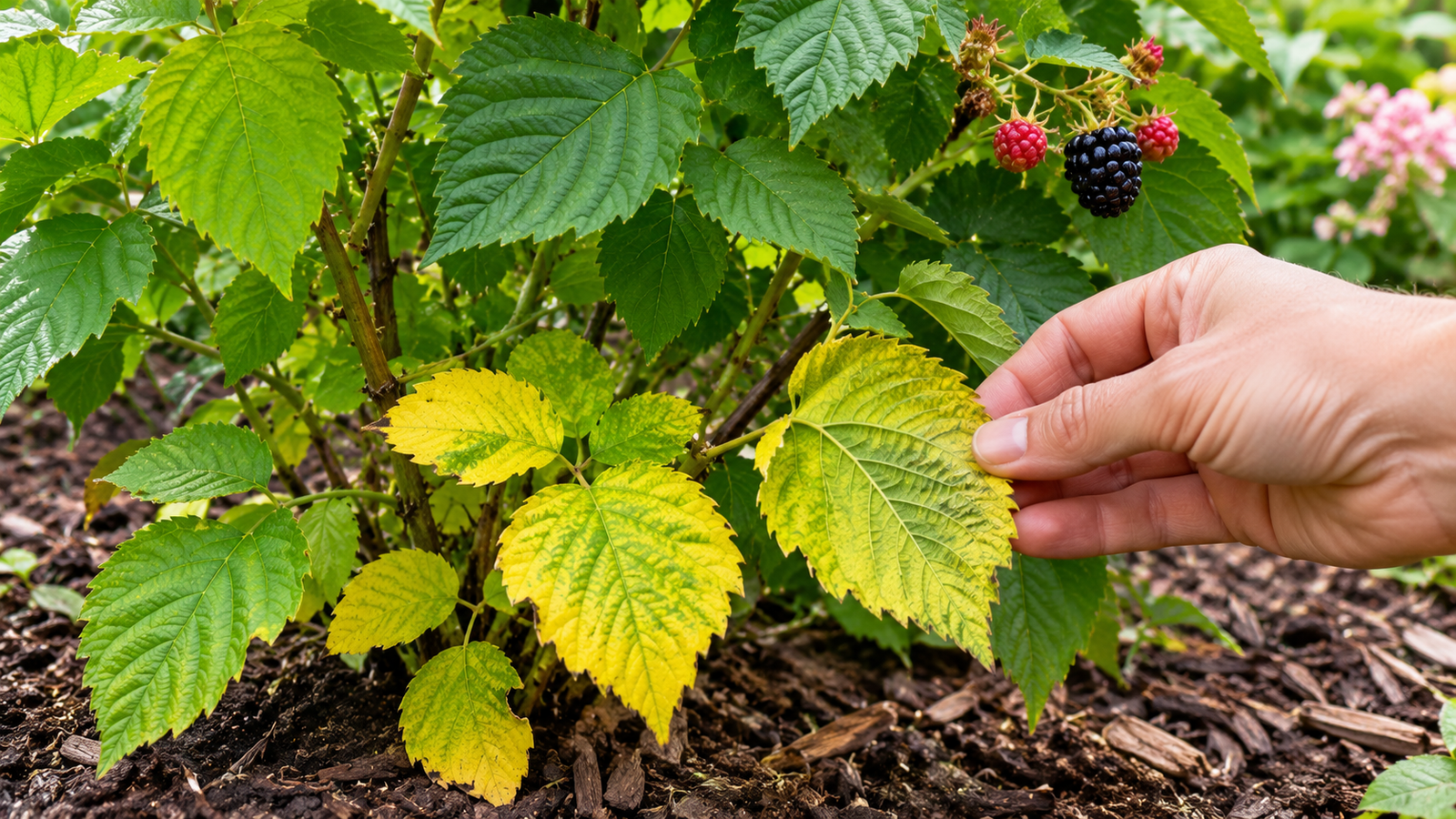
Seeing yellow leaves on a blackberry bush can be worrying, especially when the plant is supposed to be growing new canes or developing fruit. The good news is that yellow foliage does not point to one single problem. It can be related to watering, drainage, nutrient availability, pests, disease, or simply the normal seasonal cycle of the plant.
To work out why your blackberry leaves are turning yellow, look at which leaves are affected, how quickly the color is changing, and what the soil and canes look like. This guide walks through the common possibilities and explains what to check before applying fertilizer or other treatments.
Quick Answer: Why Are Blackberry Leaves Turning Yellow?
Blackberry leaves may turn yellow because of:
- Soil that stays too wet or drains poorly
- Dry soil and inconsistent watering
- Nutrient shortages or nutrients that are unavailable because of soil pH
- Natural leaf aging near the end of the growing season
- Insect feeding or a plant disease
- Stress after planting, root disturbance, or extreme weather
Do not assume that yellow leaves always mean the plant needs more fertilizer. Waterlogged or damaged roots can struggle to absorb nutrients even when those nutrients are present in the soil.
1. Overwatering or Poor Soil Drainage
Too much water is one of the first things to investigate when several blackberry leaves turn pale or yellow. Blackberry roots need oxygen as well as moisture. When soil remains saturated, air spaces fill with water and roots may become stressed. Severe or prolonged waterlogging can contribute to root rot.
Signs to look for
- Soil remains wet long after rain or irrigation.
- Lower leaves become yellow while the plant looks weak or wilted.
- Growth slows, and the plant may fail to produce strong new canes.
- In serious cases, roots may look dark and soft rather than firm and healthy.
What to do
Pause routine watering while the root zone is still wet. Check whether the planting area has standing water, compacted soil, or a blocked drainage route. Improve drainage where practical, and avoid frequent shallow watering. For container-grown blackberries, make sure the pot has open drainage holes and is not sitting in a full saucer.
2. Underwatering and Dry Soil
Blackberries need consistent moisture while shoots are growing and fruit is developing. During hot, dry weather, a plant can lose water faster than its roots can replace it. Drought stress may cause leaves to yellow, curl, wilt, or develop dry brown edges.
Signs to look for
- The soil is dry several inches below the surface.
- Leaves droop during the hottest part of the day.
- Leaf edges become dry or crispy.
- New growth looks weak, especially during a prolonged dry spell.
What to do
Water deeply enough to moisten the root zone, then allow excess water to drain. Check soil moisture before watering again instead of following a rigid daily schedule. A layer of organic mulch can reduce moisture loss; keep mulch slightly away from the base of the canes.
3. Nutrient Deficiency or Soil pH Problems
Yellowing can also be associated with nutrient problems. The pattern on the leaf can offer a clue, but it cannot confirm a deficiency on its own. Soil pH affects how easily roots can take up nutrients, so adding fertilizer without checking the soil can waste money or make an imbalance worse.
Nitrogen shortage
Nitrogen is mobile within plants. When supply is limited, older leaves may become generally pale or yellow first, and growth may be slower than expected. Similar symptoms can occur when roots are stressed, so check moisture and drainage too.
Iron availability and high soil pH
When young leaves turn yellow but their veins remain greener, the pattern may be interveinal chlorosis. Iron availability can be reduced in high-pH soil, even when the soil contains iron. A soil test is a better next step than applying iron products at random.
What to do
Use a soil test to check pH and nutrient levels. Follow local extension recommendations for blackberry soil management and fertilizer rates. Avoid heavy applications of nitrogen or multiple supplements at once; excess fertilizer can injure roots and create further problems.
4. Natural Seasonal Yellowing
Not every yellow leaf is a sign of trouble. Blackberry plants are deciduous, and older leaves naturally change color and drop as the plant moves toward dormancy. Some lower or older leaves may also be lost as the canopy develops.
Seasonal yellowing is more likely when it happens gradually toward the end of the growing season, the canes remain firm, and most of the plant has otherwise grown normally. Sudden yellowing across many leaves during active spring or summer growth deserves closer inspection.
If the plant is healthy and entering dormancy, avoid trying to force green growth with extra fertilizer. Remove fallen or diseased debris as part of normal garden cleanup.
5. Pests That Can Cause Yellow or Speckled Leaves
Some sap-feeding insects damage leaf tissue and create yellow patches or speckles. Spider mites, for example, can cause fine pale stippling and may leave delicate webbing on the undersides of leaves. Aphids can cluster on tender shoots and leaf undersides, sometimes causing curling or distorted growth.
How to inspect the plant
- Turn over leaves and check along the veins.
- Look for tiny moving insects, shed skins, sticky residue, or fine webbing.
- Check whether the damage is concentrated on new growth or scattered across the plant.
- Inspect nearby plants to see whether the problem is spreading.
What to do
Identify the pest before choosing a control. For a small infestation, washing pests from foliage with a firm stream of water may help. If a labeled insecticidal soap or horticultural product is needed, follow its label exactly and check that it is suitable for the crop and the pest. Avoid spraying pollinators or flowering plants when bees are active.
6. Leaf Diseases and Other Plant Stress
Fungal or other diseases can cause yellow spots, unusual patterns, leaf drop, or cane decline. A few yellow leaves alone are not enough to identify a disease. Look for additional signs such as orange pustules on leaf undersides, expanding spots, unusual mottling, cane lesions, or dieback.
Weather injury, root disturbance, transplant shock, and damage from cultivation can also affect water and nutrient uptake. If symptoms are spreading or the canes are declining, take clear photos and seek a diagnosis from a local Cooperative Extension office or plant diagnostic laboratory. Avoid applying a fungicide until the likely disease has been identified.
How to Diagnose Yellow Blackberry Leaves: A Simple Checklist
Use this checklist to narrow down what may be happening before you treat the plant:
- Check the timing: Did yellowing start after heavy rain, a heat wave, planting, or harvest?
- Check leaf age: Are older lower leaves affected, or is the newest growth yellow?
- Look at the pattern: Is the whole leaf pale, are the veins still green, or are there small spots and speckles?
- Feel the soil: Is it soggy, evenly moist, or dry below the surface?
- Inspect the roots and crown if decline is serious: Look for poor drainage, injury, or soft, discolored roots.
- Inspect leaf undersides and canes: Check for insects, webbing, pustules, spots, and lesions.
- Test before feeding: Use a soil test to guide pH and fertilizer decisions.
These observations help narrow the possibilities; they are not a substitute for laboratory diagnosis when a serious disease is suspected.
How to Prevent Blackberry Leaves from Turning Yellow
- Choose a well-drained planting site: Avoid low areas where water collects around the roots.
- Water according to soil moisture: Keep the root zone evenly moist during active growth without leaving it saturated.
- Mulch carefully: Use organic mulch to reduce weeds and conserve moisture, but do not pile it against the canes.
- Test soil periodically: Base pH adjustments and fertilizer applications on test results.
- Maintain airflow: Train and prune canes so the planting is not excessively crowded.
- Keep tools clean: Clean pruning tools, especially when moving between plants with suspicious symptoms.
- Remove affected debris: Clear fallen leaves and spent canes where disease is suspected, and dispose of them appropriately.
When Should You Worry About Yellow Blackberry Leaves?
Get local diagnostic help if yellowing spreads quickly, several canes wilt or die, the crown appears damaged, leaves show unusual mosaic patterns, or orange pustules and expanding lesions appear. A plant that has yellow leaves but firm canes and healthy new growth may need observation rather than immediate treatment.
Frequently Asked Questions
Why are the bottom leaves on my blackberry plant turning yellow?
Older lower leaves can yellow as part of normal aging, but lower-leaf yellowing can also occur with waterlogged roots or nutrient stress. Check the season, soil moisture, and overall cane vigor before deciding what to do.
Why are new blackberry leaves yellow but the veins are green?
Yellow tissue between green veins on young leaves can be a sign of iron chlorosis, sometimes associated with high soil pH. Confirm the soil pH with a test and seek local guidance before applying an iron treatment.
Should I remove yellow leaves from my blackberry bush?
You can remove leaves that are fully dead or clearly diseased, using clean tools. Do not strip the plant of partly green leaves without a reason; they may still be contributing to growth.
Can overwatering make blackberry leaves turn yellow?
Yes. Soil that remains saturated can deprive roots of oxygen and interfere with normal water and nutrient uptake. Improve drainage and adjust watering based on actual soil moisture.
Should I fertilize a blackberry bush with yellow leaves?
Not automatically. Yellowing can result from too much water, too little water, root injury, disease, or nutrient unavailability. Check growing conditions and use a soil test before applying fertilizer.
Do blackberry leaves turn yellow in fall?
Yes. Blackberries are deciduous, so older leaves naturally yellow and drop as plants prepare for dormancy. Sudden yellowing during active growth, especially with wilting or cane decline, needs investigation.
Final Thoughts
If your blackberry leaves are turning yellow, start with the basics: check the soil moisture, identify which leaves are affected, and inspect both sides of the foliage. Watering and drainage problems are worth checking first, while a soil test can help clarify nutrient and pH questions. Treat the cause you can support with evidence rather than applying fertilizer or sprays as a guess.
For more help with your berry patch, read our guides on how to prune blackberry bushes, blueberry bush spacing, and growing raspberries in containers.