
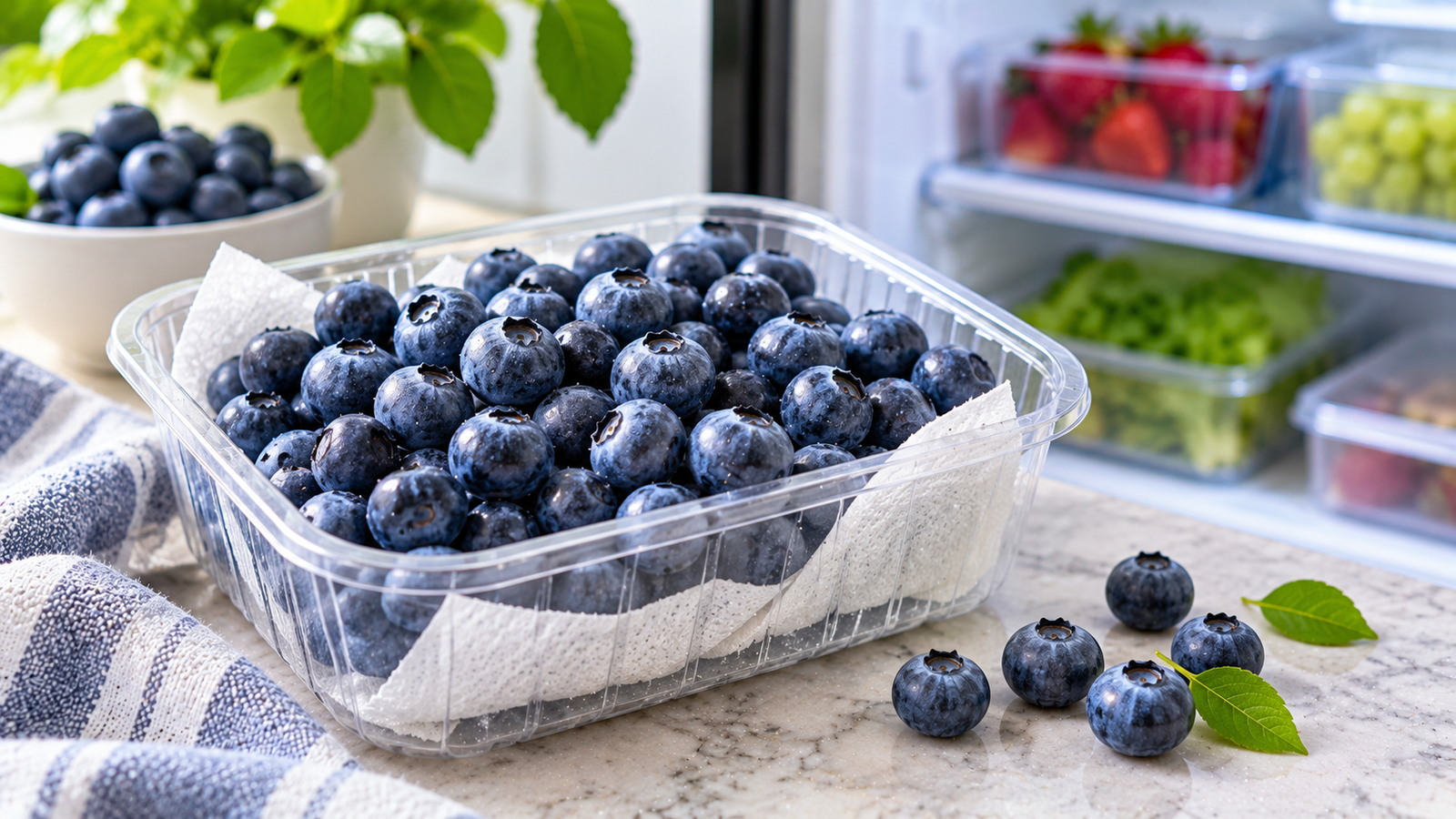
Fresh blueberries can keep in the refrigerator for about 10 days to 2 weeks when they are fresh at purchase, kept cold, and stored dry. Purdue Extension gives a storage range of 10 days to two weeks for refrigerated blueberries. Your actual results can be shorter or longer depending on how ripe the berries were when bought, how they were handled, moisture, and refrigerator temperature.
To help blueberries last as long as possible, refrigerate them promptly, keep them unwashed until you are ready to eat them, remove damaged berries, and store them in their original ventilated carton or a shallow container. Check the fruit regularly and discard berries that show mold or spoilage.
How Long Will Blueberries Keep in the Fridge?
As a practical quality guideline, plan to use fresh blueberries within 10 days to 2 weeks of purchase when stored properly in the refrigerator. This is an estimate, not a guarantee that every pack will stay fresh for the full two weeks.
Purdue Extension’s blueberry storage guidance recommends refrigerating blueberries in a single layer in a shallow container with a loose lid and notes that they can keep for 10 days to two weeks. NC State Extension also describes up to two weeks under controlled cold-storage conditions. These are best-quality estimates; inspect the berries rather than relying on the calendar alone.
Blueberry Storage Time at a Glance
- Fresh, unwashed blueberries in the fridge: About 10 days to 2 weeks under good storage conditions.
- Washed blueberries: Use sooner; extra surface moisture can encourage deterioration, especially if the berries are not dried thoroughly.
- Blueberries left at room temperature: Refrigerate promptly rather than leaving the container out for extended periods.
- Frozen blueberries: Keep continuously frozen; use within the recommended best-quality period on your storage guidance or packaging.
What Affects How Long Blueberries Last?
1. Freshness when you buy them
Blueberries that are already soft, leaking, shriveled or damaged will not last as long as firm, dry fruit. Check the bottom of the carton before buying, because crushed berries or pooled juice can be easy to miss.
2. Moisture on the berries
Washing blueberries before putting them away can leave water trapped in the container. Excess moisture can encourage mold and faster spoilage. The U.S. Highbush Blueberry Council recommends refrigerating berries without washing and rinsing them just before eating.
3. Refrigerator temperature
A consistently cold refrigerator helps slow quality loss. Keep the refrigerator at 40°F (4°C) or below, as recommended by food-safety guidance. Avoid leaving blueberries on the counter while unpacking groceries or preparing other food.
4. Container and airflow
Blueberries need protection from crushing, but they should not sit in trapped moisture. Their original ventilated clamshell can work well. A shallow covered container is another option; avoid tightly packing the fruit or pressing heavy items on top.
How to Store Blueberries in the Fridge So They Last Longer
- Inspect the carton. Remove any moldy, leaking, crushed or shriveled berries as soon as you notice them.
- Keep them dry. Do not rinse the whole batch before storage. Wait until just before eating or using the berries.
- Use a suitable container. Keep them in the original ventilated carton or transfer them gently to a clean, shallow container.
- Avoid overcrowding. A single layer is ideal when practical. If you have a large quantity, use more than one container rather than compressing the fruit.
- Refrigerate promptly. Put the berries in the refrigerator soon after purchase. Keep the container away from foods that may crush it or leak onto it.
- Check every day or two. Remove berries that become moldy, very soft or leaky so you can assess the rest of the batch.
For a broader step-by-step guide, read our related article: How to Store Blueberries: Keep Fresh Berries Longer. That guide covers choosing a container, washing, freezing and identifying spoilage.
Should You Wash Blueberries Before Refrigerating Them?
It is generally better to store blueberries unwashed and rinse only the amount you plan to eat. Water left on the fruit or in the container can shorten its useful storage life. When you are ready to eat them, place the portion in a colander and rinse gently under cool, clean running water. Drain well before serving.
Do not use soap, detergent or household cleaners on fresh produce. Washing helps remove surface dirt, but it does not make spoiled fruit safe to eat.
Where Is the Best Place to Put Blueberries in the Refrigerator?
Keep blueberries in a consistently cold part of the refrigerator where the carton will not be crushed. A crisper drawer can work if it stays cold and the container remains dry. Avoid storing the berries in the refrigerator door, where temperatures can fluctuate more often as the door opens and closes.
How to Tell If Blueberries Have Gone Bad
Check the whole container before eating the fruit. Discard berries that show clear signs of spoilage, such as:
- Visible mold: Fuzzy white, gray or green growth on the fruit.
- Leaking juice: Several berries are split, wet or surrounded by pooled liquid.
- Very soft or mushy texture: The berries collapse easily or have become slimy.
- Unpleasant smell: A fermented, sour or rotten odor rather than a mild fruity smell.
- Widespread deterioration: Many berries in the carton are shriveled, damaged or breaking down.
Do not taste a berry to decide whether visible mold is safe. Discard moldy fruit and use caution if spoilage has spread through the container. When in doubt, throw it out.
Can You Eat Blueberries After 2 Weeks in the Fridge?
Possibly, but two weeks is not a safety deadline or a guarantee. Some carefully handled blueberries may still look and smell good near that point, while other packs spoil much sooner. Check for mold, leaking, unusual softness and off odors before use. Do not eat berries that show signs of spoilage, even if they have been refrigerated for only a few days.
Can You Freeze Blueberries Before They Go Bad?
Yes. If you cannot use the berries while they are fresh, freezing is a convenient way to preserve them for smoothies, muffins, pancakes and sauces.
- Sort the berries and discard damaged or moldy fruit.
- If you rinse them, dry them thoroughly with a clean towel.
- Spread the blueberries in a single layer on a rimmed tray.
- Freeze until firm, then transfer them to a freezer-safe bag or container.
- Label the package with the date and return it promptly to the freezer.
Frozen blueberries may be softer after thawing, but they work well in cooked and blended recipes. For more details, see the U.S. Highbush Blueberry Council’s storage and freezing advice.
Frequently Asked Questions
How long do fresh blueberries last in the refrigerator?
Fresh blueberries can keep for about 10 days to two weeks when refrigerated, stored dry and handled carefully. This is a quality estimate; freshness at purchase and storage conditions make a difference.
Do blueberries last longer in an airtight container?
Not necessarily. A clean container can protect blueberries, but trapping excess moisture may encourage spoilage. Keep berries dry and use the original ventilated carton or a shallow container with a loose cover.
Should blueberries be stored in the crisper drawer?
They can be stored in the crisper if it stays cold and the berries remain dry and protected from crushing. The most important points are prompt refrigeration, low moisture and regular inspection.
Why are my blueberries moldy after only a few days?
The berries may have been damaged or already contaminated with mold before purchase, or moisture may have remained in the container. Remove spoiled berries, keep the rest dry and refrigerated, and discard the batch if mold is widespread.
Can I wash blueberries and then put them back in the fridge?
You can, but dry them thoroughly first and understand that pre-washing may shorten storage time. For the best keeping quality, wash only the portion you are ready to eat.
Do blueberries need to be refrigerated?
Refrigeration is the best choice when you want to keep fresh blueberries for more than a short serving period. Chill them promptly and keep them at 40°F (4°C) or below.
Keep Your Blueberries Fresh and Ready to Enjoy
For the best chance of keeping blueberries fresh, refrigerate them promptly, store them unwashed and dry, remove damaged fruit, and check the carton regularly. A useful planning estimate is about 10 days to two weeks, but the condition of the berries matters more than the date. If you will not use them in time, freeze the sound berries before they begin to deteriorate.
Storage note: Time ranges are general best-quality guidance, not guarantees of safety. Always inspect fresh fruit and discard berries showing mold or spoilage.