
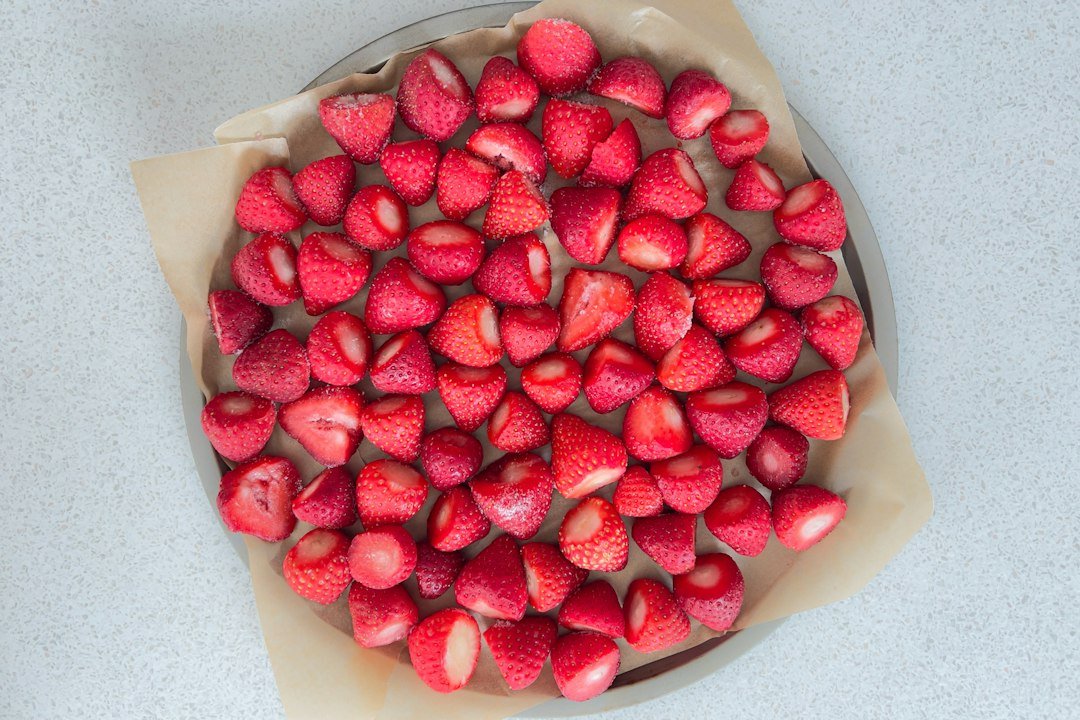
Homemade berry fruit leather is a chewy, portable snack that makes good use of ripe strawberries, raspberries, blueberries, or a mixed-berry blend. You only need fruit, a little lemon juice, and optional sweetener. The key is spreading the purée evenly and drying it slowly until the center is no longer wet.
Why Make Berry Fruit Leather at Home?
Fruit leather concentrates the natural flavor of berries into thin, flexible strips. You can adjust the sweetness, combine berries to use what you have, and cut the finished sheet into snack-size pieces. It is different from jam because the purée is dried rather than cooked down into a spread.
Ingredients
- 2 cups ripe strawberries, raspberries, blueberries, or mixed berries
- 2 teaspoons lemon juice
- 1–2 tablespoons honey or sugar, optional
- Up to 1 cup unsweetened applesauce, optional, if the berry purée is very thin
How to Make Berry Fruit Leather
1. Wash and prepare the berries
Remove stems, leaves, and any spoiled pieces. Rinse fresh berries under cool running water and pat dry. If using frozen berries, thaw them and drain excess liquid before blending. For general produce-safety advice, follow the FDA’s guidance for cleaning fruits and vegetables.
2. Blend the fruit
Blend the berries with lemon juice until smooth. Taste the purée before adding sweetener; ripe berries may not need any. If the mixture looks watery, blend in a little unsweetened applesauce or simmer the purée briefly in a saucepan to thicken it, then cool it before the next step.
3. Heat the purée for safer preparation
Before drying, heat the purée to 160°F (71°C), checking with a food thermometer and stirring so it heats evenly. Penn State Extension recommends this step to help address bacteria that may survive the drying process. See its detailed berry fruit roll-up instructions.
4. Spread it in a thin, even layer
Line a rimmed baking sheet with a suitable nonstick fruit-leather liner or nonstick drying sheet. Spread the warm purée about ⅛ to ¼ inch thick, keeping the center and edges as even as possible. Avoid waxed paper, which can stick to the finished leather.
5. Dry slowly
Use a dehydrator or an oven that can maintain a low temperature around 140°F. Drying time varies with berry type, moisture, layer thickness, and equipment; it can take several hours. Follow your appliance’s instructions and check frequently near the end. The leather is ready when the center is no longer wet, does not leave an indentation when lightly touched, and peels away cleanly. Do not rely on the clock alone.
6. Cool, cut, and roll
Peel the leather from the liner while it is still slightly warm, let it cool, then cut it into strips. Roll each strip in parchment or food-safe wrap to make individual portions.
Tips for Better Results
- Mix flavors: Strawberry-blueberry and raspberry-blackberry blends both work well.
- Keep the layer level: Thick patches stay damp while thin edges may become brittle.
- Skip extra sugar if possible: Drying intensifies the fruit flavor, so taste the purée first.
- Use applesauce carefully: It can help thicken watery berry purée, but too much changes the berry flavor.
How to Store Homemade Berry Fruit Leather
Make sure the leather is fully dry and cool before wrapping. Store it tightly wrapped in the refrigerator or freezer for longer keeping quality, following tested guidance for fruit leathers. If you notice moisture, condensation, an off smell, or mold, discard it rather than tasting it.
Ways to Enjoy It
Pack strips for hikes, lunch boxes, or road trips; snip them over yogurt; or pair them with nuts for a simple snack. If you have extra fruit, you can also try our easy berry chia jam or learn how to freeze fresh berries without clumping for another way to preserve a seasonal haul.
Frequently Asked Questions
Can I use frozen berries?
Yes. Thaw them first, drain excess liquid, and blend until smooth. Frozen berries may need a little more drying time if the purée is especially wet.
Do I need to add sugar?
No. Sweetener is optional. Very tart berries may benefit from a small amount, but the drying process concentrates the flavor.
Why is the middle still sticky or wet?
The sheet may be too thick or need more drying time. Continue drying at the recommended low temperature and check the center rather than judging only by the edges.
Can I dry it at a high oven temperature to finish faster?
No. High heat can dry the outside too quickly while leaving moisture inside. Use a low, steady temperature and follow a tested food-preservation method.
Food-safety note: drying times vary by equipment and conditions. Follow the linked extension guidance and your dehydrator or oven manufacturer’s instructions.