
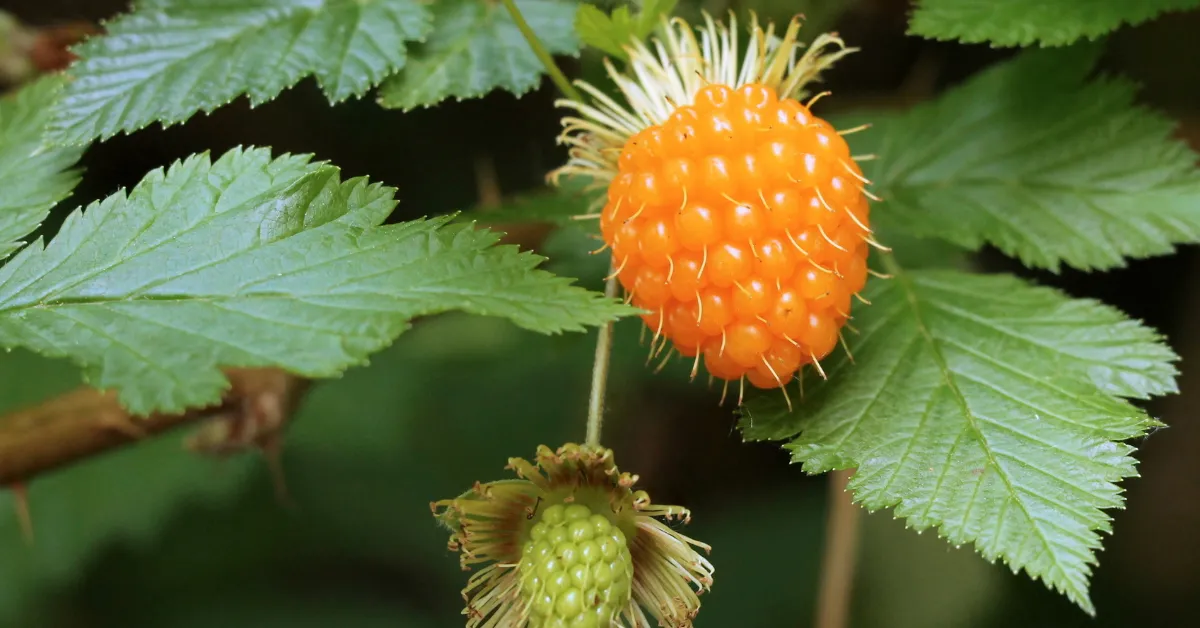
The Salmonberry (Rubus spectabilis) is one of the most unique wild berries found in the Pacific Northwest of North America. Known for its vibrant orange-red to deep salmon color, this berry thrives in the cool, damp forests of Washington, Oregon, British Columbia, and Alaska.
Although not as globally famous as blueberries or raspberries, salmonberries are a cultural icon, a forager’s treasure, and a native berry deeply tied to Indigenous traditions.
This complete guide explores everything you need to know — from identification, taste, health benefits, nutrition, habitat, harvesting, recipes, and safety, to tables that help compare salmonberries with similar berries.
Contents
- 1 What Makes Salmonberry Special?
- 2 What Do Salmonberries Look Like? (Easy Identification Guide)
- 3 Where Do Salmonberries Grow?
- 4 What Do Salmonberries Taste Like?
- 5 Are Salmonberries Edible? Yes — and Nutritious!
- 6 Salmonberry Nutritional Value
- 7 Salmonberry Health Benefits
- 8 Salmonberry vs. Similar Berries (Comparison Table)
- 9 How to Eat Salmonberries
- 10 How to Harvest Salmonberries (Safety Guide)
- 11 How the Pacific Climate Impacts Salmonberry Growth
- 12 Can You Grow Salmonberries at Home?
- 13 History & Cultural Significance
- 14 Are Salmonberries the Same as Thimbleberries?
- 15 Popular Salmonberry Recipes
- 16 Environmental Importance of Salmonberries
- 17 Conclusion: Why Salmonberries Deserve More Recognition
What Makes Salmonberry Special?
Salmonberries are one of the few berries that ripen as early as late spring, sometimes appearing even before raspberries and blackberries. Their bright colors and mild taste make them an accessible berry for foragers and hikers across the Pacific Northwest.
Quick facts:
- Scientific name: Rubus spectabilis
- Family: Rosaceae (rose family)
- Native to: Pacific Northwest (USA & Canada)
- Fruit color: Yellow, orange, pink, red, magenta
- Taste: Mild, juicy, slightly sweet
- Plant type: Deciduous shrub
- Height: 6–12 feet
What Do Salmonberries Look Like? (Easy Identification Guide)
Salmonberries are often confused with raspberries because of their similar shape and structure. However, several features make salmonberries easy to identify:
1. Color Variations
Salmonberries come in:
- Deep salmon pink
- Orange
- Bright red
- Yellow (rare)
These color differences are natural and not indicators of ripeness alone.
2. Fruit Shape
- Hollow center when picked (like raspberries)
- Cone-shaped
- Slightly larger than a raspberry
3. Leaves
- Leaves are trifoliate (three leaflets)
- Serrated edges
- Dark green with a rugged texture
4. Stems
- Stems have soft prickles (less sharp than blackberries)
- Reddish-brown bark
5. Flowers
One of the most beautiful features:
- Large, bright magenta-purple flowers
- Bloom before the fruit develops
- Five petals
Where Do Salmonberries Grow?
Salmonberries are native to and thrive in the Pacific Northwest because of its damp climate and forested environment.
Geographic Range
| Region | Presence |
|---|---|
| Washington State | Very common |
| Oregon | Common in coastal forests |
| Northern California | Found in redwood regions |
| British Columbia | Abundant |
| Alaska | Extremely common in coastal areas |
Typical Habitat
Salmonberries grow in:
- Moist forests
- Near streams and rivers
- Roadsides and trails
- Coastal wetlands
- Shaded mountain valleys
They prefer cool, damp, shaded environments and often grow below towering cedar, spruce, and hemlock trees.
What Do Salmonberries Taste Like?
The salmonberry taste is one of the most debated topics among foragers. Unlike raspberries or blackberries, which are known for their bold sweetness, salmonberries have a much milder flavor.
Flavor Profile
- Lightly sweet
- Mildly tart
- Very juicy
- Refreshing but subtle
Some describe the flavor as:
“A cross between a raspberry and a mild apricot.”
Why Some People Think Salmonberries Taste Bland
Their flavor varies due to:
- Rainfall
- Sunlight exposure
- Ripeness
- Color variation
Yellow salmonberries are often considered the sweetest.
Are Salmonberries Edible? Yes — and Nutritious!
Salmonberries are 100% edible and have been consumed for thousands of years by Indigenous communities of the Pacific Northwest.
Traditional Indigenous Uses
- Eaten fresh
- Mixed with salmon roe (hence the name “salmonberry”)
- Used in fish dishes
- Made into preserves
- Leaves used medicinally
Salmonberry Nutritional Value
Although not as heavily studied as blueberries, salmonberries offer excellent nutritional benefits.
Nutritional Table (Per 100g of Fresh Salmonberries)
| Nutrient | Amount | Benefit |
|---|---|---|
| Calories | 47 kcal | Low-calorie snack |
| Carbohydrates | 11 g | Natural energy |
| Fiber | 5–6 g | Supports digestion |
| Vitamin C | High | Boosts immunity |
| Antioxidants | Medium | Supports cell protection |
| Vitamin A | Moderate | Eye and skin health |
| Water content | 85% | Hydration |
Key takeaway: Salmonberries are hydrating, antioxidant-rich, and a light, natural snack.
Salmonberry Health Benefits
Here are the top scientifically supported and traditional health benefits:
1. Rich in Antioxidants
Helps fight free radicals and may reduce inflammation.
2. High Vitamin C Content
Supports the immune system and skin health.
3. Good for Digestion
Dietary fiber improves gut health and helps regulate digestion.
4. Low in Sugar
Great for people who want a natural, low-sugar fruit option.
5. Hydration Boost
High water content makes this berry excellent for hikers and outdoor enthusiasts.
6. Traditional Uses for Women’s Health
Indigenous groups used salmonberry shoots and leaves to support:
- Pregnancy
- Postpartum recovery
(Note: Traditional uses are historical; always consult a professional.)
Salmonberry vs. Similar Berries (Comparison Table)
| Feature | Salmonberry | Raspberry | Blackberry |
|---|---|---|---|
| Color | Orange, red, pink | Red | Dark purple/black |
| Taste | Mild, watery | Sweet-tart | Sweet and bold |
| Seeds | Small | Small | Large |
| Habitat | Moist forests | Gardens/wild | Trails, roadsides |
| Ripening Season | Spring–early summer | Summer | Mid-late summer |
| Native Region | Pacific Northwest | North America | North America |
How to Eat Salmonberries
You can enjoy salmonberries in many delicious ways:
Eat Fresh
Best enjoyed right after picking.
Make Jam or Jelly
Because they have low pectin, they’re often combined with:
- Raspberries
- Blackberries
- Apples
Add to Smoothies
Pair well with strawberries, apples, or yogurt.
Use in Baking
Popular for:
- Muffins
- Scones
- Pies
- Cobbler
Traditional Recipe: Salmonberry + Roe
Coastal tribes mixed salmonberries with salmon roe during ceremonies.
Also Read: Raspberry (Rubus idaeus strigosus): A Complete Guide to Cultivation, Benefits, and Uses
How to Harvest Salmonberries (Safety Guide)
Harvesting salmonberries is easy — but do it safely.
Best Time to Harvest
- April to July depending on region
- Berries should be soft and fully colored
How to Pick
- Gently pull — ripe berries detach easily
- Avoid unripe, hard berries
- Use breathable containers (no plastic bags)
Foraging Safety Tips
- Avoid private property
- Avoid berries near polluted areas
- Wash before eating
- Beware of bears — they love salmonberries
How the Pacific Climate Impacts Salmonberry Growth
Salmonberries thrive in:
- Frequent rainfall
- Humid, foggy air
- Shaded, cool environments
This makes the Pacific Northwest one of the best berry-growing ecosystems in the world.
Can You Grow Salmonberries at Home?
Yes — if you live in the right climate.
Growing Requirements
| Requirement | Ideal Condition |
|---|---|
| USDA Zones | 5–9 |
| Soil | Moist, rich, slightly acidic |
| Sunlight | Partial shade |
| Watering | High moisture |
| Climate | Cool, mild, humid |
They are not suitable for hot or dry climates like Texas or Arizona.
History & Cultural Significance
Salmonberries have deep cultural roots among Indigenous peoples including the:
- Tlingit
- Haida
- Salish
- Chinook
They used:
- The berries as food
- Shoots as spring vegetables
- Leaves for teas
- Roots for traditional remedies
Are Salmonberries the Same as Thimbleberries?
No.
Key Differences
- Thimbleberries are brighter red and flatter
- Salmonberries are juicier and glossier
- Thimbleberry leaves are larger and softer
Popular Salmonberry Recipes
Here are easy recipe ideas:
1. Salmonberry Jam
Ingredients:
- Salmonberries
- Sugar
- Lemon
- Pectin (optional)
2. Salmonberry Muffins
- Combine mashed salmonberries into your favorite muffin batter.
3. Salmonberry Syrup
Perfect for:
- Pancakes
- Waffles
- Yogurt bowls
Environmental Importance of Salmonberries
Salmonberries are a crucial part of their ecosystem.
Wildlife That Depends on Salmonberries
- Bears
- Birds
- Deer
- Hummingbirds (flowers)
- Insects
They are also an important early-spring nectar source for pollinators.
Conclusion: Why Salmonberries Deserve More Recognition
The Salmonberry (Rubus spectabilis) is a hidden gem of the Pacific Northwest — vibrant, nutritious, and deeply rooted in North American heritage. While their flavor is milder than raspberries or blackberries, their cultural value, ecological importance, and early-season availability make them truly special.
As interest in foraging and native foods continues to grow, salmonberries are finally gaining the appreciation they deserve.
Also Read: The Ultimate Guide to Cranberry: More Than a Holiday Staple