
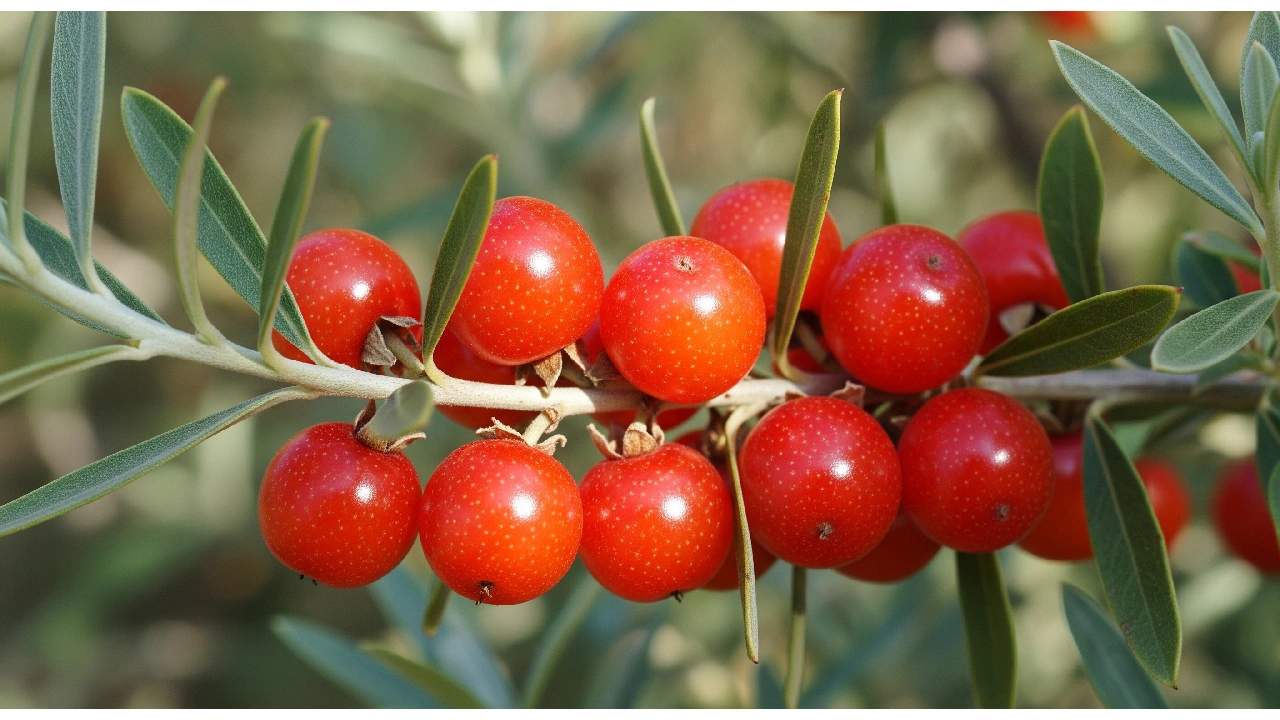
Buffaloberry (Shepherdia argentea) is one of North America’s most fascinating native berries. Found across the Great Plains and western regions of the United States and Canada, this small red-orange fruit has a long history of cultural, nutritional, and ecological significance. For centuries, Indigenous communities have used Buffaloberries for food, medicine, and ceremonial purposes. Today, modern researchers consider it a nutrient-dense superfruit packed with antioxidants, vitamins, and plant compounds.
This article provides a complete, simple-to-understand guide to Buffaloberry—its history, benefits, uses, nutrition, harvesting, and more.
Contents
- 1 What Is Buffaloberry?
- 2 Where Does Buffaloberry Grow?
- 3 A Cultural Treasure of Indigenous Communities
- 4 What Do Buffaloberries Taste Like?
- 5 Nutritional Value of Buffaloberry
- 6 Health Benefits of Buffaloberries
- 7 How Buffaloberries Are Used
- 8 Growing Buffaloberries: Can You Plant Them at Home?
- 9 Ecological Importance of Buffaloberry
- 10 Harvesting Buffaloberries
- 11 Buffaloberry vs. Other Native Berries
- 12 Are Buffaloberries Safe to Eat?
- 13 Why Buffaloberries Are Considered a “Superfruit”
- 14 Conclusion
- 15 Frequently Asked Questions (FAQs)
What Is Buffaloberry?
Buffaloberry, scientifically known as Shepherdia argentea, is a hardy shrub that produces bright red berries covered with tiny white dots. The name “Buffaloberry” comes from its historical connection to the American bison, as these shrubs grew in regions where buffalo once roamed freely.
The plant is known for:
- Its drought tolerance
- Ability to grow in poor soil
- Long lifespan
- Strong ecological value
Buffaloberry shrubs typically grow 6–20 feet tall and produce fruit in late summer or early fall.
Where Does Buffaloberry Grow?
Buffaloberry is native to:
- The Great Plains
- Western United States
- Canadian prairies
It thrives in:
- Dry, sandy soils
- Riverbanks
- Open prairies
- Rocky slopes
- Semi-arid climates
The plant is well adapted to harsh environments, making it important for soil stabilization and natural restoration projects.
A Cultural Treasure of Indigenous Communities
For many Native American tribes, Buffaloberry has played a major role in:
- Traditional foods
- Ceremonies
- Medicine
- Trade
Indigenous groups including the Lakota, Cheyenne, and Blackfoot used Buffaloberries to make:
- Soups
- Pemmican
- Berry cakes
- Drinks
- Fruit sauces
The berries were valued for their bright flavor, long storage life, and nutritional power during winter months.
What Do Buffaloberries Taste Like?
Buffaloberries have a tart, slightly bitter, and tangy flavor. Many compare their taste to:
- Cranberries
- Sour cherries
- Tart currants
When fully ripe or cooked, Buffaloberries develop a pleasantly sweet-tart balance that works well in jams, sauces, or desserts.
Nutritional Value of Buffaloberry
Buffaloberries are considered a nutrient-dense superfruit due to their high levels of:
Vitamins
- Vitamin C
- Vitamin A
- Several B-vitamins
Minerals
- Potassium
- Calcium
- Iron
Antioxidants
Buffaloberries contain lycopene, the same powerful antioxidant found in tomatoes and watermelon—sometimes in even higher concentrations.
Health Benefits of Buffaloberries
Because of their rich nutritional profile, Buffaloberries offer several health benefits.
1. Rich in Antioxidants
Buffaloberries contain antioxidants that help fight:
- Free radicals
- Inflammation
- Cellular damage
These antioxidants support long-term health and may reduce the risk of chronic diseases.
2. Supports Heart Health
The lycopene in Buffaloberries may help:
- Improve blood vessel health
- Lower oxidative stress
- Support healthy cholesterol levels
These effects contribute to cardiovascular wellness.
3. Boosts Immune Function
Their high vitamin C content helps:
- Strengthen immunity
- Support healing
- Improve overall energy
Buffaloberries were traditionally used during winter months to prevent illness.
4. Aids Digestion
The berries contain natural fiber that supports:
- Healthy digestion
- Regular bowel movements
- Gut health
Fiber also helps control appetite and maintain stable blood sugar levels.
5. Powerful Anti-Inflammatory Effects
Some traditional uses involved:
- Reducing swelling
- Easing joint discomfort
- Supporting wound healing
The anti-inflammatory compounds in Buffaloberries make them a natural remedy in herbal medicine.
How Buffaloberries Are Used
Buffaloberries can be enjoyed fresh, but their sour taste makes them ideal for cooking.
Popular uses include:
1. Jams and Jellies
Cooking Buffaloberries with sugar creates delicious spreads that highlight their flavor.
2. Sauces
Perfect for serving with meat—especially wild game—because of the berry’s tartness.
3. Baking
Used in:
- Muffins
- Pies
- Cakes
4. Pemmican
A traditional Indigenous food combining dried berries, fat, and meat.
5. Beverages
Buffaloberries are used to make:
- Juices
- Fermented drinks
- Traditional berry teas
6. Medicinal Preparations
Some tribes used Buffaloberries to:
- Treat colds
- Aid digestion
- Support general wellness
Also Read: The Ultimate Guide to Cranberry: More Than a Holiday Staple
Growing Buffaloberries: Can You Plant Them at Home?
Yes! Buffaloberry shrubs are very easy to grow.
Ideal Conditions
They grow best in:
- Full sun
- Dry or sandy soil
- Open spaces
- Low-water environments
Why Grow Buffaloberries?
- They attract birds
- Need minimal maintenance
- Provide high-value fruit
- Help restore ecosystems
Ecological Importance of Buffaloberry
Buffaloberry shrubs play a vital role in nature.
1. Food Source for Wildlife
Birds, deer, and even bears eat Buffaloberries as an important seasonal food.
2. Soil Stabilization
Their deep roots help prevent erosion.
3. Nitrogen Fixation
Buffaloberry shrubs naturally improve soil fertility, making them valuable for land restoration.
Harvesting Buffaloberries
Buffaloberries ripen from mid-summer to fall depending on climate.
Tips for Harvesting
- Wear gloves to protect against thorns
- Wait until berries are fully red
- Shake branches gently to release ripe berries
- Avoid unripe berries—they taste very bitter
Buffaloberry vs. Other Native Berries
| Feature | Buffaloberry | Salmonberry | Huckleberry |
|---|---|---|---|
| Taste | Tart, slightly bitter | Sweet-tart | Sweet |
| Color | Red/orange | Orange/red | Dark purple/blue |
| Vitamin C | High | Moderate | Moderate |
| Traditional use | Pemmican, teas | Fresh eating | Fresh & preserves |
| Antioxidants | Very high | High | High |
Buffaloberries stand out for their tart flavor and exceptionally high antioxidant content.
Are Buffaloberries Safe to Eat?
Yes, Buffaloberries are safe, but like many tart fruits, they may cause:
- Mild stomach discomfort if eaten in large amounts
- Astringency (mouth dryness) due to natural compounds
Cooking or sweetening the berries reduces this effect significantly.
Why Buffaloberries Are Considered a “Superfruit”
Buffaloberries have gained attention in modern nutrition because they contain:
- Higher lycopene than tomatoes
- Stronger antioxidant levels than many berries
- Natural anti-inflammatory compounds
- Excellent fiber and vitamin content
This combination makes Buffaloberries one of North America’s most underrated yet powerful native superfruits.
Conclusion
Buffaloberry (Shepherdia argentea) is a nutrient-rich, culturally important, and ecologically valuable berry native to North America. Its tart, antioxidant-packed fruit has been used for centuries by Indigenous communities and continues to gain interest as a healthful wild berry. Whether eaten fresh, cooked into spreads, or used in traditional recipes, Buffaloberries offer unique flavor and nutritional benefits.
This hardy shrub plays an important role in ecosystems and can even be grown at home with minimal care. As more people rediscover native fruits, Buffaloberry stands out as a remarkable plant with a rich history and powerful health benefits.
Frequently Asked Questions (FAQs)
1. Are Buffaloberries edible raw?
Yes, but they are very tart. Most people prefer them cooked or sweetened.
2. When do Buffaloberries ripen?
They typically ripen between July and September, depending on the region.
3. Are Buffaloberries healthy?
Yes, they are rich in antioxidants, vitamins, fiber, and minerals.
4. Can Buffaloberries be frozen?
Absolutely. Freezing preserves their nutrients and flavor for future use.
5. Is it easy to grow Buffaloberries at home?
Yes, they are hardy plants that tolerate poor soil and low water.
Also Read: Salmonberry (Rubus spectabilis): A Complete Guide to America’s Pacific Jewel