
Buffaloberry is one of North America’s most underestimated native fruits. While blueberries and cranberries dominate the superfood conversation, this tart red berry of the Great Plains contains antioxidant levels that rival — and in some studies surpass — both of them. Indigenous communities across the American plains have known this for centuries. Modern nutrition science is finally catching up.
This complete guide covers everything about Shepherdia argentea: its botanical profile, where it grows across the USA, full nutritional breakdown including its remarkable lycopene content, six science-backed health benefits, traditional Indigenous uses, a full recipe guide, foraging tips, growing instructions, and how it compares to cranberry and other native berries.
What Is a Buffaloberry? Botanical Profile
Buffaloberry (Shepherdia argentea) is a hardy deciduous shrub native to the Great Plains and western regions of North America. It belongs to the Elaeagnaceae family — the same family as sea buckthorn and silverberry — and is one of only three species in the Shepherdia genus, all native to North America.
The name “buffaloberry” traces to the plant’s deep historical connection with the American bison. The shrubs grew abundantly in the regions where vast buffalo herds roamed, and Indigenous peoples who followed the bison naturally incorporated buffaloberries into their food traditions. The berries were a critical ingredient in pemmican — the preserved high-energy food that sustained plains communities through long winters and during travel.
Scientific name: Shepherdia argentea | Family: Elaeagnaceae | Common names: Silver buffaloberry, thorny buffaloberry, bull berry
Height: 6–20 feet | Fruit color: Red-orange with white spots | Season: July–September | USDA Zones: 2–7
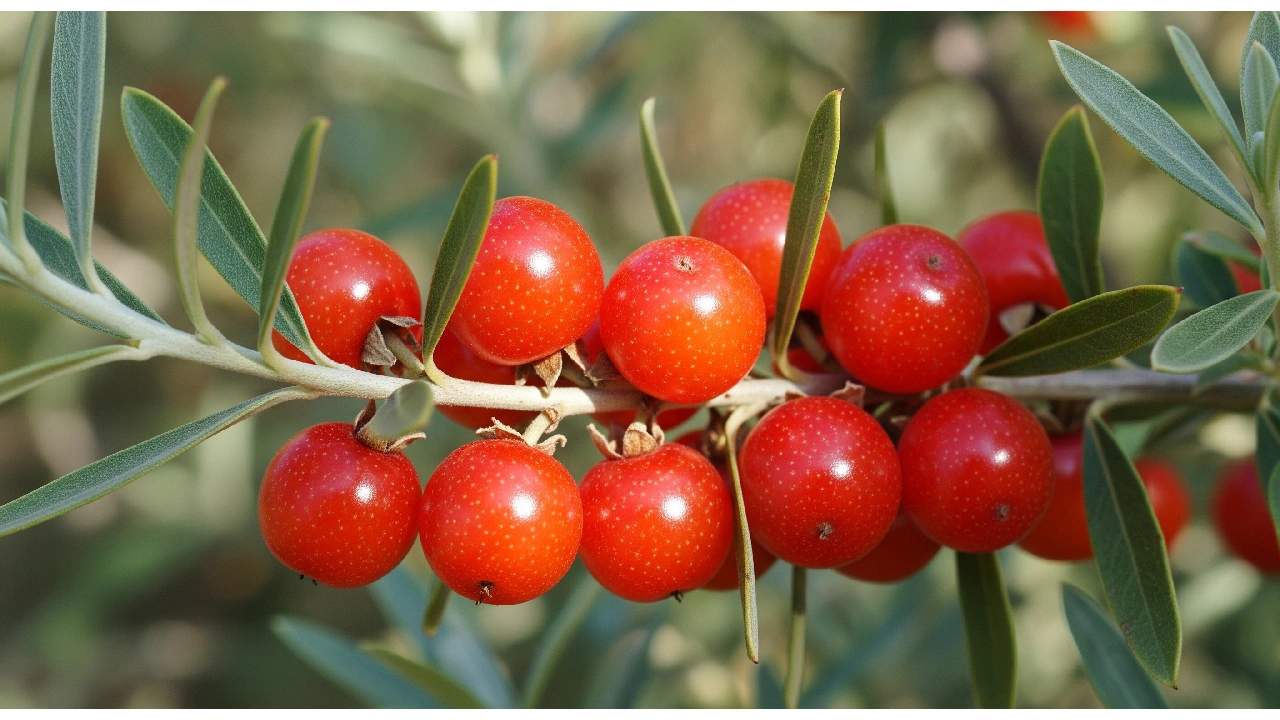
What does buffaloberry look like? The shrub produces small clusters of bright red-orange berries covered in distinctive tiny silver or white dots — a pattern unique enough to make identification straightforward. The plant itself has silvery-green leaves (the argentea in the scientific name means “silvery”) and significant thorns on mature branches. Male and female plants are separate — only female plants produce fruit, and a male plant must be nearby for pollination.
Where Does Buffaloberry Grow in the USA?
Buffaloberry is a Great Plains and Rocky Mountain native with a wide natural range across the central and western United States. It is one of the most cold-hardy native shrubs in North America, surviving temperatures as low as -40°F (-40°C), which makes it suitable for the harshest prairie winters.
| Region | States | Typical habitat |
|---|---|---|
| Northern Great Plains | North Dakota, South Dakota, Nebraska, Montana | River valleys, grassland margins, coulees |
| Central Plains | Kansas, Iowa, Minnesota, Wisconsin | Prairie edges, stream banks, open slopes |
| Rocky Mountain region | Wyoming, Colorado, Idaho, Utah | Dry slopes, rocky canyons, riverbanks |
| Pacific Intermountain | Oregon (eastern), Washington (eastern), Nevada | Sagebrush steppe, dry canyon sides |
| Canadian border states | Minnesota, North Dakota, Montana | Prairie river corridors |
Buffaloberry thrives in conditions that challenge most other fruit-bearing shrubs: dry, sandy, or rocky soils; full sun exposure; minimal rainfall; and extreme temperature swings. This drought and cold tolerance make it one of the most ecologically important native plants for Great Plains restoration projects. According to the USDA PLANTS Database, Shepherdia argentea is documented across more than 30 U.S. states.
What Does Buffaloberry Taste Like?
Buffaloberry is not a subtle berry. Raw off the bush, it is sharply tart, astringent, and slightly bitter — an intensity that takes most people by surprise. The flavor is often compared to cranberry, sour cherry, or tart currants, with an additional bitter edge that comes from saponins (natural plant compounds also responsible for the berries’ tendency to foam when agitated).
After a frost, everything changes. Cold temperatures break down some of the astringent compounds, and post-frost buffaloberries become significantly more palatable — sweeter, less bitter, and more cranberry-like in balance. This is why traditional harvesting often took place after the first autumn frost.
Cooked and sweetened, buffaloberry shines. When made into jam, jelly, or sauce with sugar, the berry’s tartness transforms into a vivid, complex flavor that outperforms cranberry sauce in the opinion of many who try it. The naturally high acid content means it sets beautifully with minimal added pectin.
Buffaloberry Nutrition Facts
Buffaloberries are genuinely nutrient-dense — a designation earned by their combination of vitamins, minerals, antioxidants, and fiber in a low-calorie package. Nutritional data is sourced from research published by the USDA Agricultural Research Service and peer-reviewed studies on Shepherdia species.
| Nutrient | Per 100g | Standout quality |
|---|---|---|
| Calories | ~55–65 kcal | Low calorie |
| Lycopene | Extremely high | One of richest plant sources in North America |
| Vitamin C | High | Immune support, collagen production |
| Vitamin A | High | Eye health, immune function |
| Dietary fiber | ~4–5g | Gut health, satiety |
| Potassium | Good source | Blood pressure regulation |
| Calcium | Moderate | Bone health |
| Iron | Present | Oxygen transport, energy |
| Total antioxidants (ORAC) | Very high | Among highest of any North American berry |
The Lycopene Story: Why Buffaloberry Is Special
Lycopene is the carotenoid antioxidant most famous for giving tomatoes their red color and for its association with reduced risk of heart disease and certain cancers — particularly prostate cancer. Most people think of tomatoes and watermelon when they think of lycopene. Few know that buffaloberry may be a richer source than either.
Research published in the Journal of Food Composition and Analysis found that Shepherdia argentea berries contain lycopene concentrations that rival or exceed those of processing tomatoes — a remarkable finding for a wild prairie berry. Unlike tomatoes, where lycopene is more bioavailable when cooked, buffaloberry lycopene appears to be well-absorbed from both raw and cooked preparations.
Why lycopene matters:
- Associated with reduced risk of prostate, lung, and stomach cancers in epidemiological studies
- Linked to lower rates of cardiovascular disease — lycopene reduces LDL oxidation and arterial inflammation
- Acts as a potent antioxidant, particularly effective at neutralizing singlet oxygen (a highly reactive free radical)
- May help protect skin from UV damage
This lycopene content is the primary reason nutrition researchers have begun calling buffaloberry a “superfruit” — and why it deserves far more attention than it currently receives outside of Indigenous food traditions and the Great Plains region where it grows.
6 Health Benefits of Buffaloberries
1. Outstanding antioxidant protection
Buffaloberries combine lycopene, vitamin C, vitamin A, and flavonoid antioxidants into a single fruit — giving them an exceptionally broad antioxidant profile. These compounds work synergistically to neutralize free radicals, reduce oxidative stress, and protect cells from the kind of chronic damage that accumulates over years into disease. Research on related Shepherdia species confirms high total antioxidant activity, comparable to blueberries and cranberries on a per-gram basis.
2. Heart health support
The lycopene and potassium in buffaloberries contribute to cardiovascular health through complementary mechanisms. Lycopene reduces LDL (“bad”) cholesterol oxidation — a key step in arterial plaque formation. Potassium supports healthy blood pressure by counteracting the effects of sodium. Dietary fiber from buffaloberries also helps lower LDL cholesterol by binding bile acids in the digestive tract. This combination of mechanisms makes buffaloberry a genuinely heart-supportive food.
3. Immune system reinforcement
High vitamin C content makes buffaloberry an outstanding immune-supporting food. Vitamin C enhances the function of white blood cells, supports the skin’s barrier function, and accelerates wound healing. Plains Indigenous communities used buffaloberries specifically during winter and early spring — times of illness vulnerability and vitamin C scarcity — suggesting traditional recognition of these immune benefits long before modern nutritional science confirmed them.
4. Digestive health
With 4–5 grams of dietary fiber per 100g, buffaloberries support healthy digestion by feeding beneficial gut bacteria, adding bulk to support regularity, and slowing the absorption of glucose into the bloodstream. The natural acids in buffaloberry also have mild prebiotic properties, supporting a diverse gut microbiome.
5. Anti-inflammatory effects
Multiple compounds in buffaloberry demonstrate anti-inflammatory activity, including quercetin, kaempferol, and the carotenoids including lycopene. Chronic low-grade inflammation is recognized as a driver of conditions ranging from arthritis to type 2 diabetes to Alzheimer’s disease. Incorporating anti-inflammatory foods like buffaloberry regularly is one of the dietary strategies most consistently associated with long-term health in epidemiological research.
6. Blood sugar regulation potential
The combination of high fiber, low sugar, and natural acids in buffaloberries suggests potential benefits for blood sugar management. The fiber slows glucose absorption; the acids may inhibit digestive enzymes that break down complex carbohydrates; and the low glycemic load of the fruit itself means it adds minimal blood sugar burden. While human clinical trials specifically on buffaloberry are limited, the nutritional profile strongly supports this benefit based on research on comparable berries.
Indigenous Cultural Uses: A Deep History
For the Lakota, Cheyenne, Blackfoot, Hidatsa, Mandan, and many other plains nations, buffaloberry was not a peripheral food — it was a staple. Its abundance, long storage life, and nutritional density made it essential to plains life in the pre-contact era and beyond.
Pemmican
Buffaloberries were a key ingredient in pemmican — the concentrated, long-lasting food made from dried buffalo meat, rendered tallow, and dried berries that sustained plains communities through winter and on long journeys. Pemmican could be stored for months or even years without refrigeration. The buffaloberries added vitamin C, antioxidants, flavor, and natural preservative compounds to a food that would otherwise lack fresh nutrients. Modern food historians consider pemmican one of the most nutritionally complete and calorie-dense portable foods ever developed.
Ceremonial and social uses
Among the Lakota, buffaloberry harvest was a community event. A traditional method of harvesting involved laying blankets or hides beneath the thorny shrubs and striking the branches with sticks to knock ripe berries free — a method still used today. The berries were celebrated in oral traditions and featured in seasonal ceremonies tied to the buffalo hunt and harvest seasons.
Medicinal uses
Traditional medicinal uses of buffaloberry documented by ethnobotanists include treatments for stomach ailments, as a mild laxative preparation, and in preparations to support recovery from illness. The USDA Forest Service’s ethnobotanical records document buffaloberry use across more than a dozen tribal nations of the Great Plains and Rocky Mountains.
Soapberry foam — “Indian ice cream”
The related species Shepherdia canadensis (russet buffaloberry or soapberry) is famous for a unique preparation — when the berries are vigorously whipped, the saponins they contain cause the juice to foam into a whipped, ice cream-like dessert sometimes called “Indian ice cream” or sxusem in some First Nations languages. S. argentea (silver buffaloberry) can be prepared similarly, though it is less commonly used this way. The tradition is documented among Athabascan, Carrier, Wet’suwet’en, and Interior Salish peoples of Canada and the northern Rocky Mountain region.
Buffaloberry vs Cranberry: Full Comparison
Buffaloberry is the native berry most frequently compared to cranberry — both are tart, both are red, both are transformed by cooking with sugar, and both have impressive antioxidant profiles. Here is how they compare across the key dimensions:
| Feature | Buffaloberry | Cranberry |
|---|---|---|
| Scientific name | Shepherdia argentea | Vaccinium macrocarpon |
| Taste raw | Very tart, astringent | Very tart, sour |
| Lycopene | Very high (exceptional) | Low |
| Anthocyanins | High | Very high |
| Vitamin C | High | Moderate |
| Native range | Great Plains, Rocky Mountains | Northeast, Great Lakes |
| Growing conditions | Dry, poor soil, drought-tolerant | Wet bogs, acidic, specialized |
| Best culinary use | Jam, jelly, sauce, pemmican | Sauce, juice, dried, supplements |
| Availability | Limited — wild or specialty | Widely available commercially |
| UTI research | Limited (less studied) | Extensive clinical research |
See our full guide to cranberries for a complete breakdown of that berry’s nutritional profile and health research.
Buffaloberry Recipes
Because of their intense tartness, buffaloberries are best used in cooked preparations where sugar moderates their bite. Here are five recipes ranging from traditional to modern:
1. Buffaloberry jelly (the classic)
Combine 4 cups of buffaloberries and ½ cup of water in a saucepan. Crush the berries and simmer for 10 minutes. Strain through a cheesecloth, pressing to extract all juice. Return 3 cups of juice to the pan with 3 cups of sugar and the juice of half a lemon. Bring to a rolling boil and cook until it reaches 220°F (gel stage), about 15–20 minutes. Pour into sterilized jars. The resulting jelly has a beautiful crimson color and a vivid tart-sweet flavor that pairs exceptionally well with wild game, venison, or roast pork.
2. Buffaloberry cranberry sauce substitute
Buffaloberry sauce can substitute perfectly for cranberry sauce at Thanksgiving or alongside roast meats. Simmer 2 cups of buffaloberries with ¾ cup of sugar, ¼ cup of water, and a cinnamon stick for 15 minutes until berries burst and sauce thickens. Add a pinch of orange zest. Serve warm or chilled.
3. Traditional pemmican (modernized)
A simplified modern version of the traditional plains food: combine ½ cup of dried buffaloberries (dehydrated at low heat) with 1 cup of finely dried ground beef jerky and ½ cup of rendered beef tallow or coconut oil. Mix thoroughly, press into a flat pan, and refrigerate until solid. Cut into bars. This high-energy, long-lasting food honors a centuries-old tradition and is genuinely nutritious.
4. Buffaloberry syrup
Simmer 3 cups of buffaloberries with 1 cup of water until berries are soft (about 10 minutes). Strain and return the juice to the heat with 1 cup of sugar. Simmer until slightly thickened, about 5 minutes. Use over pancakes, waffles, yogurt, or as a cocktail mixer. Keeps refrigerated for 3 weeks.
5. Buffaloberry muffins
Fold 1 cup of fresh or thawed buffaloberries into a standard muffin batter (reduce sugar by 2 tablespoons since the batter will taste tarter than expected). The intense tartness of the berries bakes into pockets of bright, cranberry-like flavor throughout the muffin. Top with a simple honey glaze to balance. Bake at 375°F for 20–22 minutes.
Foraging and Harvesting Guide
Harvesting buffaloberries in the wild is a rewarding but thorny undertaking — literally. Here is how to do it safely and efficiently:
When to harvest
- Berries ripen July through September, varying by location and elevation
- Best time: after the first autumn frost — cold temperatures reduce astringency significantly and make berries far more palatable
- Ripe berries are fully red-orange and slightly soft when gently pressed
- Unripe berries are hard, orange, and extremely bitter — not worth eating
The traditional harvesting method
Because buffaloberry shrubs have significant thorns, the traditional and most efficient harvesting method is still the best: spread a tarp, blanket, or old sheet beneath the shrub, then strike the branches firmly with a stick or dowel. Ripe berries fall freely; unripe ones cling to the stem. Collect from the tarp, picking out leaves and debris. A single productive shrub can yield several pounds of berries this way in minutes.
Safety notes
- Wear long sleeves and gloves — the thorns are sharp and can cause painful scratches
- Buffaloberries are safe to eat but may cause mild digestive discomfort in very large quantities due to saponin content
- The berries foam when agitated — this is normal and harmless
- Wash berries before eating or processing
- Do not harvest near roadsides, industrial areas, or land that may have been treated with herbicides
How to Grow Buffaloberries at Home
Buffaloberry is one of the easiest native shrubs to establish in the right climate. It is exceptionally drought-tolerant, cold-hardy to Zone 2, and requires almost no maintenance once established. It also improves the soil around it by fixing atmospheric nitrogen — making it a net positive for the broader garden ecosystem.
| Requirement | Ideal conditions | Notes |
|---|---|---|
| USDA Zones | 2–7 | One of the most cold-hardy fruit shrubs in North America |
| Soil | Sandy, loamy, or rocky — poor soil is fine | Excellent drainage required; does not tolerate wet feet |
| Sunlight | Full sun (6+ hours) | More sun = more fruit |
| Water | Low — very drought-tolerant | Water weekly for first season; minimal after establishment |
| Pollination | Plant 1 male per 5–6 females | Male plants do not fruit; needed for pollination |
| Mature size | 6–20 feet tall | Can be pruned to maintain lower height |
| Time to fruit | 3–5 years from transplant | Patience rewarded with decades of production |
| Nitrogen fixation | Yes | Improves soil fertility; great companion plant |
Where to buy buffaloberry plants: Buffaloberry is increasingly available from native plant nurseries across the Great Plains and Rocky Mountain region. Check with your local Cooperative Extension Service for regionally adapted sources. The Native Plant Network also maintains a directory of native plant suppliers by region.
Ecological bonus: Buffaloberry shrubs attract birds (cedar waxwings, robins, and grouse love the berries), support pollinators with their early flowers, and provide dense nesting cover. In a wildlife garden or food forest, they are one of the highest-value plants you can establish in the Great Plains region.
Frequently Asked Questions About Buffaloberries
Are buffaloberries edible raw?
Yes, they are edible raw, but most people find them very tart and astringent straight off the bush. They taste significantly better after a frost, which reduces astringency. Cooked with sugar — in jam, jelly, or sauce — they are genuinely delicious. Eating large amounts raw may cause mild digestive discomfort due to saponin content.
Do buffaloberries have more lycopene than tomatoes?
Research published on Shepherdia argentea suggests that buffaloberries contain exceptional levels of lycopene — in some studies comparable to or exceeding concentrations found in tomatoes. This makes buffaloberry one of the richest plant sources of lycopene in North America, which is significant given lycopene’s associations with heart health and cancer prevention.
What does buffaloberry taste like?
Sharp, tart, astringent, and slightly bitter when raw — similar to cranberry with additional bitterness. After a frost or when cooked with sugar, the flavor becomes a vibrant sweet-tart similar to high-quality cranberry sauce. Their intense flavor makes them ideal for jams, jellies, and sauces rather than fresh eating.
When do buffaloberries ripen?
Buffaloberries ripen between July and September depending on location and elevation. The best harvest window is after the first autumn frost, when astringent compounds break down and the berries become more palatable. Northern Great Plains populations typically peak in August.
Can you grow buffaloberries in your yard?
Yes — buffaloberry shrubs are very easy to grow in USDA Zones 2–7 and are extremely drought-tolerant, making them ideal across the Great Plains, Rocky Mountain region, and Intermountain West. They need full sun, well-drained soil, and minimal water once established. Plant at least one male plant per five to six female plants for pollination.
Is buffaloberry the same as soapberry?
They are related but distinct species. Buffaloberry (Shepherdia argentea) is the silver or thorny buffaloberry, with bright red fruit and silvery leaves. Soapberry (Shepherdia canadensis) is the russet buffaloberry, with orange-red fruit and a spineless stem. Soapberry is famous for being whipped into a traditional foam dessert called “Indian ice cream” in First Nations communities. Both are edible and nutritious.
Conclusion: America’s Most Underrated Native Superfruit
Buffaloberry deserves to be in the same conversation as blueberry, cranberry, and elderberry when Americans talk about native superfruits. Its antioxidant profile — anchored by exceptional lycopene content and supported by high vitamin C, vitamin A, and diverse flavonoids — is genuinely impressive. Its deep roots in plains Indigenous food traditions represent thousands of years of nutritional wisdom. And its extraordinary drought tolerance and cold hardiness make it one of the most ecologically valuable native plants you can grow.
The berry’s tartness is not a flaw — it is a feature. Like cranberry, it simply requires the right preparation to reveal its full potential. Once you taste a buffaloberry jelly spread on toast or a buffaloberry sauce alongside roast venison, you will understand why the Lakota, Cheyenne, and Blackfoot nations valued it so highly.
More from Berry Nation USA
Written by Kirna — Berry Nation USA
Berry Nation USA is America’s home for wild, native, and cultivated berry guides. Learn more about us.